





















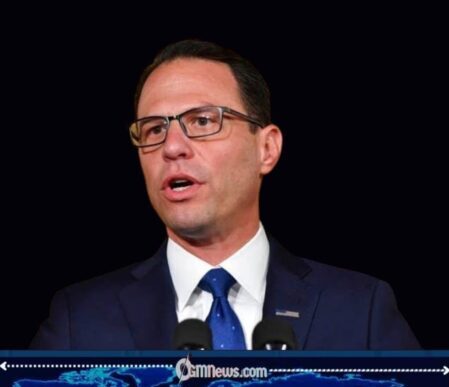
Josh Shapiro has become the center of a fresh political debate after a newly released poll showed the Pennsylvania governor leading his Republican opponent by an impressive 25 percentage points, despite President Donald Trump carrying the battleground state in the 2024 presidential election. The striking margin has sparked intense discussion over whether Pennsylvania voters are once again demonstrating a willingness to separate state leadership from national politics, leaving both supporters and critics scrambling to explain the apparent political contradiction.
Shapiro’s 25-Point Lead Leaves Republicans Searching for Answers
The latest polling has placed Josh Shapiro in an unexpectedly commanding position as the race for Pennsylvania’s governorship continues to develop. While election campaigns remain fluid and public opinion can shift over time, such a substantial lead has inevitably attracted national attention. Supporters argue that the numbers reflect voter confidence in Shapiro’s leadership, administrative record, and bipartisan appeal, while Republican strategists have emphasized that polls are snapshots rather than guarantees of election outcomes.
Josh Shapiro has consistently projected himself as a pragmatic governor focused on infrastructure, public safety, economic development, and government efficiency. Political observers note that statewide races often differ from presidential contests because many voters assess governors according to local issues rather than national party loyalty. In typical Pennsylvania fashion, the latest survey has once again reminded analysts that predicting the state’s political direction can be far more complicated than reading a single election result.
Trump Won Pennsylvania—So Why Is Shapiro Dominating the Polls?
Beyond the headline-grabbing numbers, Josh Shapiro’s apparent advantage reflects a broader trend seen across several American states, where voters occasionally support candidates from different political parties depending on the office being contested. Political scientists often describe this behavior as ticket-splitting, a pattern in which voters distinguish between national ideological debates and state-level governance. Although ticket-splitting has become less common in recent years, Pennsylvania has continued to demonstrate moments of political independence that frustrate easy partisan assumptions.
President Donald Trump remains a significant political force after winning Pennsylvania in the 2024 presidential election, yet gubernatorial elections operate under different political dynamics. Candidate recognition, incumbency, economic conditions, local policy decisions, campaign organization, and voter perceptions of state leadership frequently outweigh national narratives. For that reason, analysts caution against interpreting any single poll as evidence of an inevitable result, particularly with months of campaigning, debates, advertising, and voter outreach still capable of reshaping public opinion before ballots are cast.
As the campaign progresses, Josh Shapiro is likely to remain under heightened scrutiny from both political allies and opponents eager to test whether this substantial polling advantage can withstand the pressures of an increasingly competitive election season. OGM News will continue monitoring developments, recognizing that polls may influence the conversation, but voters—not surveys—will ultimately determine Pennsylvania’s next political chapter.
Navigating through slot games used to feel overwhelming but this login portal makes everything so...