













Jessica Tarlov took center stage during a tense on-air exchange on Fox News, where she challenged prevailing narratives surrounding Iran’s geopolitical influence and the current state of the U.S. economy. Drawing attention to both international and domestic factors, Tarlov framed her argument around strategic realities often overlooked in political discourse.
Her intervention immediately shifted the tone of the discussion, as she emphasized that policy debates must be grounded in verifiable data and global context. By combining geopolitical analysis with economic indicators, she presented a multi-layered critique that contrasted with more optimistic viewpoints expressed during the segment.
Jessica Tarlov Highlights Iran’s Strategic Position
Tarlov underscored the importance of Iran’s control and influence near the Strait of Hormuz, a key artery for global oil shipments. She argued that any serious evaluation of Middle Eastern dynamics must account for the country’s ability to affect maritime trade routes.
According to Tarlov, overlooking this strategic leverage risks underestimating Iran’s role in shaping global energy security. Her remarks reflected concerns shared by international analysts who warn that disruptions in the strait could have immediate and widespread economic consequences.
Jessica Tarlov Points to Rising Inflation at 3.3%
Turning to domestic issues, Jessica Tarlov cited the current U.S. inflation rate of 3.3% as evidence that economic challenges persist despite positive narratives. She noted that such figures directly impact American households, affecting the cost of living and overall financial stability.
Her argument suggested that economic realities should not be downplayed in political messaging. By bringing inflation into the discussion, Tarlov linked foreign policy considerations with domestic economic pressures, reinforcing the interconnected nature of modern governance.
Jessica Tarlov Counters President Trump’s Narrative
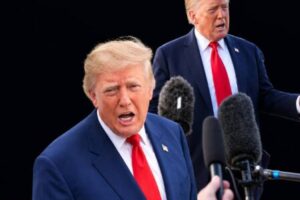
Jessica analysis stood in contrast to statements from Donald Trump, who has expressed confidence in both U.S. economic performance and foreign policy strategy. Without dismissing the administration outright, she questioned whether current narratives fully reflect underlying risks.
Her critique highlighted a broader divide between differing schools of thought—one emphasizing optimism and strength, the other caution and data-driven assessment. This contrast added depth to the discussion and underscored the complexity of interpreting current events.
Jessica Tarlov Emphasizes Policy Consequences
Beyond immediate debate points, Jessica Tarlov stressed that misreading geopolitical realities or economic indicators could lead to significant policy consequences. She argued that decision-makers must remain attentive to both global dynamics and domestic conditions when crafting strategies.
Her perspective aligned with calls from policy experts for a more balanced and evidence-based approach. By integrating multiple dimensions into her analysis, Tarlov reinforced the importance of comprehensive evaluation in governance.
Jessica Tarlov Shapes Media Discourse on Key Issues
Jessica performance on Fox News reflects the growing role of media commentators in shaping public understanding of complex issues. Through detailed argumentation and reference to measurable data, she contributed to a broader conversation on U.S. policy direction.
As debates over Iran and economic performance continue, voices like Tarlov’s illustrate how media platforms serve as critical spaces for scrutiny and dialogue. Her intervention not only challenged existing narratives but also encouraged a more nuanced examination of global and domestic realities.

Logging in is a breeze and the site stability is amazing even during peak hours....