









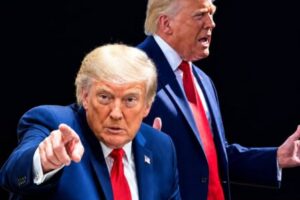



















Former U.S. Secretary of State Hillary Clinton has issued a forceful critique of U.S. President Donald Trump, describing his leadership as “disgraceful” and expressing deep personal discomfort with his recent actions and rhetoric. Her remarks have drawn significant attention, reflecting ongoing political divisions and concerns about the tone of U.S. leadership.
Clinton’s comments come at a time of heightened geopolitical tension and domestic political debate. As a prominent figure in American foreign policy, her words carry weight both within the United States and internationally, contributing to broader discussions about governance, diplomacy, and political conduct.
Hillary Clinton’s Remarks: A Direct and Personal Critique
Hillary Clinton’s criticism of President Donald Trump was notable for its intensity and personal tone. She described his behavior as deeply troubling and suggested that his actions undermine the dignity of the presidency.
Her remarks referenced a pattern of statements and decisions that she believes have negatively affected the United States’ standing on the global stage. While she did not focus on a single incident, her comments reflect cumulative concerns about leadership style and communication.
Clinton’s language, including describing the president as “disgraceful,” underscores the depth of her disagreement and the seriousness with which she views the current political climate.
Context: Ongoing Political and Policy Disputes
The latest comments from Hillary Clinton are part of a broader context of longstanding political rivalry and policy disagreements with President Donald Trump. These differences span issues such as foreign policy, national security, and domestic governance.
Recent developments, including tensions involving Iran and debates over international alliances, have intensified scrutiny of U.S. leadership. Clinton’s remarks appear to be influenced by these developments, as well as by the administration’s communication strategy.
The political environment remains highly polarized, with leaders and commentators offering sharply contrasting views on the direction of the country.
Foreign Policy Concerns: Implications for Global Relations
As a former Secretary of State, Hillary Clinton’s critique carries particular significance in the realm of foreign policy. She has suggested that President Donald Trump’s rhetoric could have consequences for diplomatic relationships and international stability.
Clinton has long emphasized the importance of consistent and measured communication in global affairs. Her concerns reflect a belief that strong language and controversial messaging can complicate negotiations and weaken alliances.
These perspectives are shared by some analysts who warn that the tone of leadership can influence how the United States is perceived abroad.
Public and Political Reactions: A Divided Response
Reactions to Clinton’s remarks have been mixed, reflecting the broader divisions within American society. Supporters argue that she is raising legitimate concerns about leadership and accountability.
Critics, however, view her comments as politically motivated and part of an ongoing partisan conflict. They argue that such statements contribute to polarization rather than constructive dialogue.
The differing responses highlight the challenges of maintaining civil discourse in a highly charged political environment.
The Role of Political Language in Shaping Perception
The exchange underscores the powerful role of language in shaping public perception of political leaders. Statements from prominent figures like Hillary Clinton can influence both domestic opinion and international views.
President Donald Trump has often been a central figure in debates over political rhetoric, with supporters praising his directness and critics questioning his tone. Clinton’s remarks add another layer to this ongoing discussion.
The interaction between political messaging and public reaction continues to be a defining feature of modern governance.
Historical Context: A Longstanding Rivalry
The relationship between Hillary Clinton and President Donald Trump has been marked by years of political competition, most notably during the 2016 presidential election. Their differing visions for the United States have continued to shape public discourse.
Clinton’s latest comments can be seen as part of this broader history, reflecting enduring disagreements over policy and leadership style. The rivalry remains a significant element of American political dynamics.
Understanding this context is essential for interpreting the tone and substance of her remarks.
Hillary Clinton’s description of President Donald Trump as “disgraceful” highlights the depth of political divisions in the United States. Her comments reflect broader concerns about leadership, communication, and the country’s role on the global stage.
As debates over policy and governance continue, the exchange underscores the importance of dialogue and the challenges of bridging ideological differences in a complex political landscape.

The weekly tournaments here keep me coming back because the prize pools are surprisingly generous....