




















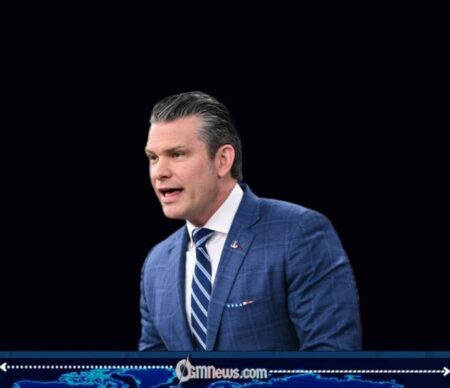
The United States’ ongoing war with Iran has entered a critical phase, and with it has come intensified scrutiny of key figures within President Donald Trump’s administration. At the center of the storm is Secretary of War Pete Hegseth, whose approval ratings have plunged amid growing public unease over the prolonged conflict. As dissatisfaction rises, political maneuvering within Republican circles is reportedly gaining momentum, with prominent figures such as Ron DeSantis being linked to potential Cabinet reshuffles.
Recent polling suggests that Hegseth’s leadership is increasingly under question, even as the administration maintains a firm stance on military operations. The convergence of declining public support, internal political calculations, and an evolving geopolitical landscape has created a moment of uncertainty for the Pentagon and the broader Trump administration.
Public Approval Ratings Reflect Deepening Divide
The latest national polling paints a troubling picture for Hegseth. With an approval rating of just 32 percent and a disapproval rating of 39 percent, the Secretary currently ranks as one of the least popular members of the Cabinet. The figures highlight a widening gap between the administration’s wartime posture and public sentiment.
Support for Hegseth remains relatively stable among Republican voters, with a majority expressing approval of his performance. However, this backing is not sufficient to offset the broader national trend. Among independent voters, approval drops sharply to around one in four, reflecting skepticism about both the war’s direction and its leadership.
Democratic respondents show even stronger opposition, with more than half disapproving of Hegseth’s tenure. The data underscores a deeply polarized political environment, where views on national security leadership are increasingly shaped by partisan alignment.
Iran Conflict Intensifies Pressure on Hegseth’s Leadership
The war involving Iran has now stretched into its eighth week, with no clear resolution in sight. The prolonged engagement has heightened scrutiny of strategic decisions made by the Pentagon and raised concerns about long-term implications for U.S. foreign policy.
Hegseth has positioned himself as one of the administration’s most vocal advocates for aggressive action, frequently using strong rhetoric to describe Iranian forces. His stance has resonated with hawkish elements within the government but has also drawn criticism from those advocating for a more measured approach.
Recent military developments, particularly in the strategically vital Strait of Hormuz, have further elevated tensions. The waterway remains a critical artery for global oil shipments, making any escalation in the region a matter of international concern.
Strong Warnings and Strategic Messaging from the Pentagon
In a recent press briefing, Hegseth reaffirmed U.S. control over key maritime routes and issued a direct warning to Iranian forces. He emphasized that any attempt to disrupt American shipping or military assets would be met with decisive force.
The statement reflects a broader strategy of deterrence, aimed at signaling strength while preventing further escalation. However, critics argue that such rhetoric risks inflaming an already volatile situation, potentially narrowing diplomatic options.
Despite the controversy, administration officials insist that Hegseth maintains a strong working relationship with President Trump. They argue that continuity in leadership is essential during a time of active military engagement, even as public opinion remains divided.
Speculation Grows Over Possible Cabinet Changes
Amid declining approval ratings and reports of internal dissatisfaction, speculation about potential Cabinet reshuffles has intensified. Sources suggest that President Trump has grown increasingly frustrated with certain members of his administration, fueling expectations of further changes.
Within this context, attention has turned to Ron DeSantis, who is widely seen as an influential figure within Republican politics. While he has publicly downplayed interest in specific roles, reports indicate that he may be open to serving in positions such as Secretary of War or even a future judicial appointment.
DeSantis himself has acknowledged that he remains open to opportunities where he can contribute meaningfully. His comments have been interpreted by some analysts as a signal of readiness, should an opening arise within the administration.
Senate Constraints Complicate Any Transition
Any potential replacement of a Cabinet official would require Senate confirmation, adding a layer of complexity to the situation. Republican lawmakers have expressed concern about the limited legislative calendar and the challenges of processing nominations within a compressed timeframe.
Thom Tillis has highlighted the logistical difficulties, noting that the number of working days available for confirmations is shrinking. This constraint could limit the administration’s ability to enact swift personnel changes.
Additionally, the political risks associated with replacing a key defense official during an ongoing conflict may deter immediate action. Lawmakers are wary of creating instability at a time when consistent leadership is seen as critical to national security.
Internal Dynamics and Presidential Mood Add Uncertainty
Reports from within Republican circles suggest that President Trump’s mood has become a factor in shaping Cabinet dynamics. Some lawmakers believe that dissatisfaction within the administration could lead to abrupt decisions regarding personnel.
An unnamed senator indicated that the President may be preparing for broader changes, potentially affecting multiple departments. While such claims remain unverified, they contribute to an atmosphere of uncertainty within Washington.
For now, Hegseth remains in his position, but the combination of public disapproval, political maneuvering, and strategic pressures ensures that his tenure will continue to be closely watched in the weeks ahead.

Logging in is a breeze and the site stability is amazing even during peak hours....