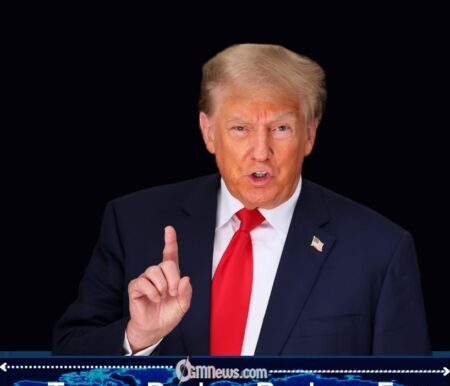








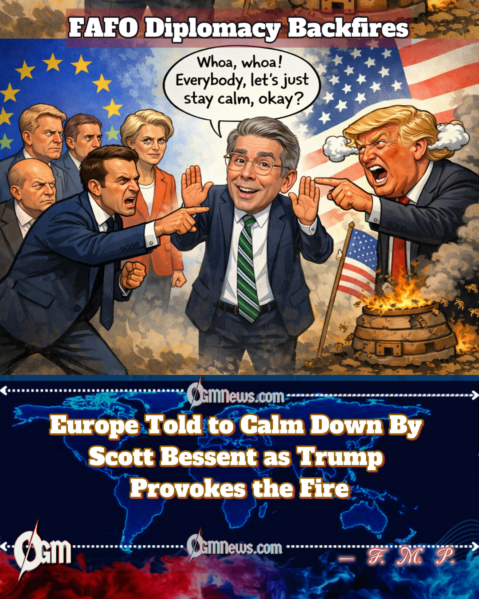
FAFO Diplomacy | OGM News — President Donald Trump, now serving his second term as the current U.S. president, has once again unsettled America’s closest allies by reviving aggressive rhetoric and policy threats over Greenland, trade, and NATO relations. What began as renewed pressure on Denmark over Greenland has expanded into a broader confrontation with Europe, raising questions about alliance stability, diplomatic restraint, and America’s role in the global order.
As tensions escalated, Treasury Secretary Scott Bessent emerged as the administration’s chief diplomatic firefighter—urging Europe not to retaliate and warning against escalation. Critics, however, argue that the appeals for calm are misdirected, given that the initial provocation came from Washington itself.
Greenland and the Return of Coercive Diplomacy
FAFO Diplomacy | OGM News — Greenland, a semi-autonomous territory within the Kingdom of Denmark, has reentered the geopolitical spotlight due to its strategic Arctic location, mineral resources, and growing military significance. President Trump has repeatedly argued that U.S. control over the territory is a national security necessity, reviving a controversial idea first floated years earlier.
European leaders have firmly rejected the notion, emphasizing Greenland’s right to self-determination and Denmark’s sovereignty. The renewed pressure has been interpreted across Europe as a shift from alliance diplomacy toward transactional coercion, particularly when paired with threats of economic retaliation.
Trade as Leverage: Tariffs Enter the Dispute
FAFO Diplomacy | OGM News — The standoff intensified when the U.S. administration signaled potential tariffs on European goods, implicitly linking trade penalties to political compliance. Such measures would mark a sharp departure from traditional transatlantic dispute resolution, which historically relied on negotiation rather than punishment.
European officials have warned that retaliatory steps are on the table if U.S. trade threats materialize. While no formal countermeasures have yet been enacted, internal preparations within European institutions suggest the bloc is treating the risk seriously rather than as rhetorical posturing.
Scott Bessent’s Call for Calm: The Backlash of Trump’s FAFO Diplomacy
FAFO Diplomacy | OGM News — Treasury Secretary Scott Bessent has publicly urged European governments to avoid escalation, cautioning that retaliatory measures could destabilize markets and harm long-term cooperation. Speaking to international audiences, he portrayed the situation as manageable and warned against “overreaction.”
However, critics on both sides of the Atlantic argue that Bessent’s appeals overlook the root cause of the crisis. Rather than urging restraint abroad, they contend, the administration should first de-escalate its own language and policy threats. The perception that Europe is being asked to absorb pressure without response has fueled resentment rather than reassurance.
NATO Under Strain and the Alliance Questioned
FAFO Diplomacy | OGM News — Beyond trade and Greenland, the episode has revived deeper concerns about NATO’s cohesion. European officials increasingly question whether Washington views the alliance as a partnership or as leverage for unilateral objectives.
At the same time, the dispute has accelerated conversations within Europe about strategic autonomy—reducing dependence on U.S. leadership in defense, trade, and diplomacy. While NATO remains intact, the trust underpinning it appears more fragile than at any point in recent years.
Global Optics: Power, Perception, and Pushback
FAFO Diplomacy | OGM News — The confrontation has also reshaped global perceptions of American power. Smaller nations and allied territories have demonstrated an increased willingness to resist U.S. pressure, signaling that traditional assumptions about American dominance no longer go unchallenged.
Analysts warn that prolonged transatlantic friction could benefit rival powers by weakening Western unity. Whether the dispute ends in compromise or confrontation, it has already altered diplomatic calculations well beyond Europe.
FAFO Diplomacy: A Test of Leadership and Limits
FAFO Diplomacy | OGM News — What began as a revived territorial fixation has evolved into a broader test of U.S. leadership in a multipolar world. President Trump’s second-term approach—assertive, transactional, and unapologetic—has energized supporters while alarming allies.
As Europe weighs its response and Washington debates its next move, one reality is clear: the era of unquestioned American authority among allies is fading, replaced by a more contested and conditional partnership.