







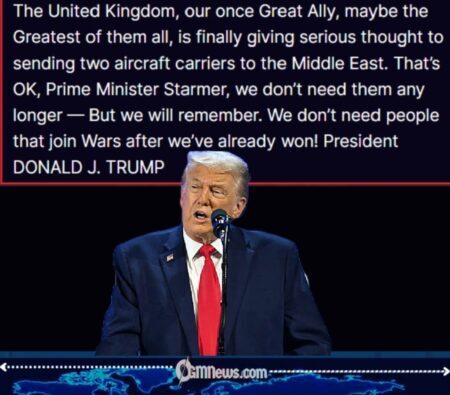
Donald Trump has publicly expressed concerns about the decision by the United Kingdom to deploy two aircraft carriers to the Middle East, arguing that the move could escalate regional tensions and strain military resources. His comments have sparked renewed debate about allied military strategy and the appropriate scope of Western naval operations in a region marked by geopolitical complexity.
The United Kingdom’s deployment is part of broader security efforts aimed at supporting maritime stability and coalition operations. Defense officials in London maintain that the carriers provide deterrent capabilities and logistical support for humanitarian and security missions. However, critics argue that such large-scale deployments risk signaling an escalation of military presence rather than a purely defensive posture.
This development underscores the ongoing challenges of alliance-based security strategy, where decisions by one nation can carry diplomatic and strategic implications for others. Analysts emphasize the importance of balancing military preparedness with diplomatic engagement to address regional tensions effectively.
Donald Trump’s Criticism of Carrier Deployment
Donald Trump’s remarks focused on concerns that deploying two aircraft carriers to the Middle East may not represent the most efficient use of military assets. He argued that large-scale naval operations could contribute to heightened tensions in an already volatile region while diverting resources from other strategic priorities.
Supporters of his position contend that military deployments should be carefully evaluated to ensure they address specific security objectives without creating perceptions of unnecessary escalation. They argue that targeted defense measures and diplomatic initiatives can often achieve stability more effectively than expansive military posturing.
Critics, however, maintain that a visible naval presence plays a vital role in deterring potential aggression and supporting international efforts to protect maritime trade routes. The debate highlights differing perspectives on how best to balance security objectives with diplomatic considerations in a complex geopolitical environment.
United Kingdom’s Rationale for Deployment
Officials in the United Kingdom have defended the deployment, emphasizing the strategic importance of maintaining a robust maritime presence in the Middle East. The region remains critical to global commerce, with shipping lanes serving as essential conduits for international trade.
Defense leaders argue that aircraft carriers provide flexible capabilities, enabling humanitarian assistance, intelligence operations, and rapid response to emerging threats. Proponents assert that such assets contribute to regional stability by demonstrating commitment to collective security and deterrence.
Nevertheless, questions persist about the long-term implications of sustained military deployments. Critics suggest that diplomatic initiatives and regional partnerships could complement security efforts, reducing reliance on large-scale naval operations while addressing underlying sources of tension.
Diplomatic Reactions and Allied Relations
The criticism from Donald Trump has prompted varied reactions from diplomatic and defense circles. Some officials argue that open debate about military strategy is a hallmark of democratic governance, fostering accountability and informed decision-making.
Others caution that public disagreements among allies can create perceptions of division, potentially complicating coordinated security efforts. Diplomats emphasize the importance of constructive dialogue and mutual understanding in addressing shared challenges.
International observers note that the discussion reflects broader questions about the evolving nature of global security. As geopolitical dynamics shift, nations must navigate the balance between military preparedness and diplomatic engagement to maintain stability.
Implications for Military Strategy and Security Policy
The controversy surrounding the deployment highlights the ongoing evolution of military strategy in an increasingly interconnected world. Defense planning now prioritizes flexibility and collaboration, recognizing that modern security challenges often transcend traditional boundaries.
Analysts suggest that alliances such as those between Western nations remain essential for addressing transnational threats, including maritime security and humanitarian crises. However, they also stress the need for strategic clarity and efficient resource allocation to ensure long-term effectiveness.
Donald Trump’s comments contribute to this broader conversation by encouraging scrutiny of strategic priorities and resource utilization. Whether or not one agrees with his perspective, the debate underscores the importance of evaluating defense policies in light of changing global conditions.
A Debate Over Security and Strategy
The discussion over the United Kingdom’s deployment of aircraft carriers to the Middle East illustrates the complexities of modern defense policy and alliance-based security. While proponents view the move as a necessary contribution to regional stability, critics argue for greater caution and strategic efficiency.
As debates continue, policymakers face the challenge of balancing security objectives with diplomatic considerations and long-term stability. Constructive dialogue among allies remains essential in addressing shared challenges and adapting to evolving geopolitical realities.
Donald Trump’s remarks have added a significant dimension to this conversation, reflecting broader questions about the future of military strategy and international cooperation. Ultimately, the pursuit of security and stability requires careful judgment and collaboration among nations.