












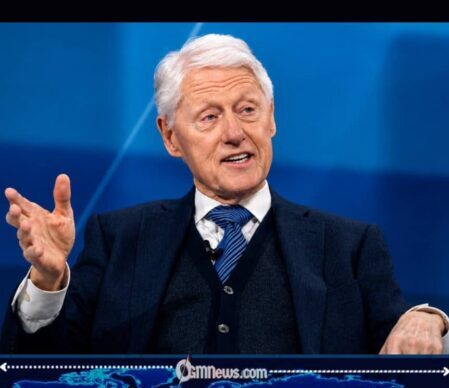
Former U.S. President Bill Clinton has reignited debate over Benjamin Netanyahu’s long-running confrontation with Iran, arguing that the Israeli prime minister has had a political reason to keep the Iranian threat at the centre of his leadership. Clinton made the striking claim in 2025, saying Netanyahu had long wanted to fight Iran because doing so could help him remain in office “forever and ever,” while urging leaders to pursue ways of defusing the conflict.
THE IRAN QUESTION THAT REFUSES TO RETIRE
Clinton’s argument has given political observers another reason to examine Netanyahu’s repeated focus on Iran. The Israeli prime minister has consistently presented Iran’s nuclear ambitions and regional influence as major security threats to Israel, while supporters of his position argue that confronting Tehran is a matter of national survival rather than political convenience.
But in the satirical political courtroom of public opinion, the question has become almost impossible to ignore: if Iran disappears from the headlines tomorrow, what happens to the politician who has spent years warning everyone about Iran? Clinton’s criticism suggests that the conflict may serve not only as a security issue but also as a powerful political shield.
Recent developments have kept the argument alive. Netanyahu said in August 2026 that Iran had allegedly attempted to kill one of his sons, although he did not provide details supporting the claim. Meanwhile, tensions surrounding Iran, Israel and the United States remain highly volatile, ensuring that the Iranian question continues to occupy a prominent place in Middle Eastern politics.
TRUMP ALSO CAUGHT IN THE MIDDLE
Clinton did not spare Washington from his criticism. In his 2025 remarks, he called for the conflict to be defused and expressed hope that President Donald Trump would help reduce the danger rather than allow the situation to expand into a wider regional war.
That warning has become particularly relevant as President Trump remains deeply involved in the Iran crisis. More recent reporting shows that Netanyahu and Trump have publicly acknowledged broad agreement over the Iranian nuclear issue, even while differences have existed over how the problem should ultimately be handled. In the meantime, civilians across the region remain the unfortunate audience for a geopolitical drama in which the politicians hold the microphones but ordinary people often pay the bill.
For Netanyahu, the political stakes are also unusually high. Israel is scheduled to hold its next election on October 27, 2026, adding another layer of political calculation to every major security decision. With Iran, Gaza and domestic political disputes continuing to dominate public debate, the prime minister faces a political environment where war and politics increasingly appear to share the same stage.
Clinton’s claim therefore remains a provocative political interpretation rather than an established fact, but it raises a question that is unlikely to disappear: where does genuine national security end and political survival begin? As tensions over Iran continue and Israel moves toward another election, OGM News will continue watching the story—because in this particular political drama, the next headline may already be waiting behind the next missile warning.
Its Amazing