
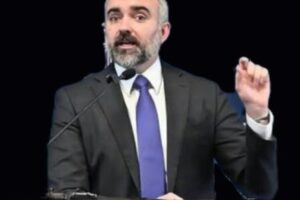









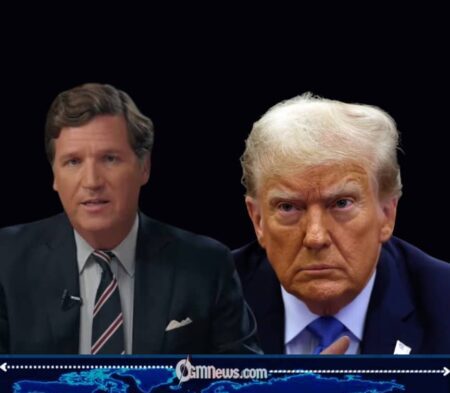
Conservative media figure Tucker Carlson has reportedly expressed regret over his role in helping President Donald Trump return to the White House, saying he now feels personally responsible for encouraging Americans to place their trust in a leadership he no longer fully supports. In remarks that quickly drew national attention, he said he was sorry for “misleading people,” describing the admission as a painful personal reckoning.
The comments marked a notable shift from one of the most recognizable voices in conservative media. For years, he was regarded as a major supporter of Trump’s political movement, using his platform to defend key policies and amplify the president’s message to millions of viewers.
His reported apology has generated intense political discussion because it suggests criticism of the current administration is emerging not only from opponents, but also from figures who once helped strengthen its public support.
Carlson’s Words and Their Immediate Impact
During a recent episode of his online program, Carlson reportedly acknowledged that he had played an active role in influencing voters during the last election cycle. He said that support was offered in good faith at the time, but that he now believes some of the public may have been led to expect outcomes that did not materialize.
His statement that he would be “tormented” by his role for a long time was interpreted by observers as more than a political disagreement. Instead, it appeared to reflect a deeper concern about accountability among media figures who shape public opinion.
The comments spread rapidly across social media and political news platforms, where supporters and critics alike debated whether Carlson’s apology represented a sincere reassessment or a strategic political repositioning.
The Relationship Between Carlson and Trump
Carlson and President Trump were once viewed as politically aligned, with the broadcaster frequently defending the president’s policies and rhetoric. Their relationship gave Carlson unusual influence within conservative circles, where his commentary often helped shape the priorities of grassroots voters.
In recent months, however, tensions between the two men have become increasingly visible. Differences over foreign policy, government strategy, and the administration’s broader direction have created distance between Carlson and the White House.
Political analysts say the relationship appears to have evolved from mutual support into a more complicated dynamic, with Carlson emerging as one of the few conservative voices willing to publicly question aspects of Trump’s second-term leadership.
Why the Apology Matters Politically
Carlson’s comments are significant because they reflect growing debate inside the conservative movement itself. Public criticism from a longtime ally can carry more weight than attacks from traditional political opponents because it suggests concern from within the same ideological space.
Some analysts believe Carlson’s remarks could encourage other influential conservative figures to speak more openly about disagreements with the administration. Others argue that his audience may view the apology as an act of honesty rather than betrayal.
Regardless of interpretation, the statement highlights the evolving nature of political loyalty in modern American media, where personalities can shape political narratives as strongly as elected officials.
Media Influence and Political Responsibility
Carlson’s remarks have also renewed debate over the role of media figures in national politics. As commentators gain larger audiences through digital platforms, their influence can extend far beyond traditional journalism.
Critics of political media argue that commentators should bear responsibility when their endorsements help shape election outcomes. Supporters, however, contend that voters ultimately make their own decisions and that media personalities cannot be blamed for every political consequence.
Carlson’s apology has therefore become part of a broader conversation about the responsibilities of influential broadcasters in an era when opinion-driven media can play a decisive role in public life.
What Happens Next
It remains unclear whether Carlson’s comments will have a lasting effect on conservative politics. Some observers see the statement as a personal reflection, while others believe it could signal deeper divisions within the coalition that helped return Trump to office.
The White House has not officially responded in detail to Carlson’s remarks, though political allies of the president have dismissed criticism from former supporters as politically motivated.
Even so, Carlson’s public regret has added a new layer to the national political conversation, raising questions about loyalty, accountability, and the long-term consequences of political influence in America.
The weekly tournaments here keep me coming back because the prize pools are surprisingly generous....