



























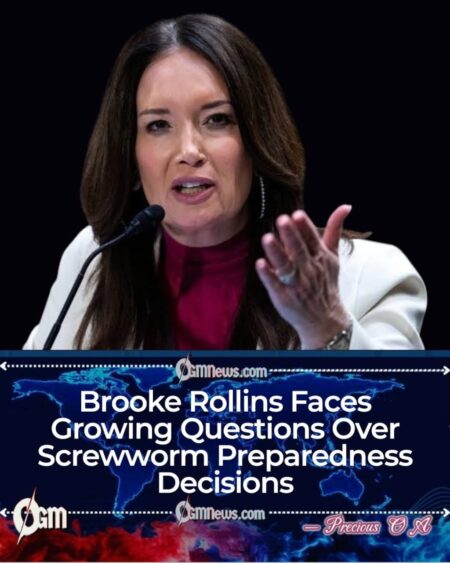
Brooke Rollins has emerged at the center of a growing controversy after reports raised concerns about the handling of federal screwworm prevention efforts during her early weeks as Agriculture Secretary. Decisions involving monitoring programs, staffing levels, and sterile-fly production capacity have fueled debate among agricultural stakeholders, with critics arguing that preparedness measures may have been weakened at a time when vigilance was most needed. As the discussion intensifies, questions are being raised about whether administrative priorities aligned with the long-term risks posed by one of livestock agriculture’s most feared pests.
Brooke Rollins Under Pressure as Critics Scrutinize Early Agriculture Moves
Brooke Rollins came under scrutiny following allegations that screwworm monitoring and prevention programs were discontinued or reduced as part of broader departmental changes. Critics argue that surveillance systems serve as an essential early-warning network against biological threats and that any reduction in those capabilities could create vulnerabilities that remain unnoticed until a larger problem emerges. The concerns gained traction as agricultural groups and observers began examining the potential implications of those decisions.
Additional attention has focused on workforce reductions affecting offices connected to screwworm response activities. Reports indicating that a significant portion of personnel were removed from positions linked to preparedness efforts have prompted questions about institutional expertise and emergency readiness. Supporters of the department maintain that operational restructuring does not necessarily reduce effectiveness and insist that the agency remains capable of responding to emerging threats. Nevertheless, the staffing decisions have become a focal point in the broader debate.
Brooke Rollins and the Screwworm Debate: Prevention, Politics, and Accountability
The controversy extends beyond staffing and program management because the screwworm itself remains a serious concern for livestock industries. The parasite’s larvae feed on living tissue, creating risks for cattle, wildlife, pets, and, in rare circumstances, humans. For decades, agricultural authorities relied heavily on surveillance and sterile-fly programs to suppress outbreaks, making those systems a central part of national biosecurity efforts. The recent debate has therefore reignited discussion about how much investment should be directed toward prevention before a threat becomes widespread.
Brooke Rollins has also faced criticism regarding reported delays in approving additional sterile-fly production capacity. Experts have long regarded sterile-fly releases as one of the most successful methods for controlling screwworm populations, and some industry observers argue that expanding production capabilities should be treated as a priority whenever concerns about future outbreaks arise. Others caution against drawing direct conclusions from administrative timelines alone, noting that infrastructure projects often involve regulatory and logistical considerations that extend beyond a single officeholder’s authority.
As policymakers continue evaluating preparedness strategies, Brooke Rollins remains a central figure in a debate that has grown far larger than any single personnel or administrative decision. Whether the concerns ultimately reveal genuine weaknesses or simply reflect political disagreement over risk management, the controversy has highlighted the delicate balance between efficiency, prevention, and public confidence. OGM News will continue monitoring developments as officials, agricultural experts, and industry leaders assess what lessons can be drawn from the growing discussion surrounding national screwworm preparedness.



Installed the 68winapp on my phone and gotta say, it's pretty smooth. Quick access to...