





















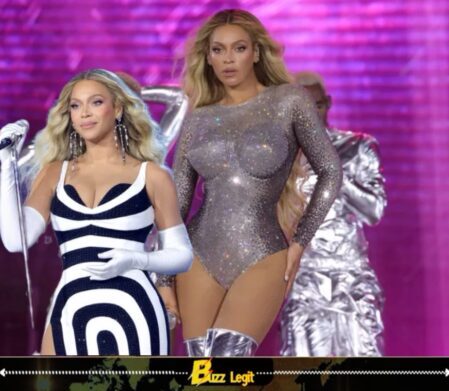
Beyoncé’s Renaissance era has produced another chapter in the music industry’s never-ending battle over samples, copyrights and who actually owns what — but this time, the biggest plot twist happened outside the recording studio. A lawsuit accusing Beyoncé’s entertainment company, Parkwood Entertainment, of using an allegedly unauthorized sample in “Alien Superstar” has been dismissed after a federal judge found a striking procedural problem: the company that filed the case did not legally exist when the lawsuit was brought.
For Buzz Legit FC, the development is the kind of courtroom drama that makes even a perfectly innocent DJ pause the music and ask for legal clearance before pressing play.
Beyoncé’s ‘Unauthorized Sample’ Lawsuit Collapses Before Court Can Decide Who Owns It
The dispute centred on the spoken-word introduction to “Alien Superstar,” one of the tracks on Beyoncé’s 2022 album Renaissance. The opening passage comes from “Moonraker,” a 1998 house-music recording associated with John Holiday, also known as Foremost Poets. Parkwood maintained that it had obtained a licence from Holiday to use the recording and composition in Beyoncé’s song. Court documents show that the licence was executed in September 2022.
The trouble arrived in July 2025, when Hirose Enterprises LLC sued Parkwood, Sony Music Entertainment, Sony Music Publishing and Warner Chappell, alleging that it owned the relevant rights to “Moonraker” and that the sample had therefore been used without proper authorization. The complaint claimed that Soundmen on Wax had acquired rights to the work and that those rights were later assigned to Hirose. Parkwood disputed the ownership allegations and argued that there was no adequate documentation showing the alleged transfer.
Beyoncé Escapes ‘Alien Superstar’ Copyright Battle on a Legal Technicality
Then came the legal equivalent of an unexpected remix. On June 26, 2026, U.S. District Judge Mark C. Scarsi dismissed the lawsuit after finding that Hirose Enterprises LLC had not yet legally existed when the lawsuit was filed. In other words, the court did not need to decide whether the disputed sample was ultimately authorized or whether Hirose actually owned the copyright claimed in the case. The case fell at the procedural starting line.
The ruling even borrowed language from the disputed “Moonraker” sample, producing a moment that practically wrote its own satirical headline: the judge explained that the court had to conduct a jurisdictional “troubleshoot” before reaching the merits. The decision therefore represents a dismissal based on standing rather than a judicial declaration that the underlying copyright allegations were false. Hirose Enterprises reportedly retains the right to appeal.
For the music industry, the episode is another reminder that sampling is not simply a matter of finding a catchy piece of an old record and dropping it into a new hit. Renaissance has previously generated sampling-related controversy, including the dispute surrounding the interpolation of Kelis’ “Milkshake” on “Energy,” which Beyoncé’s team subsequently removed from the track. Meanwhile, an earlier lawsuit by New Orleans group Da Showstoppaz over “Break My Soul” was voluntarily dismissed in 2024.
The latest Renaissance courtroom saga therefore ends, at least for now, with Parkwood winning the procedural battle while the deeper ownership question remains unresolved by the court. Beyoncé herself was not named as a defendant in the Hirose lawsuit. For Buzz Legit FC, the message is simple: when music lawyers say “clear the sample,” they apparently mean clear absolutely everything — including the existence of the person doing the suing. Readers should watch this space for any appeal or further development in the dispute.



mjpKyJqtopJmUkjsHEeNp