


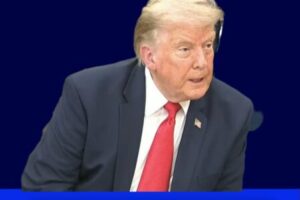
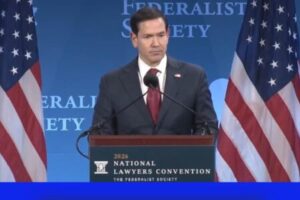






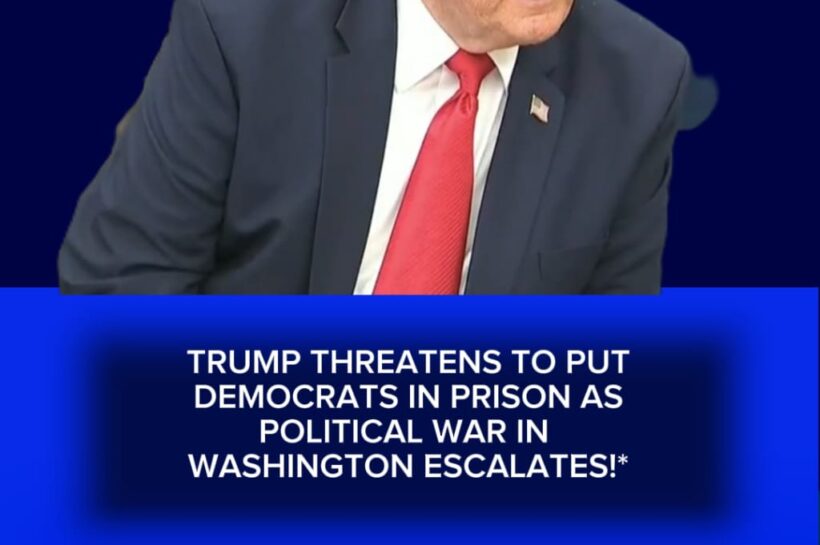










President Donald Trump appears to be preparing for an extraordinary political confrontation with Democrats following their sweeping victories in the November 2026 midterm elections. With Democrats set to take control of Congress in January, the president has responded to their promised investigations with threats of criminal investigations and possible imprisonment, raising fresh concerns about the future of democratic oversight and the separation of powers in Washington.
In a dramatic escalation, Trump recently directed the Department of Justice (DOJ) to investigate Democratic lawmakers whom he accused of threatening government officials. In a social media statement, the president described the lawmakers as “EXTORTIONISTS” and insisted that imprisonment should be their punishment, although he did not provide evidence establishing that they had committed a crime. Apparently, Washington’s political battle is entering a new chapter where politicians are no longer satisfied with defeating their opponents at the ballot box; some now appear determined to settle political disagreements through the language of criminal prosecution.
Trump’s Administration Sends a Warning: Investigate Us, and We May Investigate You
The confrontation intensified after White House Counsel Will Scharf sent a three-page letter to Representative Robert Garcia, the Democrat expected to become chairman of the powerful House Oversight Committee. Scharf warned that congressional investigations must have legitimate legislative purposes and should not be used to intimidate government officials or punish political opponents. He further suggested that certain threats and potentially unlawful subpoenas could warrant criminal investigations. The letter followed Garcia’s post-election warning to Trump administration officials to “lawyer up.” Interestingly, the White House appears determined to establish legal boundaries for congressional investigations before the incoming Democratic leadership even gets comfortable in its new offices.
Attorney General Todd Blanche has also refused to completely rule out possible prosecutions of Democratic lawmakers, suggesting that the decision would depend on what they say or do. Meanwhile, Trump allies have reportedly adopted an increasingly confrontational position, warning that Democratic lawmakers could find themselves facing indictments. It is an extraordinary political atmosphere: Democrats are preparing investigative committees, while Trump’s camp is making it clear that those conducting the investigations could potentially become subjects of investigations themselves. Washington’s traditional political arguments are beginning to resemble a courtroom drama in which everybody wants to be the prosecutor, but nobody wants to occupy the defendant’s chair.
Congressional Oversight or Presidential Retaliation? America Faces a Constitutional Test
At the heart of this confrontation is the constitutional authority of Congress to investigate the executive branch. Congressional oversight is an established responsibility of the legislative branch, allowing lawmakers to examine government spending, administrative decisions and possible misconduct. However, such investigations must also serve legitimate legislative purposes and respect constitutional limitations. The White House is now arguing that certain Democratic threats could cross legal boundaries, while Democrats insist that investigating the administration is part of their responsibility to the American people. The bigger question is whether the president’s threats of prosecution could discourage lawmakers from exercising their constitutional responsibilities.
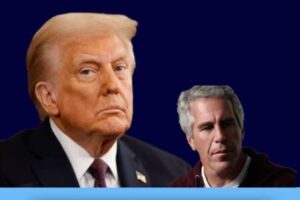
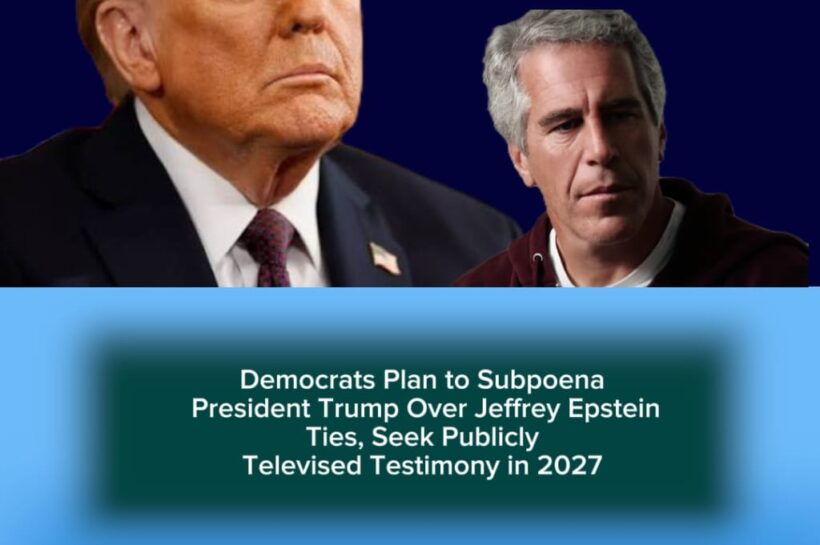
Democrats have already indicated that their incoming oversight agenda could include investigations into alleged financial dealings involving Trump’s family, immigration and deportation policies, and the government’s handling of information surrounding Jeffrey Epstein and his powerful connections. Representative Garcia has maintained that Democrats will not be intimidated and intends to pursue accountability. Consequently, the coming months could produce an extraordinary confrontation between the White House and a newly empowered Congress. If every investigative subpoena is treated as political persecution and every investigation is answered with threats of criminal prosecution, America’s constitutional system could face a serious test.
President Trump is making it increasingly clear that he will not welcome congressional investigations without a fight, while Democrats appear equally determined to exercise their oversight powers when the new Congress takes office. Whether the administration’s warnings will lead to actual prosecutions or remain part of a broader political intimidation strategy remains uncertain. One thing, however, is becoming increasingly obvious: Washington is preparing for a political showdown in which the battle over accountability could become as consequential as the midterm elections themselves. Will Democrats investigate the Trump administration, or will the administration succeed in making investigators fear becoming the investigated? Keep watching OGM News for further developments.

https://addlinks.pro/QOrqA