














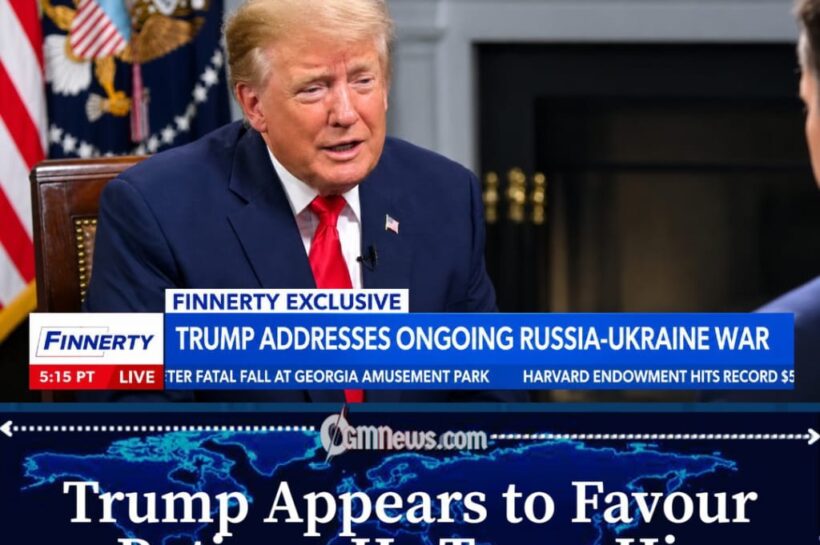






President Donald J. Trump is reportedly growing increasingly frustrated with senior aides and political operatives as Republicans struggle to strengthen their prospects ahead of the November 3 midterm elections. According to people familiar with internal discussions, Trump has questioned campaign spending, redistricting strategies and candidate selections, while tensions have reportedly intensified between key figures overseeing the Republican political operation. In a contest that could determine the final two years of his presidency, the president appears eager to secure victories but increasingly dissatisfied with the machinery built to deliver them. The emerging picture is an administration confronting an uncomfortable political question: if the strategy is failing, who should take responsibility?
Political Blame Game Intensifies as Trump’s Inner Circle Faces Scrutiny
The reported friction centres on James Blair, the longtime Trump aide who runs the MAGA Inc. super PAC, and White House chief of staff Susie Wiles. According to the supplied account, Trump has questioned Blair’s handling of campaign funds, while some officials have raised concerns about Wiles’ oversight of the broader political operation. Advisers are also reportedly blaming one another, with Wiles pointing towards Blair and Blair directing criticism at the White House legislative affairs team. One person familiar with the discussions described the situation as a “circular firing squad”—a fitting description of a political operation in which the search for someone to blame may be moving faster than the search for votes.
Trump has been campaigning energetically and urging supporters to treat the midterm elections as though his own name were on the ballot, despite not being a candidate in the congressional contests. Yet his personal involvement in shaping Republican strategy makes it difficult to separate his political fortunes from those of his party. He helped drive decisions on redistricting and candidate selections, while his approval ratings and voter concerns about living costs and the Iran war present additional challenges. White House spokesman Davis Ingle rejected the criticism attributed to unnamed sources, dismissing it as baseless speculation. Trump, meanwhile, publicly defended Wiles on Friday, describing her as “smart” and “tough” and insisting she would remain in her position for a long time.
$200 Million Campaign Spending and Redistricting Under Pressure
The financial stakes are considerable. Public records cited in the supplied report put MAGA Inc.’s campaign spending at approximately $200 million so far, yet Trump is reportedly questioning why the investment has not translated into stronger polling numbers in pivotal races. Whether he will authorise additional spending before Election Day remains unclear. The controversy highlights a familiar political dilemma: campaign money can purchase advertising, organise outreach and amplify a message, but it cannot automatically persuade voters who are worried about household expenses or dissatisfied with the government’s performance. If the anticipated gains fail to materialise, the dispute could intensify over who controlled the money and whether the campaign’s priorities were properly chosen.
Redistricting has also become a source of concern, particularly in Texas, where Republicans redrew congressional boundaries in an effort to improve their electoral position. The strategy depends partly on the party maintaining strong support among Hispanic voters, but economic concerns and dissatisfaction with Trump’s policies could complicate that calculation. Instead of delivering a guaranteed advantage, the revised boundaries could leave some Republican incumbents facing more competitive races. Meanwhile, Blair’s reported overseas consulting work in Republika Srpska, alongside Chris LaCivita, has raised questions about competing professional responsibilities. Trump publicly distanced himself from the pair on October 7, describing them as outside consultants and warning that he would terminate them immediately if he found a conflict of interest. Blair and LaCivita have defended their work and rejected the criticism, while the future of Blair’s role in the political operation remains uncertain.
The wider electoral picture could have serious consequences for the White House. Opinion polls cited in the supplied material suggest Democrats are favoured to win the House of Representatives, while the Senate contest remains uncertain. Losing the House would complicate Trump’s legislative agenda and give Democrats greater power to investigate his administration through congressional oversight and subpoenas. Trump has previously tried to distance himself from Republican setbacks, including ahead of the 2022 midterms, when he argued that he should receive credit for victories without being blamed for losses. But the current situation presents a more difficult test because he has personally promoted several of the strategies now facing scrutiny. Whether the reported tensions lead to personnel changes, a fresh spending push or a strategic retreat could shape the final weeks of the campaign.
For now, Trump continues to insist that his political team is focused on winning, while his aides face mounting questions about money, strategy and accountability. The central uncertainty is whether Republicans can turn their campaign machinery into enough votes to preserve congressional control—or whether internal disputes will become another obstacle in an already difficult election season. Follow OGM News for future updates as the November 3 midterms approach and the battle over responsibility inside Trump’s political operation continues.

I love how this casino keeps things exciting with a huge catalog of games and...