
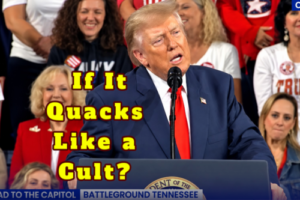



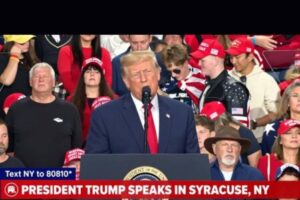

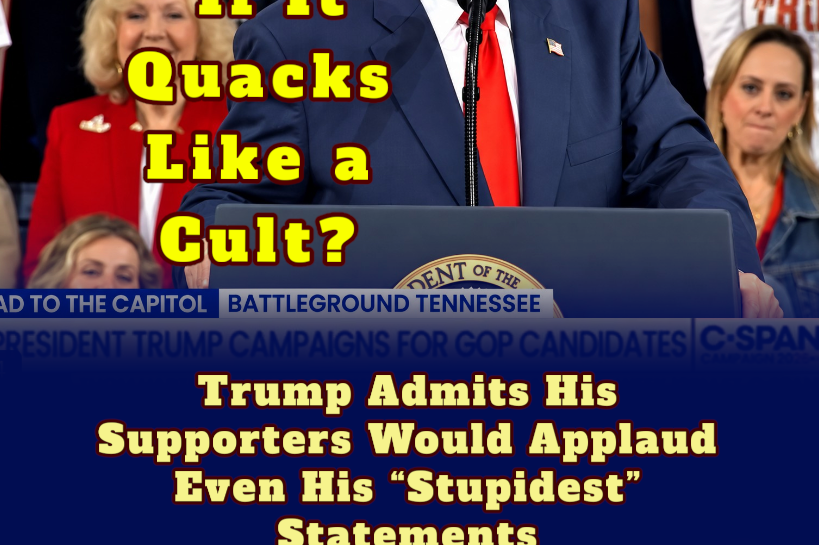


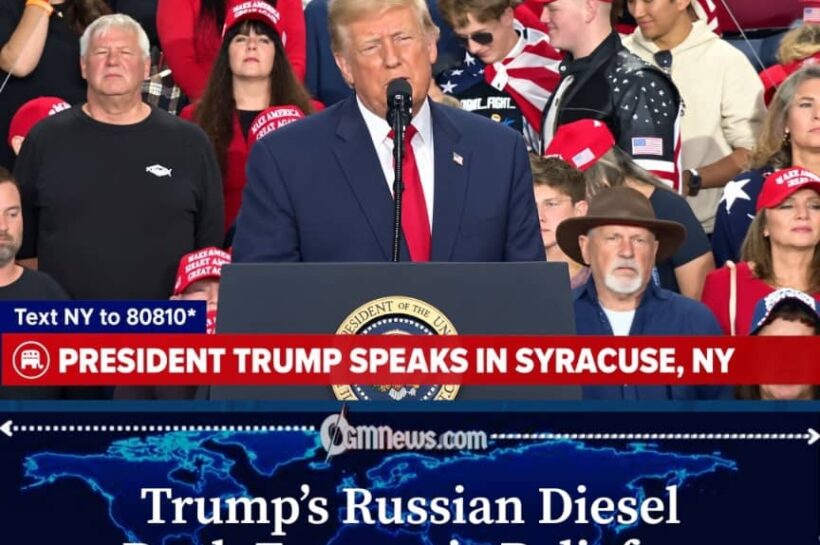
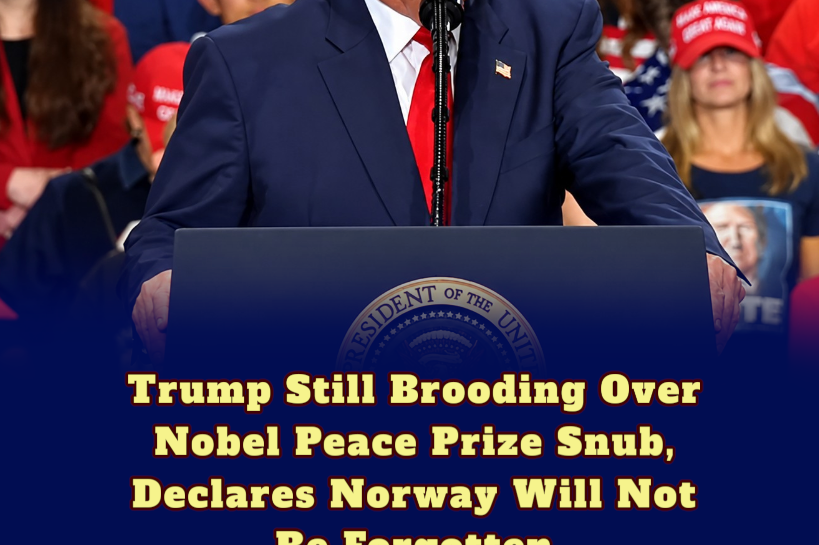





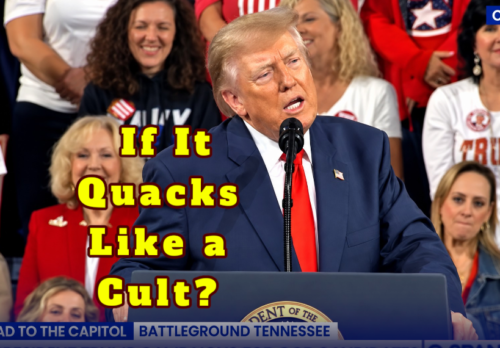
President Donald Trump has offered critics a fresh opportunity to question the relationship between political loyalty and independent thinking after making a striking observation about the enthusiasm of his supporters. “It’s amazing. When you stand up here, it’s just like the love. I could say the stupidest things and you’d clap,” Trump remarked, describing the enthusiastic response he receives from audiences. The comment practically writes its own political satire: what happens when a politician openly suggests that applause may be guaranteed regardless of what comes out of his mouth?
For a president whose political brand thrives on rallies, personal loyalty and an intensely devoted supporter base, the remark raises an uncomfortable question about whether political enthusiasm can sometimes overpower critical thinking. Donald Trump may have intended it as humorous banter, but the observation invites a broader discussion about the difference between supporting a political leader and treating everything that leader says as unquestionable wisdom.
Donald Trump’s Applause Machine: When Loyalty Becomes Louder Than Logic
Donald Trump’s remark offers a revealing glimpse into the political relationship between a leader and an audience that appears eager to reward him with applause. Political rallies have long relied on crowd participation, emotional connection and memorable one-liners. However, there is a significant difference between applauding a politician’s policies and applauding simply because the politician is speaking. The moment becomes especially striking when the politician himself acknowledges that distinction. A similar dynamic has drawn commentary in previous years, including criticism of business leaders who applauded controversial remarks during Trump’s 2024 economic speech.
Of course, enthusiastic applause alone does not prove that a political movement is a cult, nor does it mean every supporter has abandoned independent judgment. People support candidates for different reasons, including economic priorities, immigration policies, judicial appointments and dissatisfaction with political opponents. Nevertheless, when personal loyalty becomes more important than examining evidence, even obvious contradictions can struggle to break through the noise. Democracy works best when citizens retain the freedom to applaud, question, disagree and change their minds without feeling that loyalty requires unquestioning obedience.
When the Leader Knows the Audience Will Clap
The irony is difficult to miss: Donald Trump’s observation could be interpreted as a joke about his own ability to command a crowd, but it also invites an uncomfortable question about the audience itself. If a politician believes that supporters will applaud even his worst statements, what incentive remains to offer better explanations, acknowledge mistakes or defend policies with evidence? In a healthy democracy, public approval should encourage leaders to serve the people—not convince them that every utterance deserves a standing ovation.
For critics, the scene is practically a political comedy sketch waiting to happen. Imagine a teacher telling a classroom, “I could give you the wrong answer to every question, and you would still give me an A,” only for the entire class to cheer. The teacher might feel popular, but the education system would have a serious problem. Similarly, political enthusiasm becomes dangerous when the performance matters more than the substance. The real test of political loyalty is not whether supporters can cheer for their candidate, but whether they can challenge him when he gets something wrong.
President Donald Trump’s remark has reignited a familiar debate about political devotion, independent thinking and the culture of modern political rallies. Whether intended as humor or an honest observation, the statement raises questions that deserve more than applause and laughter. Supporters have every right to defend their preferred leader, but no politician should be beyond scrutiny. OGM News will continue following the story and examining the wider implications for American political culture. After all, when a leader says the audience will applaud even his stupidest statements, perhaps the most important question is not what the leader said—but why the audience keeps clapping.
[…] […]