



















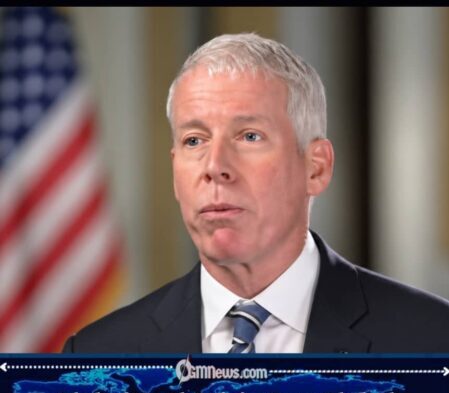
U.S. Energy Secretary Chris Wright has offered Americans a tour through the complicated world of fuel prices, touching on the Middle East, Russia and Ukraine before arriving at a rather familiar political destination: former President Joe Biden and California Governor Gavin Newsom. In recent remarks, Wright explained that damaged Russian refineries and disruptions to global refining capacity are contributing to elevated gasoline and diesel prices, while arguing that previous Democratic energy policies also helped create what he describes as “expensive energy.”
From the Middle East to Moscow, the Fuel Story Takes a Global Detour
Wright’s explanation comes as international conflicts continue to disturb energy markets. The Middle East conflict has affected oil flows, while Ukrainian attacks on Russian refining infrastructure have reduced supplies of refined petroleum products. Recent market reports have also recorded severe pressure on global diesel supplies, with Russia’s reduced exports adding another complication to an already strained market.
But just when the explanation appeared ready to remain international, the political map apparently became much smaller. Wright has argued that years of policies aimed at reducing reliance on hydrocarbons contributed to reduced refining capacity, which he says has made today’s energy situation more expensive. He has specifically connected California’s energy policies under Newsom to refinery closures in the state.
Biden and Newsom Become the Unexpected Final Stop
The remarkable part of the explanation is that a discussion beginning with the Middle East, Russia and Ukraine eventually lands firmly on Biden and Newsom. Wright has repeatedly made the case that refinery capacity, rather than crude oil availability alone, is central to the current fuel-price problem, while maintaining that policies from the Biden era contributed to the reduction of U.S. refining infrastructure.
Newsom, meanwhile, has challenged Wright and the current president’s administration over rising fuel costs, arguing that the administration should explain what preparation was made for the consequences of military action involving Iran. That disagreement has turned the fuel-price debate into a larger political argument over responsibility, energy policy and the consequences of international conflict.
For motorists watching prices at the pump, the explanation therefore comes with several moving parts: international conflict, damaged refineries, disrupted supplies and domestic energy policy. And, according to Wright’s account, when all those roads are followed far enough, they eventually lead back to Biden and Newsom—leaving OGM News readers to watch closely as the fuel-price blame game continues to produce more twists, turns and political mileage.

[…] […]