
















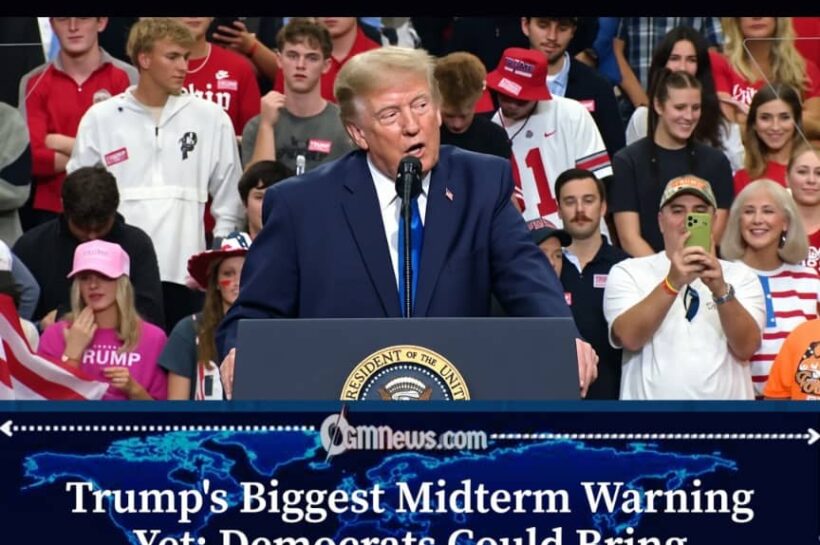













Democratic unity faced another awkward moment on Capitol Hill on Tuesday after Reps. Jared Golden of Maine and Marie Gluesenkamp Perez of Washington broke with their party to help advance a procedural vote connected to a Russia sanctions bill. Their decision helped Republicans overcome a potentially decisive obstacle, raising fresh questions about party discipline, congressional strategy and whether bipartisan foreign policy can survive Washington’s increasingly complicated political arithmetic.
Democratic Unity Cracks as Two Lawmakers Give Republicans a Crucial Boost
Golden and Gluesenkamp Perez voted with Republicans on a House rule that allowed lawmakers to proceed with legislation involving sanctions against Russia and additional measures targeting Iran. The procedural vote passed 214–211, with the two Democrats providing the support needed to move the package forward. The development marked the second time in September that the lawmakers had crossed party lines on a rule vote, a practice that has drawn particular attention from Democratic leaders. 
The two representatives’ decision was not necessarily an endorsement of every provision in the wider package. Golden has expressed support for advancing Russia sanctions, while Gluesenkamp Perez has also previously broken with Democratic leadership. Their votes nevertheless created an uncomfortable scene for a party seeking to maintain a unified congressional position. In the Capitol’s familiar political theatre, two votes proved sufficient to remind everyone that party loyalty sometimes comes with a carefully negotiated exception clause. 
Trump-Backed Sanctions Bill Moves Forward With Help From Democratic Rebels
The legislation at the centre of the dispute is the Lindsey O. Graham Sanctioning Russia and Iran Act of 2026. The Senate approved the bill with an 86–11 vote in August after months of bipartisan negotiations. Among its provisions are sanctions targeting Russian officials and financial networks, measures addressing sanctions evasion, and authority for the current president, Donald J. Trump, to impose tariffs of up to 100% on countries that continue purchasing substantial amounts of Russian energy. 
The disagreement among Democrats is largely about how the bill combines sanctions with expanded presidential tariff authority. Democratic lawmakers who oppose the legislation argue that the tariff provisions could raise costs for Americans, harm international partners and give the White House excessive discretion. Supporters of the bill argue that stronger economic pressure could restrict revenue supporting Russia’s war effort and reinforce U.S. backing for Ukraine. The controversy therefore extends beyond party politics into a debate about economic consequences, executive power and the most effective way to pressure Moscow.
The House vote has shown that the Russia sanctions debate is producing unusual alliances, even as disagreements over tariffs and presidential authority remain unresolved. Whether the bill ultimately becomes law will depend on the next stages of congressional consideration and the administration’s position. OGM News will continue monitoring the legislation, the reaction from Democratic leadership and the consequences of this latest break with party ranks.



https://addlinks.pro/sfnWB