











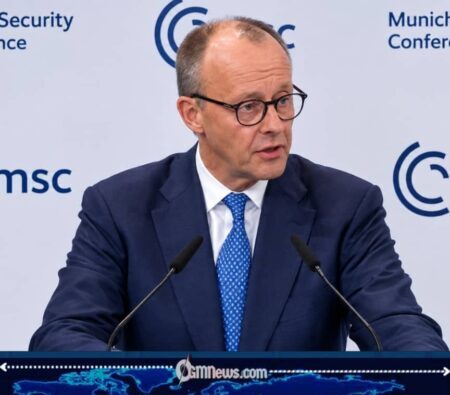
German Chancellor Friedrich Merz has delivered a sharply worded message across the Atlantic, effectively telling supporters of President Donald J. Trump’s MAGA movement that Germany has no intention of importing America’s culture wars. Speaking at the Munich Security Conference, Merz acknowledged that Vice President JD Vance had correctly identified a growing divide between Europe and the United States, but made it clear that Berlin was not signing up for the ideological package that came with it.
When Free Speech Meets the German Rulebook
Merz’s remarks placed freedom of speech at the centre of the latest transatlantic disagreement. His position was that Germany protects free expression but draws a legal boundary when speech attacks human dignity or the country’s Basic Law. In other words, the European argument appears to be that free speech is important—but apparently it still has to show identification at the constitutional border before entering the country.
The dispute has deeper roots. At the 2025 Munich Security Conference, Vance sharply criticised European governments over what he described as restrictions on political dissent and free speech, arguing that Europe’s greatest danger was coming from within rather than from external powers. The intervention stunned several European leaders and helped expose a widening ideological disagreement between Washington and some of its traditional European partners.
Tariffs Get a Cold Welcome in Berlin
Merz also rejected tariffs and protectionism, declaring Germany’s preference for free trade. The comment lands at a time when trade policy has become one of the most contentious areas of the Trump administration’s relationship with Europe, adding an economic dimension to what is increasingly becoming a very public argument over values, sovereignty and international cooperation.
For MAGA enthusiasts expecting Europe to applaud every American policy with diplomatic enthusiasm, Merz’s position may sound less like partnership and more like a European terms-and-conditions page. Berlin, however, insists that the transatlantic relationship remains important. Merz has called for a renewed partnership while simultaneously arguing that Europe must become more capable of standing on its own feet rather than depending indefinitely on Washington.
The irony is difficult to miss: Washington and Berlin still describe themselves as allies, yet they increasingly appear to be arguing over what exactly an ally is allowed to believe. One side is warning Europe about freedom and political openness; the other is warning that freedom comes with constitutional limits and that economic cooperation should not be replaced by tariff battles. Somewhere between the speeches, the diplomats may soon need a referee—and possibly a very large translation machine.
For now, Merz’s intervention represents another sign that the relationship between the United States and Europe is entering a more complicated phase. The German chancellor has not called for a divorce from Washington; instead, he is demanding a different kind of partnership—one based on European sovereignty, free trade, democratic principles and mutual respect. OGM News will continue to watch the developing transatlantic drama, because judging by the latest speeches, the next chapter may contain even more political fireworks.

[…] […]