





























House Democrats are reaching deep into traditionally Republican territory as the 2026 midterm elections approach, betting that voter dissatisfaction over inflation, the war in Iran and the Trump administration could turn seemingly comfortable Republican districts into surprise contests. These are not conventional toss-ups — far from it — but Democrats are spending money, recruiting candidates and testing whether a national political wave can carry them into places where the electoral map normally tells them to stay home.
Democrats Are Reaching for House Seats Republicans Thought Were Untouchable
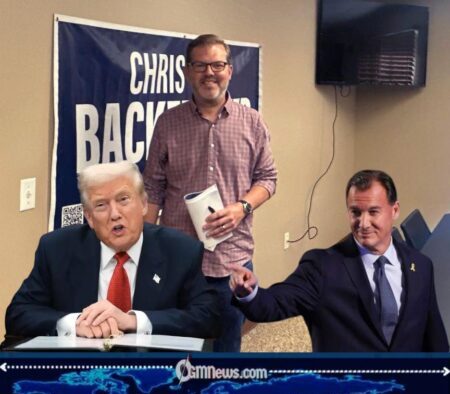
The Democratic Congressional Campaign Committee has expanded its battlefield beyond the districts that analysts already consider competitive, targeting what can fairly be described as “reach” races. Among them are Nebraska’s 1st District, where Democrat Chris Backemeyer is challenging Republican Rep. Mike Flood; Kentucky’s 6th District, where Democrat Zach Dembo is contesting an open seat after Republican Rep. Andy Barr chose to run for the Senate; South Carolina’s 1st District, where Democrat Nancy Lacore is challenging Republican nominee Jenny Costa Honeycutt; and Texas’ redrawn 35th District, where Democrat Johnny Garcia faces Republican Carlos De La Cruz.
The strategy is essentially political long-distance throwing: Democrats do not necessarily expect to win all — or even most — of these districts. Instead, strong performances could reveal a broader national shift and force Republicans to spend valuable campaign resources defending territory that previously looked safe. Republicans, meanwhile, are dismissing the Democratic expansion as wishful thinking, arguing that putting a district on a target list does not magically transform it into a battleground. In Washington, apparently, even the electoral map now has to defend itself against aggressive marketing.
Democrats Gamble on Voter Anger to Break Into Republican Strongholds
Several of the races illustrate why Democrats are willing to take the gamble. Nebraska’s 1st District has not voted Democratic for president since Lyndon B. Johnson’s 1964 victory, making Backemeyer’s challenge an especially ambitious undertaking. Kentucky’s 6th is similarly Republican-leaning, although Democrats see an opening after Democratic Gov. Andy Beshear carried the district during his 2023 reelection campaign. In South Carolina, the departure of Rep. Nancy Mace creates another opportunity, while Texas’ newly redrawn 35th has produced an electorate that is majority Hispanic and backed President Donald Trump by double digits in 2024.
The wider political environment explains why these long-shot campaigns are receiving attention. Democrats need a net gain of only three seats to reach the 218-seat threshold for House control, and recent race ratings have shown movement in their direction in several competitive districts. At the same time, redistricting has complicated the battlefield by making some Democratic-held seats more vulnerable while giving Republicans additional protection in other districts. President Donald Trump has also promised to campaign aggressively for Republican candidates, indicating that both parties understand how narrow the road to House control could become.
The reach strategy, therefore, may ultimately prove less about predicting individual upsets than measuring the political atmosphere surrounding them. If Democrats begin performing unexpectedly well in districts that Republicans normally consider secure, it could be an early warning that election night is preparing a few surprises. But until voters actually cast their ballots, these remain ambitious targets rather than guaranteed breakthroughs — meaning OGM News will be watching closely to see whether the Democratic reach becomes an actual grasp for power or simply a very expensive stretch.



[…] […]