
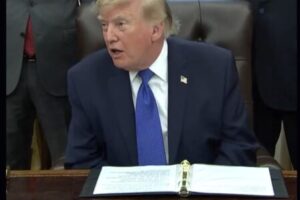



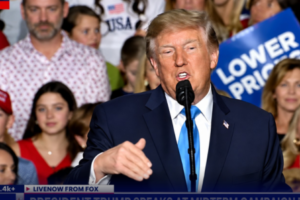


















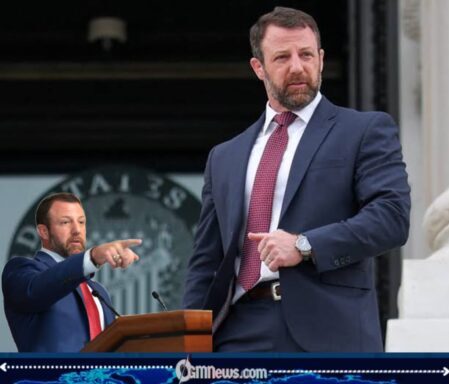
As America heads toward the November 2026 midterm elections, Homeland Security Secretary Markwayne Mullin has delivered a statement guaranteed to make the phrase “peaceful election day” work overtime. Mullin says Immigration and Customs Enforcement (ICE) agents could be sent to polling places if there is a specific threat or if officers need to serve a warrant, while insisting that ICE would not simply be there to patrol voters. The clarification has done little to calm concerns, however, as the prospect of immigration officers appearing anywhere near ballot boxes has already raised questions about voter intimidation, federal power and just how many federal agencies America plans to invite to the voting booth.
ICE Says It Is Not Coming to Watch Voters — Unless Something Happens
Mullin’s position is that ICE would not be deployed to polling places as a routine election-security force. Instead, he says officers could appear if there were a public-safety threat or if agents were serving a warrant on a person they were already pursuing. The Department of Homeland Security has similarly said ICE is not planning operations targeting polling locations, while maintaining that targeted enforcement could occur if an active threat endangered a voting site.
That distinction may sound reassuring until one imagines the Election Day conversation: “Why are immigration officers outside the polling place?” — “Don’t worry, they are not here for the election.” The administration’s explanation has nevertheless revived concerns among voting-rights advocates, who argue that the mere presence of armed federal immigration officers could intimidate voters even if no voter is personally targeted. Federal law also places significant restrictions on armed federal personnel at places where elections are being held, making any potential deployment a legally sensitive proposition.
Military Says ‘Not Us’, Leaving Immigration and Customs Enforcement Under the Spotlight
The controversy comes as America’s military leadership has separately tried to remove itself from the electoral equation. Gen. Dan Caine, chairman of the Joint Chiefs of Staff, confirmed that the military has no plans to deploy federal troops or federalized National Guard personnel to polling places during the 2026 elections. He also said there were no plans for military personnel to seize ballots, voting machines or other election-related materials.
That leaves a rather unusual political picture: the military is saying it is staying away, DHS says Immigration and Customs Enforcement is not planning polling-site operations, yet the Homeland Security secretary is simultaneously acknowledging circumstances in which ICE officers could appear at one. Meanwhile, the Trump administration continues to pursue what it describes as election-integrity measures, including investigations into alleged non-citizen voting, despite repeated criticism over the evidence behind some of the claims. Recent reporting has noted that non-citizen voting remains extremely rare and that major claims about its scale have been disputed by election officials and experts.
For now, the official message is that voters should not expect Immigration and Customs Enforcement agents to turn polling places into immigration checkpoints. But the political argument surrounding federal agents, voter intimidation and election security is clearly not going away, particularly with the November midterms approaching. The OGM News newsroom will continue watching whether this remains a theoretical possibility, becomes an actual operational policy or produces another chapter in America’s increasingly dramatic election-security saga. Until then, voters may want to remember the traditional purpose of a polling place: to cast a ballot, not to wonder which federal agency might be standing outside the door.
[…] […]