







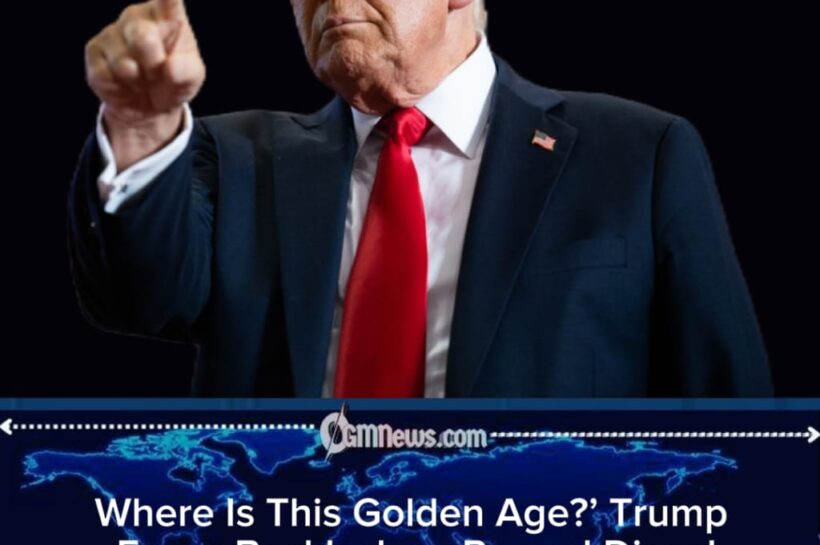





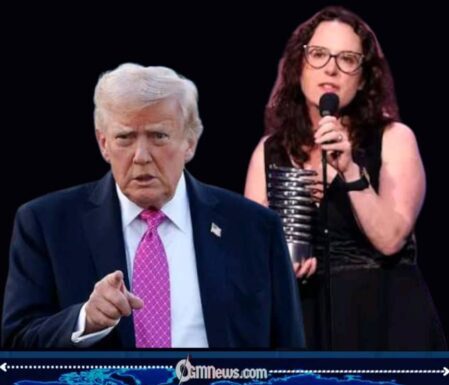
Trump-Media Feud has erupted again after President Donald Trump launched a highly personal attack against a New York Times reporter, accusing her of being a “fake reporter,” dismissing her journalism as “fake reporting” and labeling her a “stalker.” Trump also demanded that she surrender any money he claims she earned from reporting about him, turning another presidential complaint about the press into a broader confrontation over journalism, criticism and presidential power.
Donald Trump’s latest remarks are notable not simply because of their harsh language, but because they move beyond the familiar presidential complaint that a story is inaccurate. The president is suggesting that a journalist should be financially punished because of reporting he considers false. Whether such a demand could have any legal effect is an entirely different matter from Trump’s political rhetoric.
Donald Trump TAKES AIM AT A REPORTER HE SAYS KNOWS LITTLE ABOUT HIM
Donald Trump’s statement singled out the New York Times journalist and questioned her credibility, describing her as someone who knows less about him than other reporters covering his administration. He also used highly personal language to attack her appearance and character before accusing her of stalking him.
The president’s comments fit a pattern that has become familiar during his political career. Donald Trump has frequently used social media and public remarks to attack journalists, news organizations and individual reporters whose work he believes is hostile toward him. Those attacks can generate enormous attention because criticism from the president himself can instantly turn a relatively obscure dispute into a national political story.
The latest remarks, however, go beyond simply disputing the contents of an article. Donald Trump is demanding that the reporter surrender money allegedly earned through her coverage of him. That is a political demand rather than, by itself, evidence that the journalist has committed wrongdoing or that she is legally required to surrender income.
THE BIGGER FIGHT IS OVER PRESIDENTIAL POWER AND THE PRESS
The confrontation comes against a broader backdrop of increasingly strained relations between the Trump administration and major news organizations. Donald Trump has repeatedly accused critical media outlets of spreading false information, while journalists and press-freedom organizations have argued that aggressive presidential attacks can undermine public trust in independent reporting.
The First Amendment provides strong protections for freedom of the press, including reporting that is critical of public officials. At the same time, journalists are not immune from legitimate legal claims if they knowingly publish false statements that meet the demanding standards required for defamation, particularly when the subject is a public figure. Simply calling a report “fake,” however, does not establish that it is legally defamatory.
That distinction is important because presidential criticism can be political theater while legal liability requires evidence and a specific legal basis. A journalist does not ordinarily lose the right to income from published work simply because the subject of the reporting strongly dislikes it.
Trump’s latest broadside is therefore best understood as another escalation in his long-running Trump-Media Feud, rather than as proof that the reporter has committed an offense. The substance of the underlying reporting, any evidence supporting Trump’s allegations and any potential legal claims would all need to be examined separately.
For now, the president has once again turned a dispute with a journalist into a much larger political spectacle—complete with accusations, insults and an extraordinary demand for money. In Trump’s relationship with the press, apparently even a disagreement over an article can become a full-scale presidential event.
[…] […]