
















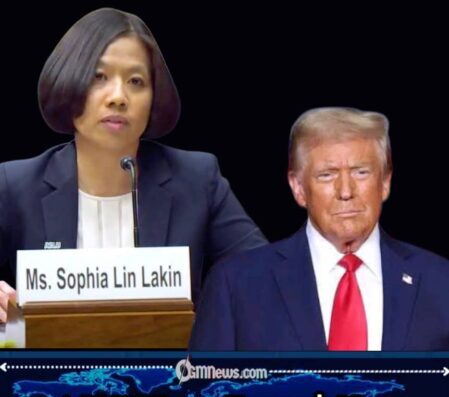
Mail Voting has become the latest battlefield in the escalating fight over how America will conduct its 2026 elections, after the Trump administration pushed forward with new federal requirements affecting absentee and mail ballots. The latest development has triggered another legal challenge, with voting-rights organizations warning that the changes are arriving dangerously close to the November midterm elections. The ACLU’s Sophia Lin Lakin has described the rollout as “chaos by design,” arguing that manufactured uncertainty over voting procedures could damage public confidence in the electoral process.
The controversy is not simply about politics. The new USPS rule requires states to provide voter lists and comply with new requirements for mail-ballot envelopes, while noncompliance could affect whether ballots are delivered. With election officials already preparing ballots and voter instructions, the timing has created a race against the calendar—and potentially another race to the courthouse.
THE NEW RULES ARRIVE AS ELECTION OFFICIALS ARE ALREADY PREPARING
The Trump administration’s policy stems from a March executive order seeking major changes to federal election administration and mail voting. Among other provisions, the order directs federal agencies to create voter eligibility information and instructs the Postal Service to deliver ballots only to voters appearing on approved lists. The ACLU argues that the Constitution gives Congress and the states—not the president—the authority to establish election rules.
The Postal Service has now finalized additional regulations that would require states to comply with federal procedures involving voter lists and standardized ballot envelopes. Critics say the changes are particularly difficult because election administrators are already deep into preparations for the midterms. Reuters reported that a coalition of 23 states, Washington, D.C., and Pennsylvania’s governor has filed a fresh lawsuit seeking to block the rule, with a hearing scheduled for September 3.
TRUMP: COURTS, NOT JUST VOTERS, WILL DECIDE WHAT HAPPENS NEXT
The legal situation is unusually complicated. On August 24, the Supreme Court lifted a lower-court injunction that had blocked part of Trump’s mail-voting order, but the justices did not issue a final ruling declaring the policy constitutional. A separate injunction and subsequent litigation have continued to complicate implementation, meaning the administration’s victory was significant but not necessarily the final word.
For election officials, that uncertainty is the real problem. Rules concerning ballot envelopes, voter lists, postal delivery and federal verification cannot simply be switched on and off like a television channel. States must prepare materials, train workers, communicate with voters and meet statutory deadlines. The Wall Street Journal has reported that officials are facing uncertainty as federal requirements continue to change close to the election.
Lakin’s “chaos by design” accusation is therefore an advocacy group’s characterization, not an established finding that the administration deliberately intends to create confusion. But the underlying logistical concern is real: the country is approaching a major election while federal and state officials remain locked in a legal dispute over the rules governing mail ballots.
The Trump administration says its efforts are intended to strengthen election integrity and prevent ineligible voting. Critics argue that federal intervention could instead create confusion and potentially prevent eligible voters from successfully casting ballots. The courts will ultimately have to determine which side of that constitutional and practical dispute prevails.
For now, one thing is certain: Mail Voting is no longer merely a question of how Americans cast their ballots. It has become a test of federal power, state election authority and whether America’s election administrators can keep the rulebook stable long enough for voters to understand it.

[…] […]