




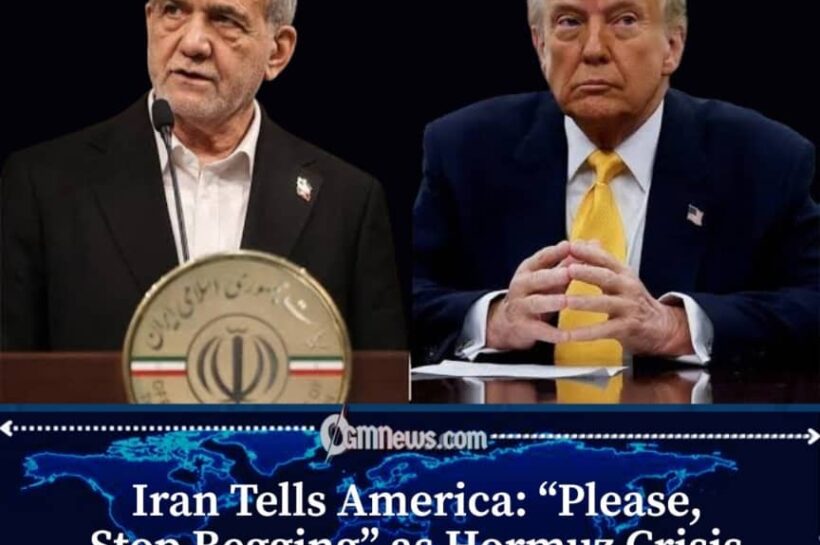





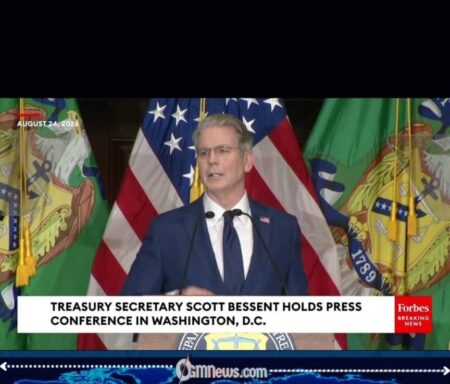
Washington has delivered its latest message to the international community, and Treasury Secretary Scott Bessent has apparently decided that global diplomacy is now an examination with only two answers. On August 24, 2026, Bessent announced the Trump administration’s new “Operation Economic Outcast”, an intensified sanctions campaign designed to squeeze Iran and pressure countries and companies doing business with Tehran. He warned that nations continuing economic dealings with Iran could face secondary sanctions, adding that it was time for world leaders to make a decision “between America and Iran.”
Bessent: The Great International Multiple-Choice Examination
According to Bessent, Washington is offering the world a remarkably straightforward political examination: America on one side, Iran on the other, with sanctions apparently waiting outside the examination hall. The Trump administration says the campaign is intended to isolate Iran financially, restrict its oil revenues and pressure countries that continue providing Tehran with economic lifelines. President Donald J. Trump has also threatened severe consequences for nations helping Iran evade the American pressure campaign.
But the international community may reasonably wonder whether geopolitics can really be reduced to a two-box questionnaire. Countries have their own security interests, trade relationships and diplomatic calculations, meaning that the world may not be quite as enthusiastic about selecting an answer simply because Washington has printed the examination paper. In the satirical version of events, several foreign leaders are reportedly searching desperately for the missing third option marked: “Can we choose peace?”
Who Started the War? History Refuses to Fit Into One Sentence
The supplied scoop argues that the war was not started by Iran and portrays the conflict as the product of American and Israeli decisions. The historical record, however, requires some care. In June 2025, Israel launched major strikes against Iranian nuclear, military and energy targets, while the Trump administration initially said the United States was not participating. The United States later entered the conflict directly, striking Iranian nuclear facilities on June 22, 2025. A ceasefire announced by President Trump followed on June 24.
That history makes the question of responsibility considerably more complicated than a single political slogan. Israel said its initial strikes were necessary for its security, while Iran responded with missiles and drones; Washington subsequently launched its own strikes against Iranian nuclear facilities. Therefore, presenting the entire conflict as though only one side supplied the first match risks turning a complicated chain of military decisions into a very convenient headline.
The latest development, meanwhile, has moved the confrontation from bombs and missiles toward banks, oil, shipping and international commerce. Bessent has described the new campaign as an economic offensive, while the Trump administration says its objective includes tightening pressure on Tehran and reopening the strategically important Strait of Hormuz.
For now, the world waits to see whether Bessent’s “America or Iran” message produces international unity, diplomatic resistance, or a third option that nobody remembered to print on the ballot. Whatever happens next, the dispute over who started the conflict, who has the right to self-defence and how far economic warfare should go is unlikely to disappear beneath another round of sanctions. OGM News will continue watching the developing confrontation and bring readers further updates as the international community decides whether this is really a choice between two nations—or a much more complicated struggle that refuses to fit inside one box.

This casino has been my consistent pick for weekend entertainment. The game selection is top...