














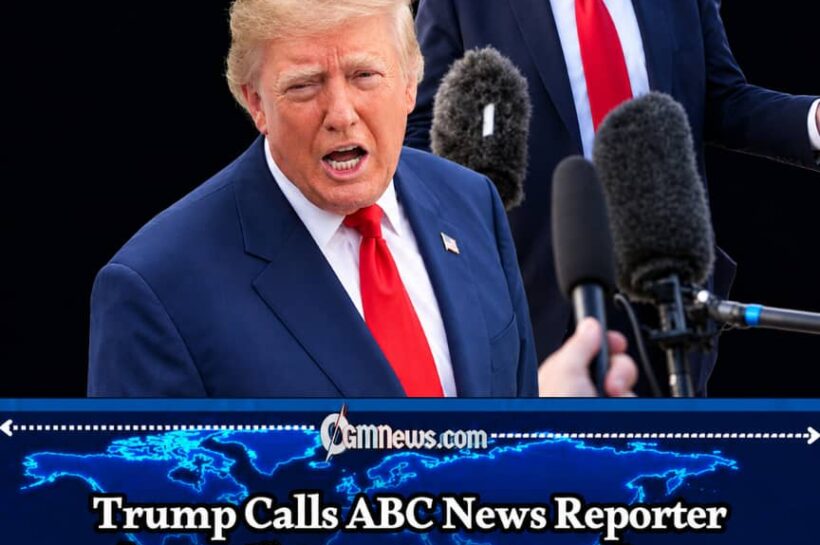







The political temperature around America’s 2026 midterm elections is rising, and President Donald J. Trump’s repeated warnings about election security are now being accompanied by a growing stream of declassified documents, disputed claims about noncitizen voting and increasingly loud predictions that a national emergency could be declared. In a development that sounds almost like Washington has ordered an emergency siren with a permanent battery, critics and election experts fear that distrust in the electoral system could itself become the justification for extraordinary action.
Trump: Election distrust becomes the new political battlefield
Trump’s July 16 address focused heavily on alleged vulnerabilities in U.S. election infrastructure and was followed by the release of intelligence material concerning foreign interference and voter-data security. The White House presented the disclosures as evidence that the American electoral system needs greater protection, while fact-checkers noted that the speech did not establish evidence of widespread fraud or demonstrate that foreign actors had changed votes in a U.S. election.
The administration has also highlighted cases involving voter registration and alleged noncitizen voting. New Jersey officials acknowledged that about 6,600 noncitizens were mistakenly registered because of a software error, but fewer than 400 actually cast ballots. The incident is real and deserves investigation; the political leap from an administrative error to a nationwide election conspiracy, however, is where the satire almost writes itself.
Trump: The “national emergency” question refuses to leave the room
The most intriguing part of the developing story is not simply what Trump has claimed, but what he has left open. His allies have publicly discussed the possibility of an emergency declaration connected to election security, while legal and election experts warn that a president cannot simply rewrite the constitutional structure governing elections by declaring an emergency. No president has previously attempted to use an emergency declaration to take direct control of election administration in this manner.
The administration’s latest election-security campaign has gained another talking point from a new Census Bureau analysis. The Bureau reported that its preliminary matching exercise identified more than 24,000 voter records associated with noncitizens among more than 128 million records it had confidently identified as citizens, while more than 32 million records remained to be analyzed. The figure has immediately become political ammunition, although independent fact-checking has warned that the methodology and matching process do not establish that all 24,000 people unlawfully voted.
For satire purposes, Washington appears to have discovered a peculiar political formula: first raise the alarm about election distrust, then release documents about election vulnerabilities, then point to disputed voting figures, and finally ask whether an emergency is necessary because people have become alarmed. The serious question beneath the comedy is whether these developments are building a genuine election-security response or creating the political predicate for extraordinary federal intervention.
OGM News will continue to watch the developing controversy as the 2026 midterm elections approach. Whether the national-emergency prediction becomes reality or remains another Washington political cliffhanger, readers should watch for further developments—and, preferably, keep their pencils sharp and their fact-checking sharper.

Mexican players will love how well this platform handles local payment methods. Deposits via OXXO...