

























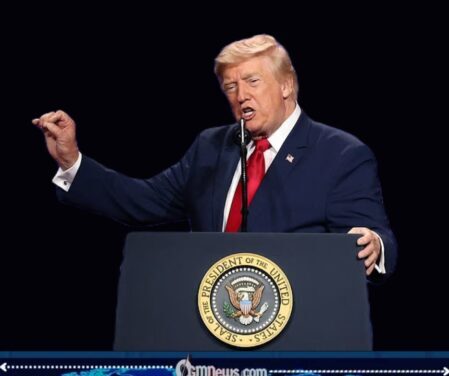
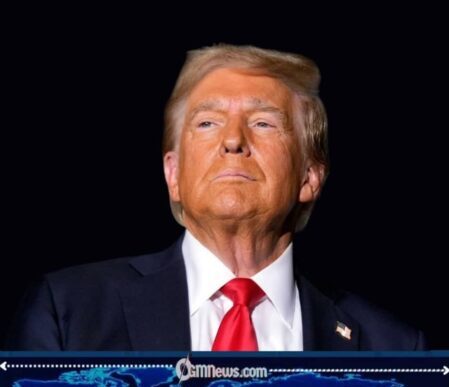
President Donald J. Trump’s second term is increasingly being shadowed by an extraordinary question: how much money can a president make while occupying the Oval Office before the boundary between public service and private enterprise becomes impossible to ignore? According to financial disclosures and recent reporting, Trump’s businesses and investments generated an estimated $2.2 billion in 2025, with cryptocurrency accounting for roughly $1.4 billion of the reported gains. Critics say the figures represent an unprecedented fusion of presidential power, personal wealth and commercial opportunity.
For satirical observers, Washington now appears to have discovered a new economic indicator: presidential monetisation. The traditional question used to be what a president could do for the country; the newer question, critics joke, is what the presidency can do for the president’s balance sheet. The controversy has intensified as Trump Media & Technology Group has launched Truth API, a service offering paying institutional clients faster access to posts from influential Truth Social accounts, including Trump’s, with reported prices reaching $100,000 a month.
From Crypto Millions to a Presidential Paywall
Trump’s financial disclosure has placed cryptocurrency at the centre of the controversy. The filing showed more than $1.4 billion in crypto-related income for 2025, including hundreds of millions associated with World Liberty Financial and the $TRUMP memecoin. Independent fact-checking of Trump’s financial claims found that crypto, rather than simply stock-market performance, accounted for a substantial share of his reported gains.
And then came the Truth API saga, producing perhaps the most distinctly 2026 Washington question imaginable: Can investors pay to hear the president faster? Trump Media says the product is a licensed data service designed for institutions that value speed, while critics argue that selling privileged access to posts that can influence markets creates an extraordinary conflict-of-interest problem. A lawsuit filed this week is now challenging the arrangement in federal court.
Trump’s Presidency Meets the Family Balance Sheet
The controversy does not stop with cryptocurrency or social media. Critics have also questioned Trump’s handling of conflicts between presidential responsibilities and private financial interests, including his continued business ownership and arrangements involving foreign-linked commercial interests. The broader concern is not simply whether particular transactions are legal, but whether the appearance of presidential influence being converted into private financial advantage undermines public confidence.
That concern has gained political momentum. Senator Mark Warner has urged financial institutions not to participate in Truth API, arguing that customers should not be able to purchase faster access to potentially market-moving presidential communications. Meanwhile, the current legal challenge alleges that the arrangement turns official presidential communication into a commercial product. Trump Media has rejected the criticism and defended Truth API as a conventional data-licensing service.
For OGM News, the developing story is less about whether Donald Trump is allowed to become richer and more about where the line should be drawn between presidential power and private profit. With billions of dollars in reported earnings, politically connected cryptocurrency ventures and a subscription service built around faster access to presidential posts, Trump’s second presidency has created a controversy that Washington’s ethics debate can no longer treat as theoretical. Whether the emerging allegations ultimately produce legal consequences, regulatory action or merely another chapter in America’s increasingly unconventional presidency remains to be seen. OGM News will continue to monitor the developments and bring readers further updates as the story unfolds.
[…] […]