



























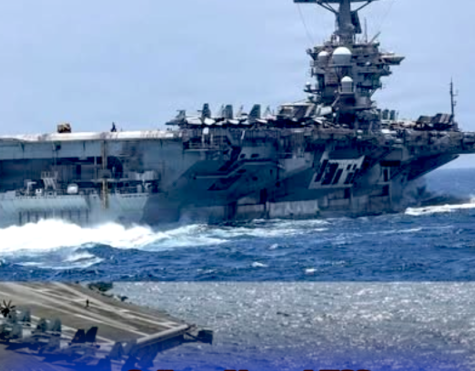
Multiple U.S. sailors aboard the USS Abraham Lincoln have reportedly attempted to go overboard amid mounting concerns about mental health, exhausting operational demands and an extended deployment linked to the ongoing Iran war. The disturbing reports, raised by military families and reported by defense-focused outlets, have transformed what should be a story about naval readiness into a much more uncomfortable question: How long can a military crew be pushed before “mission readiness” becomes “human beings running on fumes”?
The *USS Abraham Lincoln, carrying roughly 5,000 sailors and Marines, has been at sea for an extraordinary stretch. Stars and Stripes reported in July that the carrier had reached 207 consecutive days at sea, breaking the previous modern-era record set by the USS *Dwight D. Eisenhower* during the COVID-19 pandemic. The ship had originally departed San Diego for an Indo-Pacific deployment before being diverted to the Middle East as tensions with Iran escalated.
USS Abraham Lincoln at Sea—and Families at the Breaking Point
The reported overboard incidents are particularly alarming because they come against a backdrop of mounting complaints about exhaustion, communication difficulties and living conditions. Families have reportedly raised concerns about inadequate food, sanitation problems, broken facilities and the psychological strain of spending months aboard a warship with little opportunity to get ashore. The Navy has disputed some allegations about food quality, saying nutritional requirements were being met.
But even if the Pentagon can win an argument about the menu, it cannot simply season away the bigger problem: people are tired. A sailor quoted anonymously by Stars and Stripes warned that both mental and physical health were in danger and pleaded for help. The carrier’s operational tempo has included combat missions and sustained activity in the Middle East, leaving families increasingly anxious about the people they love thousands of miles away.
When “Mission Accomplished” Has No Return Ticket
According to the latest reports, several sailors on USS Abraham Lincoln have reportedly attempted to jump overboard, while fellow crew members and families have described other alarming incidents involving potential self-harm. The Navy has not publicly provided a precise number of such incidents. That uncertainty makes the situation even more difficult for families trying to determine whether their loved ones are safe.
And here is the uncomfortable satire of modern military planning: the ship (USS Abraham Lincoln ) has an aircraft carrier’s weapons, a small city’s population and apparently a calendar that keeps saying, “Just a little longer.” The USS Abraham Lincoln was not initially scheduled for this exceptionally prolonged mission, but the war with Iran changed those plans. President Donald J. Trump remains the current president, and the conflict has continued far beyond the brief confrontation many Americans might have expected when hostilities began. Military Times reported earlier this year that U.S. forces were adjusting to an unusual and sustained state of conflict with Iran.
The central issue, however, is not partisan point-scoring. Sailors are not political talking points; they are people entrusted with carrying out extraordinarily dangerous missions. If multiple service members are reaching the point of attempting to leave a carrier by jumping into the ocean, the question for military leadership should not merely be whether the crew can continue fighting—it should be whether leadership is doing enough to ensure the crew survives the fight physically and psychologically.
**OGM News will continue watching this developing story, particularly for official Navy responses, the status of the reported sailors and any decision concerning relief or rotation of the USS *Abraham Lincoln*. For the families waiting at home, “mission accomplished” means very little until their loved ones actually come home.



[…] […]