












James Talarico has launched a fierce attack on trickle-down economics, arguing that decades of policies favouring wealthy interests have left ordinary Americans struggling with an affordability crisis while powerful donors and politically connected figures enjoy disproportionate influence.His message is not merely an economic argument; it is becoming a central political weapon in one of America’s closely watched Senate contests. The provocative question now hanging over Texas is whether voters will see Talarico’s diagnosis as a necessary economic reckoning—or simply another explosive campaign argument in an already polarized election.
TALARICO’S BILLIONAIRE ACCUSATION
Talarico, the Democratic nominee for the U.S. Senate in Texas, has described the economic system he criticizes as fundamentally distorted by billionaire influence. In remarks supplied to OGM News, he argued that Americans have been told for decades that giving greater economic benefits to people at the top will eventually produce prosperity for everyone else. His response was deliberately blunt: “Trickle-down economics is not a theory. It is theft!” He further argued that political donations, corporate influence, tax breaks and government assistance to powerful interests have contributed to an economy in which ordinary citizens struggle to keep pace with rising costs.
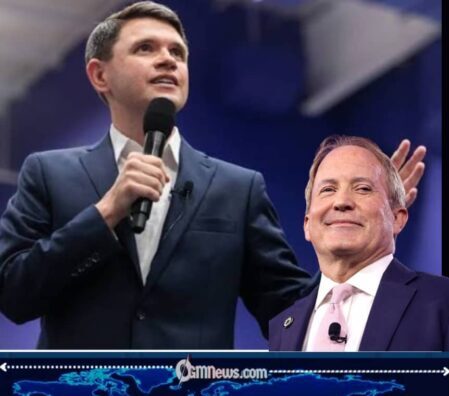
The candidate also connected that argument directly to his Republican opponent, Ken Paxton, portraying Paxton as an example of the political establishment he says protects powerful interests. Talarico’s broader complaint is that Americans are asking for relatively ordinary things—a job they can tolerate, a home suitable for raising a family and some disposable income—yet those goals increasingly feel out of reach. In that sense, trickle-down economics becomes less an academic phrase and more a symbol of everything Talarico believes is wrong with the current system.
There is, however, an important factual distinction concerning Paxton. The Texas House impeached him in 2023 after approving articles that included allegations involving bribery, abuse of office and other misconduct. But impeachment was not a criminal conviction. The Texas Senate later acquitted Paxton on all 16 articles that reached trial, allowing him to remain in office. Consequently, descriptions of Paxton as having been convicted of bribery or corruption would be inaccurate; the allegations, impeachment and subsequent acquittal are separate parts of the record.
THE AFFORDABILITY CRISIS MEETS THE TEXAS SENATE RACE
The political significance of Talarico’s trickle-down economics argument has grown because his campaign is no longer a hypothetical Democratic challenge to Texas Republicans. Talarico won the Democratic nomination in March after defeating U.S. Representative Jasmine Crockett in a closely watched primary. Paxton subsequently emerged as the Republican nominee, setting up a general-election contest that has attracted national attention because of Texas’s importance to the U.S. Senate map.
Recent polling has given Talarico’s economic message additional political oxygen. A July poll reported Talarico leading Paxton 51% to 48% among surveyed Texas voters. Although such a margin does not guarantee an election victory, it demonstrates that the contest is competitive and that economic issues could have considerable influence on voters who are not firmly aligned with either candidate.
At the heart of Talarico’s argument is a genuine policy debate rather than a simple economic formula. Supporters of tax cuts and business-friendly policies have traditionally argued that encouraging investment, entrepreneurship and economic growth can ultimately benefit workers and consumers. Critics counter that economic growth does not automatically translate into broadly shared prosperity and that wealthy interests can exercise disproportionate influence over policymaking. Calling that process “theft” is political rhetoric rather than a neutral economic conclusion, but it captures the frustration Talarico is attempting to channel into votes.
The Texas contest is therefore becoming a battle over competing explanations for America’s affordability problems. Talarico is asking voters to look toward billionaire wealth, political donations, tax policy and corporate influence when considering why ordinary households feel squeezed. Republicans are likely to present a different explanation, emphasizing issues such as government spending, taxation, regulation, energy policy and broader economic conditions.
For Talarico, however, the greatest challenge may come after the applause. A powerful accusation can dominate a campaign rally, but voters will ultimately want to know what policies would actually make housing, healthcare, groceries and other necessities more affordable. Calling the system broken is one thing; convincing Texans that a different system can work better is another.
The political irony almost writes itself: America has spent decades arguing about whether prosperity will “trickle down,” while millions of households continue checking their budgets to see whether anything has trickled into them. Talarico has now made that frustration a central feature of his campaign, turning an old economic theory into a modern political punchline—and potentially one of the defining issues of the Texas Senate race.
As the contest develops, OGM News will continue examining the claims, policies and records of both candidates, separating campaign rhetoric from verifiable facts while following whether Talarico’s attack on trickle-down economics can translate into enough voter support to reshape the political landscape in Texas.

[…] […]