













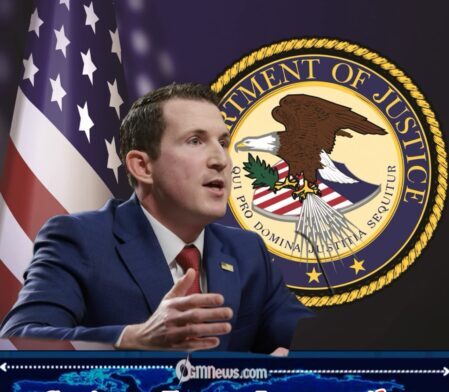
Trade fraud has finally met its toughest customs inspector yet—and this one comes armed with subpoenas instead of stickers. For years, some importers allegedly treated U.S. customs declarations like optional homework—creative, flexible, and occasionally detached from reality. Now, the U.S. Department of Justice says the joke is over. In a sweeping trade fraud crackdown, federal authorities announced they have recovered more than $1 billion through the Trade Fraud Task Force, exposing schemes that allegedly cheated Americans out of hundreds of millions of dollars by mislabeling imported goods to dodge tariffs.
From gold jewelry and drones to aluminum, quartz, and ceramic tiles, officials say the investigation is far from over. With President Donald J. Trump continuing to prioritize trade enforcement, the message from Washington is simple: if your shipment’s passport is fake, someone is coming to ask questions.
Trade Fraud Turns “Made Somewhere Else” Into an Expensive Hobby
The latest milestone comes less than a year after the Trade Fraud Task Force was established to tackle customs fraud, tariff evasion, and deceptive import practices. According to the Justice Department, investigators have uncovered multiple schemes involving false country-of-origin declarations, incorrect tariff classifications, undervalued shipments, and complex transshipment routes designed to disguise where products were actually manufactured. Authorities allege that these tactics deprived the U.S. government of significant tariff revenue while giving dishonest businesses an unfair advantage over competitors who played by the rules.
Among the headline-grabbing cases is an alleged scheme involving imported gold jewelry worth hundreds of millions of dollars that was reportedly routed through another country to reduce tariff costs. Investigators have also pursued cases involving consumer drones, aluminum products, quartz materials, and ceramic tiles. The Justice Department has since announced a new Global Trade Enforcement Section, making it clear that customs fraud is no longer viewed as a paperwork mistake but as a serious financial crime with criminal and civil consequences.
Trade Fraud Meets Its Toughest Fact-Checker
Trade experts have long warned that higher tariffs create stronger incentives for dishonest importers to manipulate shipping documents or conceal the true origin of goods. As trade enforcement has become a major economic priority under President Donald J. Trump, federal agencies have significantly increased cooperation, combining criminal investigations with civil enforcement, asset forfeitures, and customs penalties to discourage fraud throughout global supply chains.
For businesses that have faithfully paid duties for years, the latest enforcement campaign may feel like long-awaited validation. For alleged fraudsters, however, customs forms are no longer serving as works of fiction. Justice Department officials insist the billion-dollar recovery represents only the beginning, declaring that investigators are “just getting started.” It appears the era of hoping nobody notices suspicious paperwork is becoming increasingly expensive, proving once again that trade fraud eventually comes with a very costly receipt.
The billion-dollar recovery marks one of the most significant trade fraud enforcement efforts in recent years, reinforcing the U.S. government’s determination to pursue tariff evasion, customs fraud, and deceptive import practices wherever they occur. Whether this crackdown reshapes international trade compliance remains to be seen, but businesses around the world will likely be reviewing their customs paperwork more carefully than ever. Stay with OGM News for continuing updates as this expanding investigation uncovers new cases, fresh prosecutions, and the next chapter in the government’s campaign against trade fraud.

[…] […]