

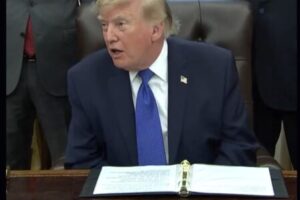


























DOGE has officially shut down, closing the curtain on one of the most closely watched government reform initiatives launched under President Donald J. Trump. Created with the ambitious goal of reducing waste, streamlining federal operations and challenging long-standing bureaucratic practices, the Department of Government Efficiency quickly became both a political rallying point and a lightning rod for criticism. While its supporters celebrate what they describe as a bold attempt to modernize government, critics argue that the initiative leaves behind as many questions as it sought to answer. Now, with DOGE no longer operating as an independent entity, attention has shifted from what it promised to what its legacy may ultimately become.
DOGE Shuts Down as Efficiency Experiment Comes to an End
The official closure of DOGE marks the end of an initiative that was introduced with extraordinary expectations. The department was tasked with identifying unnecessary government spending, reducing bureaucracy and encouraging federal agencies to operate more efficiently. Throughout its existence, the project attracted widespread public attention, not only because of its ambitious objectives but also because of the high-profile figures associated with its mission and the sweeping reforms it proposed. Supporters praised the office for forcing difficult conversations about government accountability, while opponents questioned whether rapid restructuring risked disrupting essential public services.
DOGE’s shutdown has not ended the debate surrounding government efficiency. Instead, it has intensified discussions over whether meaningful reform can survive beyond a single office or administration. Some observers argue that the department succeeded simply by placing government spending under greater public scrutiny, while others insist that true success should be measured through independently verified savings and long-term institutional improvements. In classic Washington fashion, a few political commentators jokingly remarked that the only thing capable of moving faster than government paperwork was the office created to reduce it—until it eventually filed its own farewell.
DOGE Is Gone, But Did Washington Really Change?
Although the department has officially ceased operations, many of its ideas are expected to outlive the office itself. Federal agencies are likely to continue reviewing spending priorities, evaluating regulations and pursuing modernization projects that were either introduced or accelerated during DOGE’s existence. Policy analysts note that efficiency initiatives rarely disappear entirely, even after the organizations that champion them are dissolved. Instead, they often become part of broader administrative reforms carried forward under different names and structures.
The broader political conversation surrounding DOGE may ultimately prove more significant than the department’s lifespan. Public interest in government transparency, responsible spending and administrative accountability has remained strong, ensuring that future leaders will continue facing pressure to demonstrate measurable results rather than ambitious promises alone. Whether remembered as a groundbreaking reform effort or an experiment that generated more headlines than lasting transformation, DOGE has secured a lasting place in contemporary American political history. Its closure may have ended one chapter, but the national debate over government efficiency is far from over.
As the Trump administration continues pursuing broader government reforms, the end of DOGE is unlikely to bring an end to discussions about reducing bureaucracy and improving accountability. Instead, the shutdown serves as another reminder that reforming government is rarely as simple as announcing a new department or closing an existing one. OGM News will continue following developments to determine whether the principles that defined DOGE evolve into lasting policy or become another ambitious experiment remembered more for the conversation it started than the changes it achieved.


[…] […]