

















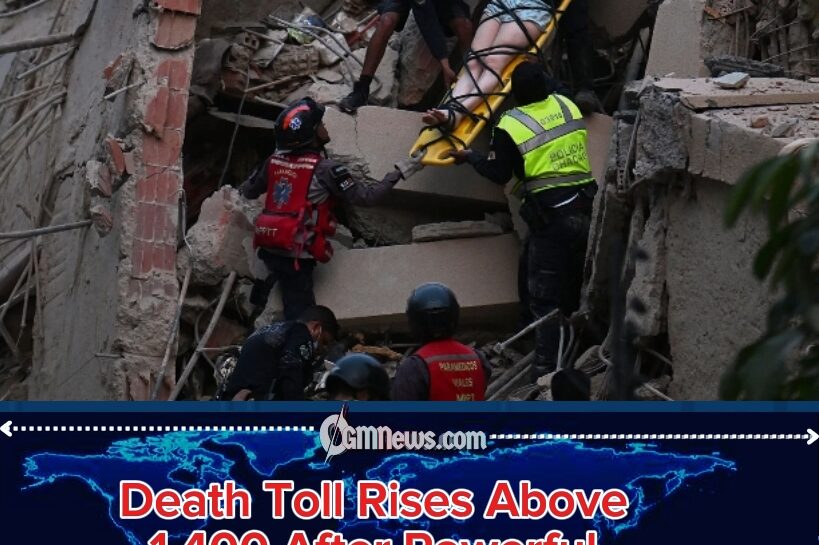











The Venezuela quakes have left the nation in a state of relentless instability as the death toll rises beyond 1,400, according to senior lawmakers. In this unfolding disaster, entire communities remain trapped beneath rubble while rescue teams struggle against time, terrain, and an uncooperative series of aftershocks that continue to shake already weakened structures. The scale of destruction has turned urban centers into fragmented zones of emergency response, where every minute carries the weight of another potential life lost.
In the midst of chaos, authorities have described a rescue environment defined by exhaustion, limited resources, and constant structural collapse risks. The situation has intensified global concern, as images of devastated neighborhoods circulate worldwide, underscoring the urgency of coordinated humanitarian intervention.
Immediate Collapse and Emergency Response
The Venezuela quakes struck in twin shocks, causing widespread infrastructure failure across multiple regions. Hospitals quickly became overwhelmed, while roads and bridges collapsed, cutting off access to several affected zones. Emergency officials confirmed that rescue operations are being slowed significantly by the scarcity of heavy machinery required to move large debris.
Survivors report hearing cries from beneath collapsed buildings, but access remains limited. Each attempt at extraction is complicated by continuing aftershocks, forcing teams to repeatedly retreat for safety. The result is a grim balancing act between urgency and survival, as rescuers try to avoid causing further collapses.
VENEZUELA QUAKES: Global Reaction and Structural Weakness Exposed
Beyond the immediate devastation of the Venezuela quakes, international attention has turned toward long-standing concerns about disaster preparedness and infrastructure resilience. Humanitarian organizations warn that the lack of reinforced building standards may have significantly increased the scale of casualties.
Global leaders have begun offering support, with U.S. President Donald J. Trump calling for rapid international coordination to accelerate relief delivery. Meanwhile, aid agencies emphasize that logistics—not just funding—remain the biggest obstacle, as ongoing aftershocks continue to disrupt air and ground operations.
Experts note that Venezuela’s geographical vulnerability to seismic activity has long been known, but implementation of preventive measures has lagged behind risk assessments. The current disaster has therefore reignited debate over enforcement of safety codes and early-warning systems across earthquake-prone regions.
As rescue operations continue under unstable conditions, officials caution that the final death toll from the Venezuela quakes may still rise significantly. With aftershocks still occurring and many areas yet to be fully accessed, the coming days are expected to determine whether more survivors can be pulled from the rubble or whether the tragedy will deepen further before stabilizing.



[…] […]