





























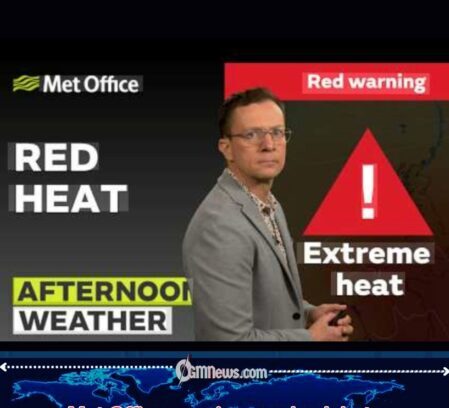
The UK heatwave has placed large parts of England and Wales under unprecedented strain as a severe Met Office warning escalates into a red-level alert, signaling potential danger to life. With temperatures forecast to climb as high as 39C in southern England, authorities are warning that daily routines, transport systems, and public health services may all be pushed beyond safe limits in the coming days. The UK heatwave has rapidly evolved into one of the most intense weather events recorded in recent years, prompting urgent national attention.
Escalation and Immediate Impact of the Heat Emergency
The UK heatwave has triggered the highest tier of weather alert issued by the Met Office, covering London, parts of the Midlands, south-east Wales, and southern England. This Met Office warning indicates that extreme heat is no longer just uncomfortable but potentially life-threatening, especially for the elderly, children, and individuals with pre-existing health conditions.
In affected regions, hospitals, care homes, and emergency responders have been placed on heightened readiness. The UK heatwave has also begun disrupting transport systems, with rail networks and road infrastructure facing heat-related strain, including warnings of buckling tracks and delays. The Met Office warning further advises the public to avoid unnecessary travel and stay in shaded or cooled environments during peak hours.
Wider Context, Climate Patterns, and Public Response
The UK heatwave is part of a broader pattern of increasing summer temperature extremes observed across Europe in recent years, raising questions about long-term climate resilience. The Met Office warning system, which escalates from yellow to amber and now red alerts, reflects growing concern that such events may become more frequent and intense.
Public reaction to the UK heatwave has been mixed, with some residents expressing alarm while others attempt to adapt creatively to the rising temperatures. Experts note that infrastructure in the UK, historically designed for milder climates, is increasingly being tested by conditions once considered rare. The Met Office warning has therefore become not just a weather update but a signal of broader adaptation challenges facing urban planning, transport systems, and healthcare services.
As the situation develops, officials are expected to issue continuous updates, while communities brace for what could be the peak of the UK heatwave. The Met Office warning remains in effect, and authorities caution that further escalation cannot be ruled out if temperatures continue to rise.
The ongoing UK heatwave underscores how quickly extreme weather can disrupt national systems, even in regions traditionally unaccustomed to such intensity. With the Met Office warning still active, the coming days will be critical in assessing both immediate public safety and long-term resilience planning across the country.



Another essential reason to switch to solar power could be the cost benefits it gives....