



















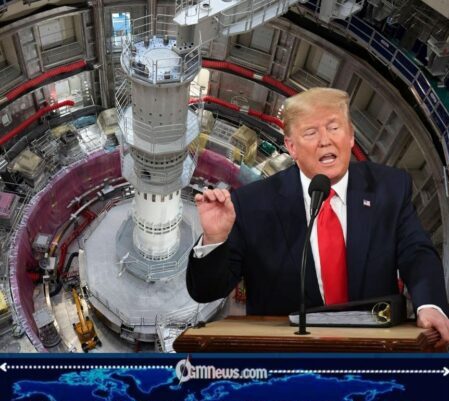
Nuclear Gamble has become the defining theme of a major energy announcement after the Trump administration revealed plans to provide $17.5 billion in federal loans for the construction of 10 large nuclear reactors. The decision represents one of the most significant commitments to nuclear energy in decades and comes as policymakers search for ways to meet rapidly increasing electricity demand. While supporters view the move as a bold investment in America’s future, critics are asking whether taxpayers are being invited into a high-stakes experiment whose final cost remains uncertain.
Trump Bets $17.5 Billion That Nuclear Power Can Save America’s Energy Future
The administration says the loan package is designed to accelerate the deployment of large-scale nuclear facilities capable of generating reliable electricity for decades. Officials argue that growing demand from artificial intelligence infrastructure, data centers, advanced manufacturing, and population growth requires a substantial increase in dependable energy generation. Under the proposal, the reactors would strengthen the nation’s power grid while supporting long-term economic expansion.
The Nuclear Gamble reflects a broader policy shift toward expanding domestic energy production across multiple sectors. Administration officials have emphasized that nuclear power provides constant electricity generation regardless of weather conditions, making it a valuable complement to renewable energy sources. Supporters also note that nuclear facilities produce very low greenhouse-gas emissions during operation, a factor that continues to attract attention from policymakers focused on long-term energy security.
Trump’s Nuclear Gamble Could Reshape America—or Create a Billion-Dollar Headache
The broader context surrounding the announcement reveals both opportunity and risk. Recent years have seen renewed interest in nuclear energy globally as countries seek stable electricity supplies amid rising demand. Energy analysts have repeatedly warned that power consumption from artificial intelligence systems and large data centers could place unprecedented pressure on existing electrical grids. In that environment, nuclear energy has increasingly been presented as a practical solution for meeting future demand.
However, the Nuclear Gamble also revives concerns associated with large reactor projects. Several high-profile nuclear construction efforts in the United States and abroad have experienced significant delays and cost overruns. Industry experts note that financing, regulatory approval, labor shortages, and supply-chain constraints remain major obstacles. Critics argue that government-backed loans could expose taxpayers to financial risks if projects fail to meet expectations, while supporters counter that long-term economic and energy benefits justify the investment.
The Nuclear Gamble announced by the Trump administration will likely remain a major topic of debate as planning and construction efforts progress. Whether the initiative becomes a landmark achievement in American energy policy or another example of ambitious projections colliding with reality will depend on execution, oversight, and market conditions. For now, the reactors exist mostly on paper, but the political, economic, and energy implications are already generating enough power to fuel national discussion for years to come.
Installed the 68winapp on my phone and gotta say, it's pretty smooth. Quick access to...