

















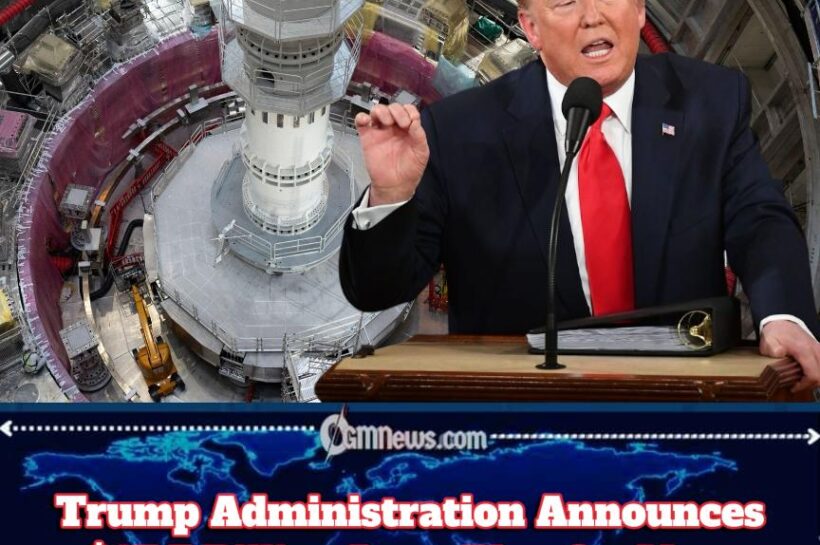








Medical Innovation has emerged as the latest battleground in America’s economic and strategic competition with China, as the Trump administration announces a sweeping effort to bring clinical trials, pharmaceutical investment, and scientific research back to the United States. While officials present the initiative as a necessary step to restore American leadership, the announcement has also sparked debate over whether regulatory reform alone can reverse years of globalization in the pharmaceutical sector.
Research advocates, industry observers, and policymakers are now watching closely to determine whether the administration’s vision can translate into measurable gains. The initiative arrives at a time when governments worldwide are competing aggressively for high-value research projects, advanced manufacturing facilities, and the economic benefits that accompany scientific discovery.
RESTORATION BASED ON MEDICAL INNOVATION
Medical Innovation was placed at the center of the administration’s latest health policy messaging by Health and Human Services Secretary Robert F. Kennedy Jr., who argued that America must reclaim its position as the world’s leading destination for clinical research. According to Kennedy, the federal government is working to modernize regulatory processes that have long been criticized for slowing development timelines and discouraging investment.
Administration officials contend that the United States possesses many of the world’s leading universities, hospitals, biotechnology firms, and pharmaceutical companies, yet faces increasing competition from countries investing heavily in research infrastructure. The new push seeks to encourage domestic investment, accelerate approvals where appropriate, and strengthen America’s attractiveness as a location for groundbreaking medical research.
COMPETITION ON SUPPLY CHAIN OF GLOBAL HEALTH
Medical Innovation has become increasingly intertwined with broader geopolitical and economic concerns. In recent years, policymakers across party lines have expressed concern about supply-chain vulnerabilities exposed during global health emergencies, as well as the growing international competition for scientific talent, pharmaceutical manufacturing, and biotechnology investment.
Industry analysts note that China has significantly expanded investment in biotechnology, advanced medicine, and clinical research capabilities over the past decade. At the same time, the United States continues to lead many areas of biomedical science, supported by world-renowned research institutions and a robust private-sector innovation ecosystem. The debate therefore centers less on whether America remains a leader and more on how it can maintain that leadership amid rapidly changing global conditions.
Supporters of the administration’s initiative argue that faster processes, targeted incentives, and expanded domestic research capacity could strengthen both economic growth and public health outcomes. Critics caution that efforts to accelerate development must preserve scientific rigor, transparency, and patient safety. As policymakers refine the strategy, the challenge will be balancing speed with trust.
For now, Medical Innovation remains both a policy objective and a political message. Whether this initiative ultimately produces a new era of American medical leadership or simply fuels another chapter in Washington’s debate over global competition will become clearer as implementation moves from speeches and announcements to measurable results. OGM News will continue monitoring developments as the administration’s plans take shape and the global race for scientific leadership intensifies.


перевод паспорта новосибирск