



























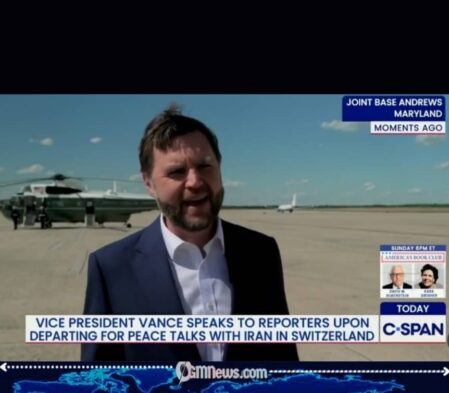
Nuclear Talks have entered a decisive phase as U.S. Vice President JD Vance travels to Switzerland for technical negotiations involving Iran, Pakistan and Qatar. The meetings are expected to focus on implementing a prospective agreement concerning Iran’s nuclear program while simultaneously advancing efforts to preserve and strengthen a fragile Lebanon ceasefire. Although officials have expressed cautious optimism, the discussions are unfolding amid continuing regional tensions and questions about whether diplomacy can keep pace with events on the ground. Recent reports indicate that the negotiations come after delays linked to instability in Lebanon and concerns surrounding the broader regional security environment.
Nuclear Talks Enter a Critical Test
Vice President Vance publicly emphasized that the primary objectives of the Swiss meetings are progress on the nuclear issue and progress on the Lebanon ceasefire issue. The negotiations represent the next stage of a broader diplomatic effort involving the United States, Iran, Pakistan and Qatar, with technical teams expected to translate political understandings into detailed implementation mechanisms. The talks are particularly significant because they could establish a framework for managing disputes that have repeatedly threatened regional stability.
The Nuclear Talks also follow earlier rounds of difficult negotiations that exposed deep disagreements over security guarantees, nuclear activities and regional conflicts. Previous discussions demonstrated that while all parties acknowledge the risks of escalation, substantial differences remain regarding enforcement mechanisms, verification procedures and long-term commitments. Switzerland’s role as host reflects its longstanding reputation as a neutral venue for complex diplomatic engagements.
Lebanon Ceasefire Pressures and the Wider Regional Picture
The Lebanon Ceasefire remains closely linked to the success of the broader negotiations. Reports suggest that renewed violence and ceasefire disputes in Lebanon complicated preparations for the Swiss meetings and created uncertainty regarding the timing of diplomatic engagements. Regional actors continue to monitor developments closely because instability in Lebanon has the potential to influence broader negotiations involving Iran and the United States.
Additional reporting indicates that Pakistan and Qatar have emerged as important diplomatic facilitators in the process. Their participation reflects a growing trend in which regional powers play active roles in conflict mediation and crisis management. Analysts note that successful implementation of any future agreement will depend not only on the principal parties but also on the willingness of regional stakeholders to support compliance and reduce tensions. Meanwhile, concerns surrounding maritime security, energy routes and ongoing regional disputes continue to underscore the high stakes attached to these negotiations.
As the Nuclear Talks proceed, the outcome may determine whether recent diplomatic momentum evolves into a more durable framework for regional stability. For now, negotiators face the familiar challenge of transforming hopeful statements into measurable results. OGM News will continue monitoring developments from Switzerland as officials attempt to secure progress on both the nuclear file and the Lebanon Ceasefire, two issues whose impact extends far beyond the negotiating table.



[…] […]