
























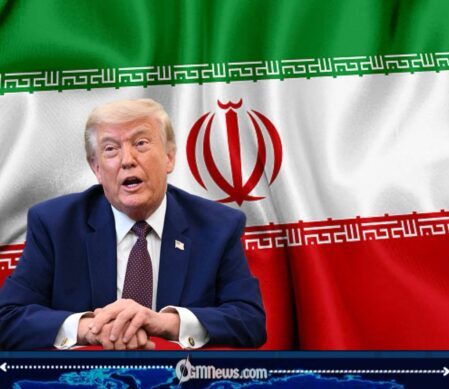
Peace Deal negotiations between the United States and Iran have suddenly become the focus of global attention after President Donald J. Trump announced that an agreement could be signed as early as this weekend. The prospect of a breakthrough has generated optimism across diplomatic circles and financial markets, particularly because the reported framework could pave the way for the reopening of the Strait of Hormuz. Yet behind the confident statements and rising expectations lies a lingering question: is the world witnessing the final stages of a historic agreement, or merely another chapter in a long-running diplomatic standoff?
Trump’s remarks suggested that negotiators had made substantial progress and that key elements of the proposed arrangement were already in place. However, Tehran’s response introduced uncertainty into the narrative, ensuring that suspense remains at the center of a story that could have significant implications for regional stability and global commerce.
CONFLICTING SIGNALS EMERGE FROM WASHINGTON AND TEHRAN
Peace Deal discussions appeared to gain momentum after President Trump publicly expressed confidence that a final agreement was within reach. According to statements from the U.S. side, the proposed arrangement could help ease tensions between the two countries, strengthen commitments aimed at preventing the development of nuclear weapons, and restore confidence in maritime security throughout the Gulf region.
Iranian officials, however, were considerably more cautious in their assessment. While confirming that negotiations remain active, Tehran emphasized that no final decision has been reached and that several critical issues still require resolution. The contrast between Washington’s optimism and Iran’s restraint has created a familiar diplomatic spectacle, with one side presenting the finish line as visible while the other insists the journey is not yet complete. Such differences often reflect negotiating strategies, but they can also reveal genuine disagreements over unresolved terms.
PEACE DEAL: WHY THE STRAIT OF HORMUZ REMAINS THE REAL PRIZE
The significance of the Peace Deal extends far beyond political symbolism. At the center of the negotiations is the Strait of Hormuz, one of the world’s most strategically important waterways. A substantial share of globally traded oil and energy products passes through the narrow passage, making its stability essential to international trade and economic confidence.
Recent tensions in the region have repeatedly highlighted the vulnerability of global supply chains to geopolitical disputes. Analysts note that a successful agreement could reduce fears of shipping disruptions, stabilize energy markets, and lower the risk of future confrontations. Nevertheless, experts also caution that previous rounds of diplomacy have produced moments of optimism before ultimately encountering obstacles. As a result, many governments and investors remain cautiously hopeful rather than fully convinced.
For now, the Peace Deal exists in a delicate space between promise and uncertainty. President Trump’s confidence has elevated expectations, while Iran’s measured response has reminded observers that negotiations are rarely complete until every signature is secured. Whether the coming days deliver a landmark diplomatic breakthrough or another unexpected twist, the outcome could shape regional security, international trade, and global energy markets for months to come. OGM News will continue to monitor developments as this high-stakes diplomatic drama unfolds.
Ae888covenuscasino, okay, I'm curious. Gonna check out this site and try to find some amazing...