











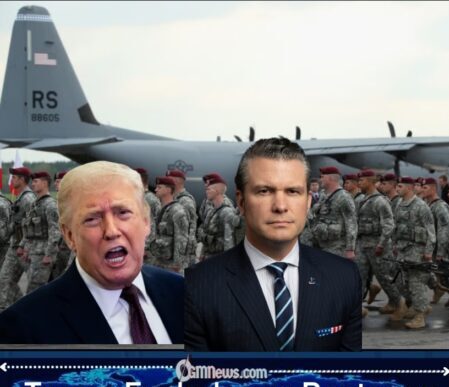
President Donald J. Trump reportedly unleashed frustration inside the White House after Defense Secretary Pete Hegseth abruptly canceled a planned troop deployment to Poland, a move that caught both American officials and Polish leaders off guard. The Poland Shock quickly escalated into a broader diplomatic controversy as concerns grew that Washington was sending dangerous mixed signals to one of NATO’s most loyal allies during an increasingly unstable period in Europe.
The tension reportedly became so serious that Trump personally confronted Hegseth over the decision, questioning why Poland had been treated harshly despite maintaining close political and military ties with the White House. Within days of the fallout, Trump announced plans to send an additional 5,000 American troops to Poland, triggering speculation that the administration was scrambling to reassure nervous allies while repairing internal confusion over military strategy.
Trump Questions Hegseth Over Sudden Poland Deployment Cancellation
The original controversy emerged after reports revealed that the Pentagon had quietly halted the deployment of a US armored brigade intended for Poland earlier this month. The cancellation came shortly after Washington also announced the withdrawal of thousands of American troops from Germany following worsening tensions between Trump and German Chancellor Friedrich Merz over the Iran conflict. While Germany had openly clashed with the administration politically, Poland had remained firmly supportive of Trump and continued backing American security priorities inside NATO.
That distinction reportedly made the Poland decision particularly sensitive. Polish officials, already facing growing fears over Russian aggression near Eastern Europe, were said to be alarmed by the sudden reversal and reportedly escalated concerns directly to the Oval Office. Trump’s reported anger appears to have stemmed from fears that the United States risked undermining trust with a frontline NATO ally bordering Russia at a time when European security anxieties are already intensifying.
The White House and Pentagon later attempted to calm speculation by insisting Trump and Hegseth remained aligned on military policy. However, the rapid announcement of additional troops for Poland fueled fresh debate over whether the administration was correcting a strategic misstep or attempting to contain political embarrassment before relations with allies deteriorated further.
Poland Reassured After Trump Announces New Troop Surge
The Troop Fallout surrounding the Poland controversy arrives during one of the most strained periods in US-European relations in recent years. Trump’s repeated calls for European nations to shoulder more defense responsibilities, combined with tariff disputes and disagreements over Iran, have already weakened confidence among some NATO members regarding America’s long-term commitment to the alliance.
Secretary of State Marco Rubio recently defended the administration’s broader military reshuffling by arguing that the United States must constantly reevaluate troop deployments because of expanding global obligations. Rubio insisted the changes were not intended as punishment against allies, although critics across both Republican and Democratic circles reportedly questioned why Poland — one of Washington’s most reliable partners in supporting Ukraine against Russia — appeared caught in the middle of the strategic turbulence.
Additional reports suggest Pentagon leaders are now weighing the possibility of relocating the 2nd Cavalry Regiment from Germany to Poland, a move that would further shift America’s military posture toward Eastern Europe. Analysts say the proposal reflects growing recognition inside Washington that Poland’s geographic position near Russia has transformed it into one of NATO’s most strategically important states as fears over future conflict continue to rise.
At the same time, Europe remains under pressure from soaring energy prices linked to instability around the Strait of Hormuz and wider fears surrounding the Iran war. The combination of military uncertainty, economic strain, and diplomatic tension has created a volatile atmosphere where even temporary confusion over troop deployments can trigger international concern.
For now, Trump’s troop announcement appears designed to restore confidence and project strength toward allies watching closely from across Europe. Yet the Poland Shock and resulting Troop Fallout have also exposed how quickly internal disagreements inside Washington can spill into global diplomacy. OGM News Nigeria understands that NATO officials and European governments will continue monitoring future US deployment decisions carefully as uncertainty surrounding America’s foreign policy direction remains a defining issue in international security debates.

https://shorturl.fm/5TtQZ