


















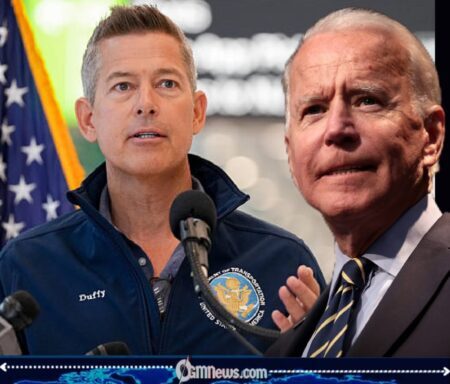
U.S. Transportation Secretary Sean Duffy has placed himself at the center of the debate surrounding the collapse of Spirit Airlines, insisting that the airline’s downfall was rooted in long-term financial struggles rather than recent spikes in global fuel prices. Speaking on Sunday, Duffy emphasized that the situation had been developing over several years.
According to him, while rising fuel costs linked to global conflicts may have intensified the crisis, they were not the primary cause. Instead, he pointed to structural weaknesses and policy-related pressures that gradually eroded the airline’s stability.
Sean Duffy Highlights Years of Financial Instability
At the core of Duffy’s argument is the assertion that Spirit Airlines had been financially vulnerable long before current economic challenges emerged. He described the airline’s business model as one that operated on extremely narrow margins, leaving little room for error.
Over time, increasing operational costs, debt accumulation, and expansion efforts strained the airline’s finances. Duffy noted that these factors created a fragile system where even moderate disruptions could trigger severe consequences.
He stressed that the collapse should be viewed as the result of a prolonged buildup of financial pressure rather than a sudden economic shock.
Policy Environment Under Scrutiny
Sean Duffy also directed attention toward aviation policies implemented during the administration of Joe Biden. He suggested that regulatory frameworks and economic decisions during that period added pressure on low-cost carriers like Spirit Airlines.
While Duffy did not provide detailed policy breakdowns, he implied that compliance costs and broader economic conditions made it increasingly difficult for budget airlines to remain competitive. His remarks have sparked debate among policymakers and industry stakeholders.
Critics argue that such regulations were designed to enhance passenger safety and consumer protections, raising questions about whether the blame can be attributed to policy alone.
Fuel Prices as the Final Trigger
Despite acknowledging the role of rising fuel costs, Sean Duffy maintained that they served only as the “final trigger” in an already deteriorating situation. Fuel prices, heavily influenced by global geopolitical tensions, have surged in recent times, affecting airlines worldwide.
However, Duffy pointed out that more financially stable carriers were able to withstand these pressures through strategic planning and financial buffers.
In contrast, Spirit Airlines lacked such resilience, making it particularly vulnerable when fuel costs spiked.
Industry Reactions to Sean Duffy’s Claims
Duffy’s position has drawn mixed reactions from aviation experts and industry observers. Some support his view, noting that Spirit Airlines’ ultra-low-cost model inherently carried higher risks during economic downturns.
Others caution against downplaying external factors such as fuel price volatility and post-pandemic travel fluctuations. They argue that the airline’s collapse was the result of multiple overlapping challenges rather than a single dominant cause.
The discussion has reignited broader conversations about the sustainability of low-cost carriers in a rapidly changing global economy.
Implications for Policy Under President Trump
The remarks by Sean Duffy come at a time when aviation policy is under renewed review during the administration of Donald Trump. Analysts suggest that future regulatory approaches may shift toward easing burdens on airlines while maintaining safety standards.
Such changes could reshape the competitive landscape, particularly for budget carriers. However, balancing economic flexibility with consumer protection remains a key challenge for policymakers.
Duffy’s comments may influence how future policies are designed to prevent similar industry collapses.
Sean Duffy Calls for Broader Industry Reflection
Sean Duffy urged stakeholders to look beyond short-term explanations and examine the deeper structural issues within the aviation sector.
The collapse of Spirit Airlines, he argued, should serve as a lesson for both policymakers and industry leaders. Addressing long-standing financial vulnerabilities and ensuring sustainable business models will be critical to avoiding similar outcomes in the future.

[…] […]