








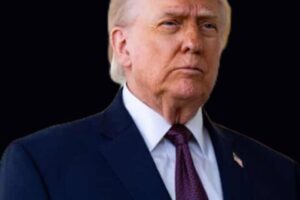






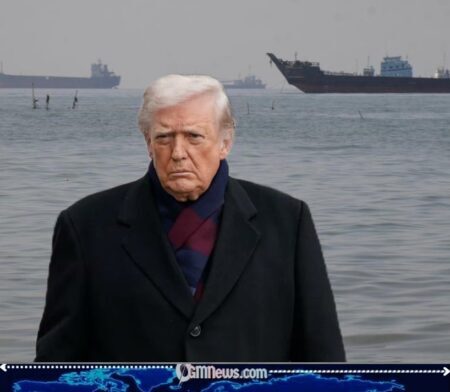
The President of the United States, Donald Trump, has unveiled a new maritime initiative aimed at escorting stranded commercial vessels out of the strategically vital Strait of Hormuz, as tensions with Iran remain delicate despite a declared cessation of hostilities.
The effort, dubbed “Project Freedom” (also referred to as “Operation Freedom”), is set to commence on Monday and is framed by the administration as a humanitarian mission to assist ships from non-combatant nations trapped in restricted waters. President Trump emphasized that the operation seeks to restore safe passage for global commerce while preventing further escalation in the region.
Humanitarian Framing of a Strategic Operation
President Trump described the initiative as a humanitarian intervention designed to ensure the safety and well-being of crews aboard vessels unable to navigate freely due to ongoing tensions. According to the President Trump, many ships have remained stranded for extended periods, facing shortages of food and essential supplies necessary for maintaining health and operational standards.
In a statement shared publicly, he stressed that the United States, alongside regional partners, would guide these ships through restricted waterways. The Trump administration maintains that the operation is not intended as a military escalation but rather as a stabilizing effort that benefits multiple stakeholders, including Iran itself.
Strategic Importance of the Strait of Hormuz
The Strait of Hormuz is one of the world’s most critical maritime chokepoints, serving as a primary transit route for a significant portion of global oil shipments. Any disruption in this corridor has immediate implications for international energy markets and economic stability.
Recent tensions linked to the conflict involving Iran have led to restricted navigation and heightened risks for commercial shipping. Industry observers note that prolonged instability in the strait could have far-reaching consequences, including increased shipping costs, supply chain disruptions, and volatility in global oil prices.
Mixed Signals on Iran Negotiations With Trump Administration
While announcing the escort initiative, President Trump also indicated that diplomatic engagements with Iran are ongoing. Speaking briefly to reporters, he characterized the negotiations as progressing “very well,” though he did not provide further details on the substance of the discussions.
Reports indicate that Iran has proposed a framework aimed at resolving disputes within a 30-day period, signaling a preference for a definitive end to hostilities rather than a temporary ceasefire. However, President Trump has expressed skepticism about whether the proposal will lead to a comprehensive agreement.
Congressional Notification and Legal Context
In parallel with the announcement, the president informed congressional leaders that hostilities with Iran have effectively “terminated,” addressing requirements under longstanding U.S. war powers legislation that governs the use of military force without explicit congressional authorization.
This notification comes amid broader debates in Washington over executive authority in military engagements. Analysts suggest that the classification of the current situation—as either an active conflict or a concluded engagement—could influence both domestic political discourse and future policy decisions.
Iranian Response Raises Concerns
The proposed U.S. escort operation has already drawn criticism from Iranian officials. Ebrahim Azizi, head of Iran’s parliamentary National Security Commission, warned that any American involvement in managing maritime activity in the strait could be interpreted as a violation of the ceasefire.
Azizi’s remarks underscore the fragile nature of the current truce and highlight the potential for miscalculation. Iranian authorities have signaled that they view external intervention in the Persian Gulf and surrounding waterways as an infringement on regional sovereignty.
Risk of Escalation Amid Humanitarian Intent
Despite its humanitarian framing, the operation carries inherent risks. President Trump made clear that any interference with the escort mission would be met with forceful action, a statement that could heighten tensions if challenged by regional actors.
Security analysts caution that even limited naval operations in contested waters can quickly escalate, particularly in an environment marked by mutual distrust and competing strategic interests. The success of “Project Freedom” will likely depend on careful coordination, clear communication, and restraint from all parties involved.
Broader Implications for Global Stability
The initiative reflects broader U.S. efforts to maintain stability in key global trade routes while navigating a complex geopolitical landscape. Ensuring safe passage through the Strait of Hormuz remains a priority not only for the United States but also for international stakeholders reliant on uninterrupted maritime commerce.
As the operation begins, global attention will focus on whether it can achieve its stated humanitarian goals without triggering renewed conflict. The coming days are expected to test both diplomatic channels and operational discipline in one of the world’s most sensitive regions.
https://shorturl.fm/5TtQZ