
























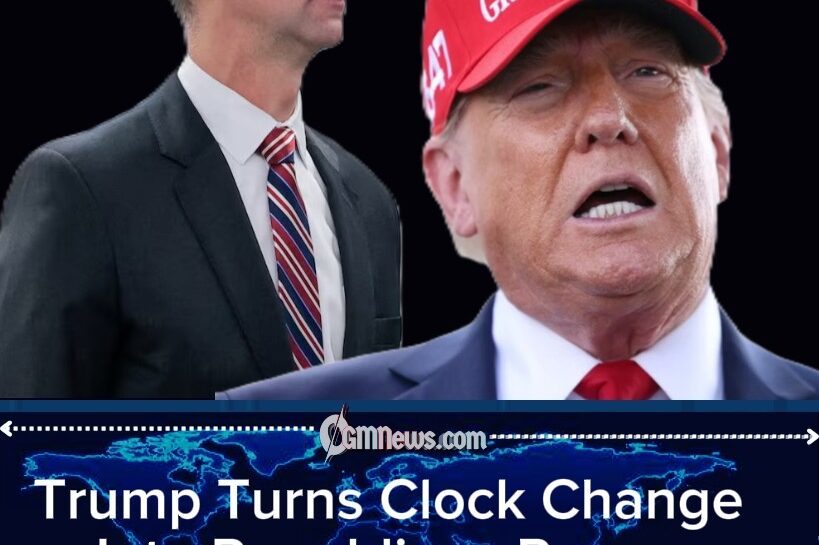


U.S. President Donald Trump, now serving a second term, has unveiled a major escalation in trade policy, declaring that the United States will impose a 25% tariff on cars and trucks imported from the European Union. President Donald Trump presented the decision as a decisive step toward protecting American industry and correcting what he described as longstanding trade imbalances.
President Donald Trump emphasized that the tariffs are designed not only to penalize foreign imports but to incentivize global automakers to relocate production to the United States. According to President Donald Trump, companies that manufacture vehicles domestically will avoid the tariffs entirely, a strategy aimed at boosting industrial investment and job creation within the country.
President Donald Trump Frames Tariffs as a Pro-Worker Economic Strategy
President Donald Trump has positioned the tariff policy as central to his broader economic agenda, arguing that American workers have been disadvantaged by global trade arrangements that favor foreign producers. By imposing higher import duties, President Donald Trump believes the U.S. can reclaim lost manufacturing capacity and strengthen its industrial base.
Supporters of President Donald Trump’s policy argue that it reflects a commitment to economic nationalism and domestic growth. They contend that the approach could lead to increased factory openings, higher employment in manufacturing sectors, and renewed confidence in American industry. However, critics remain cautious, warning that such policies often come with unintended economic consequences.
Trade Dispute Background: Rising Frictions with the European Union
The tariff announcement follows mounting tensions between Washington and Brussels over trade compliance. A previous agreement between the United States and the European Union aimed to reduce tariffs and align automotive standards, but U.S. officials claim progress has stalled.
European leaders have responded by expressing concern over the sudden escalation, arguing that internal legislative processes have delayed implementation rather than signaling outright noncompliance. The disagreement highlights broader challenges in transatlantic trade relations, as both sides navigate complex regulatory and political landscapes.
This latest move signals a shift from negotiation to enforcement, with the United States opting to apply economic pressure in an effort to accelerate compliance and secure concessions.
Economic Impact: Market Volatility and Industry Adjustments
Financial markets reacted swiftly to the announcement, with volatility observed in automotive stocks and broader indices. Investors are assessing the potential ripple effects across the global auto industry, which depends heavily on interconnected supply chains.
Manufacturers face significant uncertainty as they evaluate whether to absorb additional costs, pass them on to consumers, or accelerate plans to expand U.S.-based production. While some companies have already invested in American facilities, scaling operations quickly enough to mitigate tariff impacts presents logistical and financial challenges.
Analysts note that the global nature of automotive manufacturing means the effects of tariffs may extend beyond European imports, influencing pricing and production decisions worldwide.
Consumer Implications: Pricing Pressures and Inflation Risks
Economists caution that tariffs often function as indirect taxes, with increased costs frequently passed on to consumers. In this case, the price of imported vehicles could rise significantly, potentially affecting affordability for American buyers.
Even domestically produced vehicles may not be immune, as many rely on imported components that could also be affected by broader trade tensions. The resulting cost increases could contribute to inflationary pressures, particularly in a market already facing supply constraints and high demand.
Proponents, however, argue that any short-term price increases could be offset by long-term gains in employment and economic growth if domestic manufacturing expands successfully.
Geopolitical Risks: Potential Retaliation and Trade Escalation
The European Union is expected to consider retaliatory measures in response to the tariffs, raising concerns about a potential escalation into a broader trade conflict. Such actions could target American exports, affecting industries ranging from agriculture to technology.
A cycle of reciprocal tariffs could strain transatlantic relations and disrupt global trade flows, with implications extending far beyond the automotive sector. Analysts warn that prolonged tensions could undermine economic stability and complicate diplomatic cooperation on other global issues.
At the same time, some policymakers view the tariffs as a strategic tool, using economic leverage to strengthen the United States’ negotiating position in international trade discussions.
Legal and Policy Uncertainty: Questions Surround Implementation
Despite the administration’s firm stance, questions remain about the legal authority underpinning the tariff decision. Previous trade measures have faced judicial scrutiny, and similar challenges could arise, potentially affecting the timeline or scope of implementation.
Businesses are also navigating policy uncertainty, as sudden changes in trade rules complicate long-term planning and investment decisions. For multinational corporations, the evolving landscape presents both risks and opportunities, depending on how the policy unfolds.
Ultimately, the success of the tariffs will depend on whether they achieve their intended goals without triggering significant economic or political fallout.
Trump: A High-Stakes Test of U.S. Trade Policy
The proposed 25% tariff on European vehicles represents a defining moment in the second-term agenda of President Donald Trump. Framed as a bold effort to restore American manufacturing strength, the policy carries both potential benefits and notable risks.
Its long-term impact will depend on how businesses, consumers, and international partners respond. As the situation develops, the global economy will be watching closely to see whether this strategy delivers on its promises or intensifies existing trade tensions.


[…] […]