

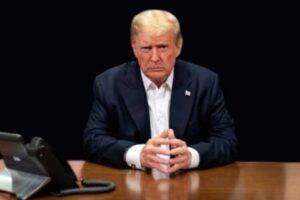


























Tennessee Governor Bill Lee has come under national attention following renewed concerns over the constitutionality of the state’s congressional district maps. The Governor has pledged to “work hard” to address what has been described as an “unconstitutional flaw,” a development that has intensified political and legal discussions across the United States.
The matter gained further prominence after comments from Donald Trump, who stated that Governor Lee is committed to correcting the issue. The situation has placed Tennessee’s redistricting process under a sharper national spotlight as legal scrutiny continues.
Governor Bill Lee’s Commitment to Addressing the Issue
Governor Bill Lee has positioned himself at the center of the unfolding controversy, expressing readiness to engage with concerns surrounding the state’s congressional maps. While not conceding fault, he has indicated that any constitutional irregularities will be addressed through lawful and structured processes.
His response reflects an effort to balance legal compliance with political sensitivity, especially as redistricting remains a highly contested issue. By signaling willingness to act, Governor Lee has sought to reassure both state residents and national observers of his administration’s commitment to constitutional governance.
Understanding the Redistricting Concerns
The current dispute originates from Tennessee’s post-2020 census congressional map, which critics argue may not adequately reflect fair representation principles. Allegations include potential dilution of voting strength in certain districts, prompting legal challenges and public debate.
Supporters of the map maintain that it was drawn in accordance with state law and demographic data. They argue that political disagreements over outcomes should not automatically be interpreted as constitutional violations, underscoring the complexity of redistricting disputes.
Legal Scrutiny and Court Proceedings
The congressional map is currently under judicial review, with courts examining whether it aligns with constitutional standards, particularly regarding equal representation. Plaintiffs in the case argue that the boundaries may violate voters’ rights, while state representatives defend the legality of the process.
Should the courts determine that the maps are unconstitutional, Governor Bill Lee’s administration may be required to initiate a redrawing process. Such a ruling could significantly affect future congressional elections and reshape Tennessee’s political landscape.
National Attention and Political Reactions
The controversy has drawn attention beyond Tennessee, especially after remarks from former President Donald Trump—now serving a second term—highlighting Governor Lee’s commitment to addressing the issue. This has added a federal dimension to what is primarily a state-level legal matter.
Reactions remain mixed, with supporters viewing Governor Lee’s stance as responsible leadership, while critics question the timing and political implications of the response. The debate reflects broader national tensions surrounding electoral map drawing and political representation.
Implications for Tennessee’s Political Future
Governor Bill Lee’s handling of the situation could have lasting implications for Tennessee’s political and legal framework. Any required changes to the congressional maps may influence electoral outcomes and reshape district boundaries ahead of upcoming elections.
As legal proceedings continue, the Governor’s actions will be closely monitored by both state stakeholders and national observers. The case underscores the growing importance of redistricting disputes in shaping modern American politics.


https://shorturl.fm/5TtQZ