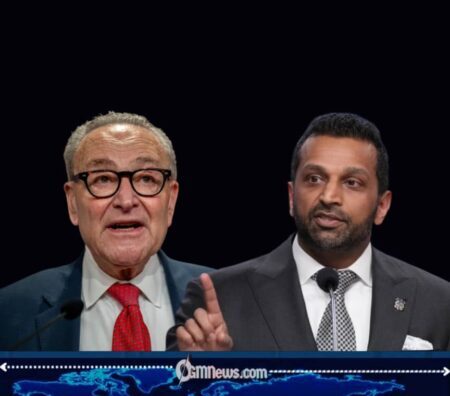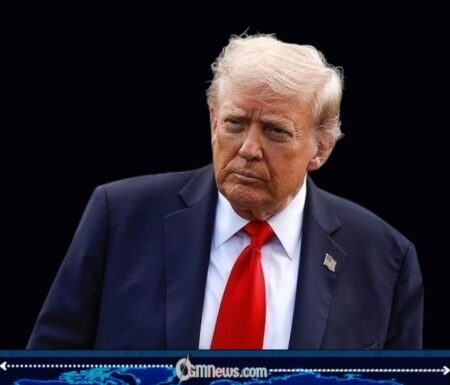






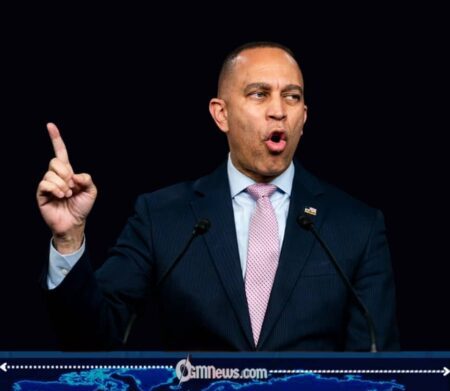
House Democratic Leader Hakeem Jeffries has warned that Democrats will strongly oppose what he describes as efforts by President Donald Trump and Republican allies to reshape congressional maps ahead of the next midterm elections. Jeffries said his party would not allow electoral boundaries to be redrawn in a way that could unfairly influence voter outcomes.
Speaking after renewed debate over redistricting in several states, Jeffries argued that attempts to alter district lines could become a central issue in the political fight for control of Congress. He said any move to redraw maps for partisan advantage would be met with what he called a “forceful Democratic response.”
The remarks have elevated redistricting into a national political issue, with both parties increasingly viewing congressional maps as one of the most important battlegrounds before the next election cycle.
Why Gerrymandering Remains a Major Political Issue
Gerrymandering refers to the practice of drawing electoral district boundaries in a way that favors one political party over another. Critics argue that the process can weaken democratic representation by allowing politicians to choose their voters instead of voters choosing their leaders.
Jeffries and other Democrats say aggressive redistricting can distort election outcomes before a single ballot is cast. They argue that the shape of district lines can determine which communities are represented and whether elections remain competitive.
Republicans have responded by saying redistricting is a constitutional responsibility of state governments and that both major parties have used the process when given the opportunity. That argument has turned map drawing into one of the most contested issues in modern American politics.
The Midterm Stakes for Both Parties
Control of the House of Representatives often depends on only a small number of competitive districts. Because of that, even minor changes to district boundaries can have major consequences for which party holds power in Washington.
Democrats believe Republican-led redistricting efforts in key states could create a structural advantage for the president’s party in the next midterms. Jeffries has suggested that without legal and political pushback, the balance of power in Congress could be altered long before Election Day.
For Republicans, defending favorable districts could be seen as a strategic necessity. Party leaders argue that Democrats are raising objections now because they recognize how critical the redistricting process could become in close races.
States Becoming New Political Battlegrounds
Several states are emerging as possible centers of the redistricting dispute. Political observers have identified places such as Texas, Florida, and other large states as potential battlegrounds where district maps could be challenged or revised.
Democrats have pointed to recent developments in multiple states as evidence that both parties are preparing for a prolonged legal and political fight over representation. Jeffries said the issue is no longer isolated to one region but may spread nationwide.
Election experts note that changes in just a handful of districts could influence the national political landscape, especially in a closely divided Congress where every seat matters.
Legal Challenges and Democratic Strategy
Jeffries’ warning signals that Democrats may rely on both court challenges and political organizing to respond. Party leaders have increasingly argued that legal action could become necessary if they believe maps violate fair representation standards.
Civil rights organizations and voting rights advocates have also raised concerns that some district changes could weaken minority voting power. Those concerns could lead to additional lawsuits under federal and state election laws.
At the same time, Democrats are expected to use the issue to energize voters by portraying redistricting as part of a broader struggle over the future of American democracy and electoral fairness.
A Fight That Could Shape the Next Election
The growing dispute over redistricting underscores how political strategy now extends far beyond campaign speeches and fundraising. Control over electoral maps can shape the political environment months or even years before voters go to the polls.
Jeffries’ comments suggest Democrats see the battle over district lines as one of the defining political conflicts leading into the midterm elections. His language reflects a belief that the issue touches not only partisan advantage but public trust in the electoral process.
Whether those warnings lead to legislative action or court intervention remains uncertain. What is clear is that redistricting has become a central front in the broader contest for political power in Washington.