



























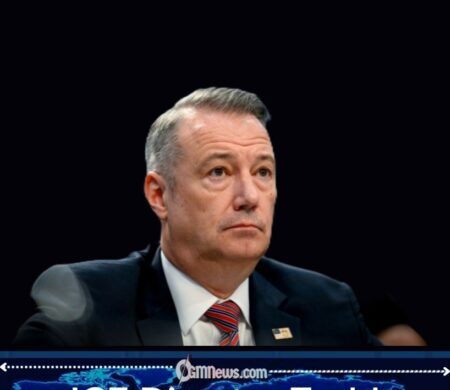
The acting director of U.S. Immigration and Customs Enforcement (ICE), Todd Lyons, is set to leave his position at the end of May after a turbulent year overseeing the agency’s expanded enforcement operations under President Donald Trump, who is currently serving his second term in office. The announcement, made by the Department of Homeland Security (DHS), marks a significant leadership change at a time of heightened public and political scrutiny surrounding immigration enforcement in the United States.
Lyons, who has led ICE since March 2025, is expected to transition into the private sector. His tenure has been defined by aggressive policy implementation, institutional expansion, and mounting criticism over the agency’s tactics and accountability.
Leadership Transition at a Critical Juncture
The Department of Homeland Security confirmed Lyons’ impending departure in an official statement, noting that he will step down at the end of May. However, the agency did not disclose who would succeed him, leaving questions about continuity and direction within ICE leadership.
DHS Secretary Markwayne Mullin commended Lyons for his service, stating that he revitalized an agency that had faced operational constraints in previous years. The White House echoed similar sentiments, with senior officials praising his role in advancing the administration’s immigration priorities.
Despite the official commendations, Lyons’ exit comes at a time when ICE is navigating both internal challenges and external pressure, raising questions about the agency’s future leadership and policy trajectory.
Expansion of ICE Operations Under Lyons
During his tenure, Lyons oversaw a substantial expansion of ICE’s operational capacity. The agency reported hiring approximately 12,000 officers and agents within a year, significantly increasing its enforcement reach across the country.
This expansion was aligned with the Trump administration’s broader immigration agenda, which prioritized stricter enforcement and increased deportations. ICE under Lyons frequently emphasized its focus on apprehending high-risk individuals, often described as “the worst of the worst.”
However, independent analyses suggested a different reality. Data indicated that a large proportion of individuals entering deportation proceedings in 2025 had no prior criminal convictions, fueling criticism about the scope and targeting of enforcement actions.
Controversies and Use-of-Force Incidents
Lyons’ leadership was marked by several high-profile incidents involving the use of force by ICE agents. One such case involved the shooting of a California man during a traffic stop, an action that Lyons publicly defended, citing officer safety.
More controversially, immigration agents were involved in the deaths of two U.S. citizens, Renee Good and Alex Pretti, in Minneapolis in January. The incident drew widespread condemnation and intensified calls for accountability within the agency.
During congressional testimony following the shootings, Lyons declined to apologize to the victims’ families or explicitly challenge the administration’s characterization of the victims as “domestic terrorists.” His stance further fueled public debate and criticism from lawmakers and advocacy groups.
Legal Challenges and Judicial Warnings
ICE under Lyons also faced increasing legal scrutiny. In January, a federal judge in Minnesota summoned Lyons to court, warning that he could face contempt charges over alleged noncompliance with judicial orders.
The court’s concerns stemmed from a surge in lawsuits accusing the federal government of conducting unlawful immigration arrests and disregarding legal constraints. Although Lyons ultimately did not testify, the episode underscored tensions between the judiciary and the executive branch over immigration enforcement practices.
These legal challenges have added to the broader debate about the limits of executive authority and the role of federal agencies in enforcing immigration laws.
Detention Conditions and Policy Criticism
Another focal point of criticism during Lyons’ tenure was the condition of ICE detention facilities. Particular attention was drawn to the Dilley facility in Texas, one of the largest detention centers housing families and children.
Advocacy groups and observers raised concerns about overcrowding, access to medical care, and the overall treatment of detainees. Lyons defended the agency’s practices, maintaining that ICE was operating within legal and regulatory standards.
Nevertheless, the issue of detention conditions remains a contentious aspect of U.S. immigration policy, with ongoing calls for reform and greater oversight.
Shifting Public Opinion and Political Pressure
Public sentiment toward ICE appeared to shift notably during Lyons’ time in office. Multiple opinion polls indicated growing dissatisfaction with the agency’s performance and tactics.
A February survey found that nearly two-thirds of Americans believed ICE had exceeded appropriate enforcement limits, while a March poll suggested that half of respondents supported abolishing the agency altogether. Additional polling indicated that a majority of voters disapproved of ICE’s overall performance.
These findings reflect broader national debates about immigration policy, law enforcement practices, and civil liberties, placing ICE at the center of an increasingly polarized political landscape.
Uncertain Future for ICE Leadership
As Lyons prepares to exit, uncertainty surrounds the future leadership of ICE. The absence of a named successor leaves open questions about whether the agency will maintain its current direction or undergo strategic adjustments.
The incoming leadership will likely face immediate challenges, including addressing public concerns, managing legal risks, and navigating the political complexities of immigration enforcement under President Trump’s administration.
Lyons’ departure thus represents not only a personal transition but also a pivotal moment for an agency at the forefront of one of the most contentious policy areas in the United States



[…] […]