
















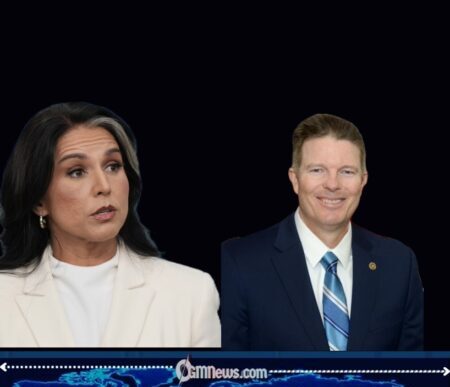
The Director of National Intelligence, Tulsi Gabbard, has sent criminal referrals to the U.S. Department of Justice, requesting investigations into a whistleblower and a former intelligence watchdog tied to the events that led to President Donald Trump’s first impeachment. The move signals a renewed effort by the current administration to revisit one of the most contentious political episodes of Trump’s earlier presidency.
The referrals, confirmed by a spokesperson for Gabbard’s office, do not specify the alleged crimes. However, they place renewed scrutiny on individuals whose actions in 2019 helped trigger a historic impeachment inquiry, reigniting partisan debates over accountability, institutional integrity, and the treatment of whistleblowers in the United States.
Gabbard Renewed Scrutiny on Key Figures in Impeachment Inquiry
At the center of the referrals is an unnamed whistleblower and former Intelligence Community Inspector General Michael Atkinson. Both figures played pivotal roles in bringing forward concerns that ultimately led to Trump’s impeachment in the U.S. House of Representatives in 2019.
The whistleblower’s complaint alleged that President Trump had used the power of his office to solicit foreign interference in a U.S. election. Specifically, it cited a phone call with Ukrainian President Volodymyr Zelenskyy, during which Trump reportedly encouraged an investigation into political rival Joe Biden.
Atkinson, as inspector general, deemed the complaint credible and urgent, forwarding it to Congress. His actions set in motion a chain of events that culminated in impeachment proceedings, though Trump was later acquitted by the Senate.
Gabbard’s Allegations of Procedural Misconduct
Gabbard has publicly criticized Atkinson’s handling of the whistleblower complaint, arguing that it relied heavily on second-hand information and failed to meet appropriate evidentiary standards. She has suggested that internal processes within the intelligence community were misused to construct what she describes as a misleading narrative.
Earlier this week, her office released documents related to Atkinson’s actions, asserting that they raise serious questions about how the complaint was evaluated and transmitted. However, the documents themselves do not present direct evidence of criminal wrongdoing.
Despite this, the decision to issue criminal referrals indicates that Gabbard believes further legal scrutiny is warranted. Ultimately, it will be up to federal prosecutors to determine whether the claims merit a full investigation or possible charges.
Political Reactions Reflect Deep Divisions
The referrals have drawn sharp reactions from political leaders, reflecting ongoing divisions over Trump’s presidency and the legitimacy of the impeachment process. Representative Jim Himes, the top Democrat on the House Intelligence Committee, strongly criticized the move.
Himes defended the whistleblower, describing their actions as principled and necessary for accountability. He warned that pursuing criminal investigations in this context could discourage future whistleblowers from coming forward, potentially undermining oversight mechanisms within government.
Supporters of Gabbard’s decision, however, argue that revisiting the events is necessary to ensure transparency and accountability, particularly if procedural flaws influenced such a significant constitutional process.
Historical Context of Trump’s First Impeachment
President Trump’s first impeachment remains one of the defining political events of recent U.S. history. The House charged him with abuse of power and obstruction of Congress following the Ukraine-related allegations.
In early 2020, the United States Senate acquitted Trump in a largely party-line vote. Trump has consistently denied any wrongdoing, maintaining that his conversation with Zelenskyy was appropriate and lawful.
The controversy also involved Trump’s then-personal attorney, Rudy Giuliani, who played a role in U.S.-Ukraine relations at the time. Questions about record-keeping and diplomatic conduct further fueled the investigation.
Broader Efforts to Revisit Past Investigations
The criminal referrals are part of a broader initiative by Gabbard and other administration officials to reexamine key controversies from Trump’s earlier tenure. In recent months, her office has also released materials related to intelligence assessments of Russian interference in the 2016 election.
Gabbard has characterized those findings as evidence of a “treasonous conspiracy,” though no criminal charges have been filed in connection with those claims. Several high-profile figures, including former CIA Director John Brennan, have reportedly been drawn into ongoing investigative efforts.
These actions suggest a wider strategy aimed at reassessing past intelligence and law enforcement decisions, particularly those that had major political consequences during Trump’s presidency.
Uncertainty Over Legal Outcomes
Despite the high-profile nature of the referrals, legal experts note that such submissions do not guarantee investigations or prosecutions. The Justice Department retains full discretion over whether to pursue the allegations.
Atkinson, who was dismissed by Trump in 2020, previously defended his conduct, stating that he acted in accordance with the law and without political bias. Neither he nor Justice Department officials have publicly responded to the latest developments.
As the situation unfolds, attention will remain focused on whether prosecutors find sufficient grounds to act — and what implications this could have for whistleblower protections and the broader political landscape in the United States.

Logging in is a breeze and the site stability is amazing even during peak hours....