





























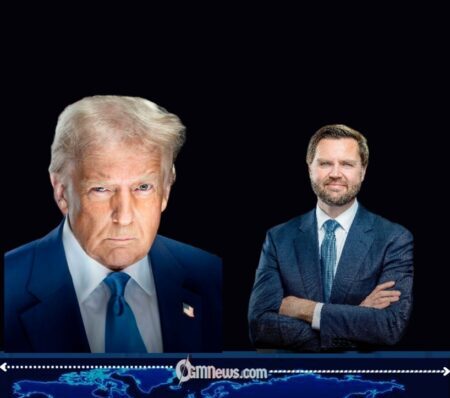
President Donald Trump has unveiled a sweeping federal crackdown on alleged fraud across Democratic-led states, appointing Vice President JD Vance to oversee the initiative as a newly designated “fraud czar.” The announcement coincided with federal arrests in California linked to a major healthcare fraud investigation, marking the first visible enforcement step in what the administration describes as a broader national campaign.
In a public statement, the president asserted that fraud in several states is “massive and pervasive,” although no specific evidence was presented to substantiate the scale of the claims. The administration indicated that enforcement actions would focus particularly on states governed by Democrats, while federal authorities highlighted ongoing investigations into healthcare-related fraud schemes, especially in southern California.
Trump Administration and New “Fraud Czar” Role
The Trump administration’s directive places Vice President JD Vance at the center of a nationwide anti-fraud effort, giving him broad oversight authority across federal agencies. According to the president, this newly created role is intended to coordinate enforcement strategies and ensure what he described as accountability in the use of taxpayer funds.
Officials say the initiative will prioritize states such as California, Illinois, Minnesota, Maine, and New York. The President Trump alleged that these regions have experienced widespread misuse of public funds, arguing that addressing such fraud could significantly improve the federal government’s fiscal position. However, the Trump administration has not released detailed data or reports to support these assertions.
The move reflects a continuation of the Trump administration’s broader policy direction, which has increasingly tied fiscal oversight to political governance at the state level. Critics argue that this framing risks politicizing federal enforcement mechanisms traditionally handled by independent agencies.
California Arrests Signal Early Enforcement Action
Shortly after the announcement, federal authorities confirmed the arrest of eight individuals in southern California in connection with an alleged healthcare fraud scheme exceeding $50 million. The suspects, including medical professionals, are accused of operating fraudulent hospice care facilities and billing Medicare for patients who were not terminally ill.
The arrests form part of a broader enforcement initiative targeting healthcare fraud, an area federal investigators have long identified as vulnerable to abuse. Officials from the Department of Justice described the case as emblematic of systemic weaknesses in oversight, particularly in regions with dense healthcare provider networks.
Law enforcement agencies indicated that similar investigations are ongoing, suggesting that additional arrests may follow. Authorities emphasized that the operation is part of a sustained effort rather than a one-off action linked solely to the Trump administration’s recent announcement.
Federal Spending Pressures and Policy Context
The crackdown comes at a time of mounting fiscal pressure on the federal government. Recent military engagements, including operations linked to tensions with Iran, have significantly increased defense expenditures, while new budget proposals outline further rises in military spending alongside reductions in domestic programs.
Within this context, the Trump administration has framed its anti-fraud campaign as both a fiscal and governance priority. The president Trump argued that eliminating fraud could offset budget deficits, though economists caution that such claims require robust evidence and long-term structural reforms.
Policy analysts note that healthcare fraud, while a legitimate concern, represents only a portion of broader fiscal challenges. They argue that sustainable deficit reduction typically requires comprehensive policy adjustments beyond enforcement measures alone.
State Leaders Push Back Against Allegations
Governors and officials from the targeted states have strongly contested the administration’s claims. California Governor Gavin Newsom defended his state’s record, citing measures such as restrictions on new hospice licenses and enforcement actions against fraudulent providers.
Similarly, Minnesota Governor Tim Walz dismissed the allegations as politically motivated, arguing that federal actions have, in some cases, undermined rather than strengthened fraud prevention efforts. Officials in New York also emphasized their own initiatives, highlighting billions of dollars in savings achieved through state-led reforms.
These responses underscore growing tensions between federal and state governments, particularly where policy priorities intersect with partisan divides. State leaders have called for greater collaboration while rejecting what they describe as broad and unsubstantiated accusations.
Healthcare Fraud as a Persistent National Issue
Despite political disagreements, experts agree that healthcare fraud remains a significant challenge in the United States. Federal agencies estimate that billions of dollars are lost annually through fraudulent billing, false claims, and abuse of public health programs such as Medicare and Medicaid.
Investigators have identified hospice care as one area of concern, particularly in regions with rapid growth in service providers. Fraudulent schemes often involve enrolling ineligible patients or inflating billing claims, practices that can be difficult to detect without extensive oversight mechanisms.
Authorities stress that effective enforcement requires coordination across federal, state, and local levels, as well as sustained investment in monitoring systems. While high-profile arrests may deter some activity, long-term solutions depend on systemic improvements in regulation and accountability.
Political and Public Implications of the Crackdown
The administration’s initiative is likely to have significant political ramifications, as it intersects with ongoing debates over federal authority, state governance, and public spending. Supporters argue that stronger enforcement is necessary to protect taxpayer funds, while critics warn against the potential misuse of federal power for political purposes.
Public reaction remains mixed, with some citizens welcoming efforts to address fraud and others expressing concern about the broader implications for healthcare access and state autonomy. Advocacy groups have also raised questions about whether enforcement actions could disproportionately affect vulnerable populations reliant on public health programs.
As the crackdown unfolds, its effectiveness—and its impact on federal-state relations—will depend on the transparency of investigations and the ability of authorities to substantiate their claims with credible evidence.
President Donald Trump’s announcement marks a significant escalation in federal efforts to address alleged fraud, placing Vice President JD Vance at the forefront of a politically sensitive initiative. While early arrests in California demonstrate active enforcement, questions remain about the scope of the problem and the evidence underpinning broader claims.
The unfolding developments highlight the complex intersection of governance, fiscal policy, and political strategy, with implications likely to extend well beyond the immediate enforcement actions.



The weekly tournaments here keep me coming back because the prize pools are surprisingly generous....