
























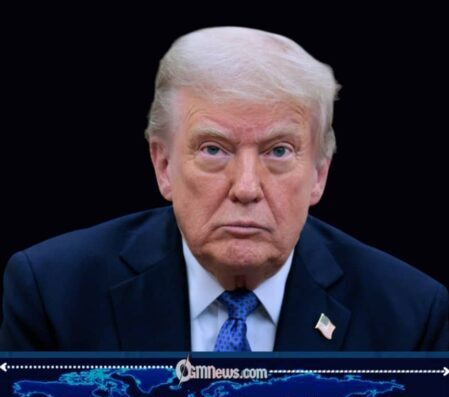
U.S. President Donald Trump, currently serving a second term, has issued a stark ultimatum to Iran, warning that the United States will “obliterate” Iranian power plants within 48 hours if the strategically vital Strait of Hormuz is not fully reopened. The statement marks one of the most direct and consequential escalations in the ongoing Middle East conflict, drawing urgent reactions from global leaders and markets alike.
The warning follows weeks of intensifying military exchanges involving the United States, Israel, and Iran, with the closure of the Strait of Hormuz triggering sharp increases in global oil prices and raising fears of a wider geopolitical crisis. As tensions mount, the ultimatum has placed the region—and the global economy—on edge.
Trump Issues 48-Hour Ultimatum
President Donald Trump delivered the ultimatum via social media, stating that failure by Iran to reopen the Strait of Hormuz would result in immediate U.S. strikes on key power infrastructure. Reports from Reuters, Bloomberg, and The Guardian confirm that the threat included plans to target major electricity facilities, beginning with the largest installations.
The language used—specifically the pledge to “obliterate” power plants—signals a shift toward targeting infrastructure critical to civilian life. Analysts note that such a move would represent a significant escalation beyond previous strikes, which largely focused on military assets.
The ultimatum also reflects growing pressure on the administration to restore stability in global energy markets, as disruptions linked to the Strait of Hormuz continue to intensify.
Strategic Importance of the Strait of Hormuz
The Strait of Hormuz is one of the world’s most critical maritime checkpoints, with roughly one-fifth of global oil supply passing through it daily. Its closure has already caused major disruptions to international shipping and energy markets.
Recent reports indicate that Iran has effectively restricted access to the waterway through attacks on vessels and the deployment of naval assets, prompting a U.S.-led military response aimed at reopening the route.
The economic consequences have been immediate. Oil prices have surged above $100 per barrel, with analysts warning of prolonged volatility if the situation is not resolved quickly.
Escalation of Military Conflict
The ultimatum comes amid a rapidly intensifying conflict involving multiple regional actors. Iran has launched missile strikes on Israeli territory, including areas near sensitive nuclear facilities, while Israel has carried out retaliatory strikes on Iranian targets.
The United States has expanded its military operations, targeting Iranian naval and missile capabilities in an effort to secure the Strait of Hormuz. These actions are part of a broader campaign that began in late February and has since escalated into a sustained regional confrontation.
President Donald Trump has framed the ultimatum as a necessary step to protect global commerce and ensure freedom of navigation, though critics warn it could deepen the conflict.
Iran’s Response and Retaliation Threats
Iranian officials have responded sharply to the ultimatum, warning that any attack on its energy infrastructure would trigger retaliation against U.S. and allied interests across the region.
Tehran has indicated that potential targets could include military bases, energy facilities, and other critical infrastructure linked to the United States and its partners. Such threats have heightened concerns about a broader regional war involving multiple countries.
The exchange of warnings underscores the fragile state of the situation, with both sides signaling readiness for further escalation while leaving limited room for immediate diplomatic resolution.
Global Reactions and Economic Fallout
International reactions to President Donald Trump’s ultimatum have been swift. Governments across Europe and Asia have called for restraint while exploring options to secure maritime routes and stabilize energy supplies.
Financial markets have responded with volatility, particularly in the energy sector. Rising oil prices and supply uncertainties are contributing to concerns about inflation and economic disruption worldwide.
Security analysts warn that prolonged instability in the Strait of Hormuz could have cascading effects on global trade, underscoring the high stakes of the current standoff.
Uncertainty Over U.S. Strategy
The ultimatum has also raised questions about the broader U.S. strategy in the region. Notably, the threat follows earlier remarks from President Donald Trump suggesting the possibility of winding down the conflict, highlighting potential shifts in policy direction.
Experts suggest that the administration may be using strong rhetoric as a pressure tactic aimed at forcing Iran to comply without further military action. However, the scale of the threat has increased concerns about miscalculation and unintended consequences.
As the 48-hour deadline approaches, the decisions made by President Donald Trump are expected to play a decisive role in shaping the next phase of the conflict and its global implications.
[…] […]