












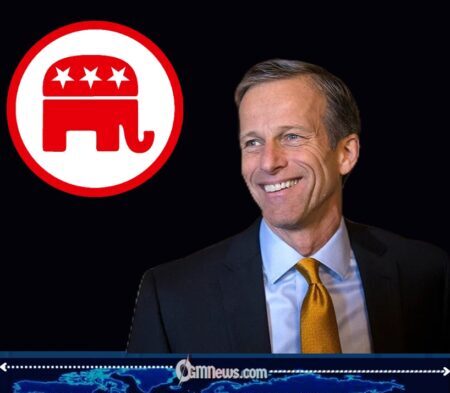
GOP lawmakers in the United States Senate are increasingly voicing concern that their party may be losing ground ahead of the upcoming midterm elections. What once appeared to be a relatively smooth path toward maintaining — or even expanding — the party’s Senate majority is now viewed with growing uncertainty.
Several factors are contributing to this shift in mood among Republicans, including the United States’ ongoing military involvement in the Middle East, rising oil prices that threaten economic stability, and internal disagreements within the party over a controversial elections reform proposal. Meanwhile, the role of Donald Trump, the current U.S. president serving his second term, has added another layer of complexity as his legislative priorities and political interventions reshape the party’s campaign focus.
Mounting Anxiety Among Senate Republicans
Conversations with Republican senators and aides suggest that the sense of confidence many lawmakers once held about the midterms is gradually fading. Earlier in the election cycle, GOP leaders believed their Senate majority was relatively secure, particularly compared with the House of Representatives, where Republican control remains extremely narrow.
However, recent political developments have shifted that outlook. The ongoing Middle East conflict and rising energy prices have dominated public debate, overshadowing the economic messaging Republicans hoped would drive their campaigns.
Senator Kevin Cramer, a close ally of President Trump, acknowledged the growing uncertainty surrounding the election. Speaking candidly about the political climate, Cramer remarked that he was relieved not to be on the ballot this year, reflecting broader unease among party members facing voters in November.
Affordability Message Struggles to Gain Traction
Many Republican lawmakers believe the key to electoral success lies in emphasizing policies aimed at lowering the cost of living. With inflationary pressures still affecting household budgets, GOP senators have attempted to frame affordability as the central theme of their midterm strategy.
Senator Josh Hawley argued that lawmakers must take concrete steps to address rising prices. Energy costs, food prices, and housing affordability remain top concerns for many American voters, according to recent polling.
Despite this emphasis, some Republicans worry that the party’s economic message is being overshadowed by other issues. The Senate recently approved a major housing bill intended to ease affordability challenges, but the legislation faces an uncertain future in the House of Representatives.
Trump’s Policy Priorities Shape Party Strategy
President Donald Trump has played a significant role in shaping the policy agenda for Republican lawmakers during the election season. While many senators hope to highlight economic issues, the president has repeatedly pushed his party to prioritize passage of the proposed SAVE America Act.
The legislation would introduce stricter voter identification and citizenship requirements for casting ballots. The proposal also includes broader provisions, such as limits on mail-in voting and other election-related reforms.
Trump has emphasized the bill as his administration’s top legislative priority. However, several Senate Republicans have privately acknowledged that the measure currently lacks the votes needed to pass the chamber, creating tension between the White House and members of the GOP conference.
GOP Leadership Faces Difficult Balancing Act
Senate Majority Leader John Thune has attempted to steer the party toward a message centered on economic performance. According to Thune, the upcoming midterm elections will likely hinge on voter perceptions of the economy rather than debates over election law.
At the same time, Thune must manage pressure from conservative activists and lawmakers who want the SAVE America Act pushed forward aggressively. Some within the party have even suggested weakening or eliminating the Senate filibuster to ensure passage of the bill.
Yet that approach also appears unlikely to gain sufficient support within the Republican conference, highlighting the difficult position party leadership faces as it tries to balance competing priorities ahead of the election.
High-Stakes Senate Races Add to GOP Concerns
Republicans remain mathematically favored to retain Senate control, as Democrats must gain at least four seats to win back the majority. Nevertheless, several competitive races have heightened Republican anxiety.
The GOP is defending vulnerable seats in Maine and North Carolina — two states widely viewed by strategists as the most plausible Democratic pickups. At the same time, Republicans hope to capture Democratic-held seats in Michigan and Georgia, though those races remain competitive.
Democrats have also strengthened their position in traditionally Republican states such as Ohio and Alaska through strong candidate recruitment, forcing Republicans to allocate more resources than initially anticipated.
Texas Primary Battle Highlights Party Divisions
Internal Republican tensions are perhaps most visible in Texas, where Senator John Cornyn faces a high-profile primary runoff against Ken Paxton, a candidate strongly supported by the MAGA wing of the party.
The SAVE America Act has become a central issue in the contest, with both candidates competing for President Trump’s endorsement. Cornyn recently indicated support for eliminating the Senate filibuster to advance the legislation, underscoring the pressure lawmakers face from conservative voters.
Trump has signaled that his endorsement decision may hinge on which candidate demonstrates the strongest commitment to passing the bill — a stance that has reportedly frustrated several Senate Republicans who doubt the legislation can clear Congress.
Financial and Electoral Risks Ahead
Beyond ideological disagreements, Republican strategists are concerned about the financial implications of a contentious primary battle in Texas. If the GOP nominee emerges from the runoff weakened, the party could be forced to spend hundreds of millions of dollars defending the seat against Democratic challenger James Talarico.
Such expenditures could divert resources from other competitive races across the country. As a result, party leaders are closely watching the Texas contest while trying to maintain unity ahead of the national campaign.
With the midterm elections approaching, Republican lawmakers face the challenge of presenting a unified message to voters while navigating both external political pressures and internal party divisions.
https://shorturl.fm/vJtLQ