




























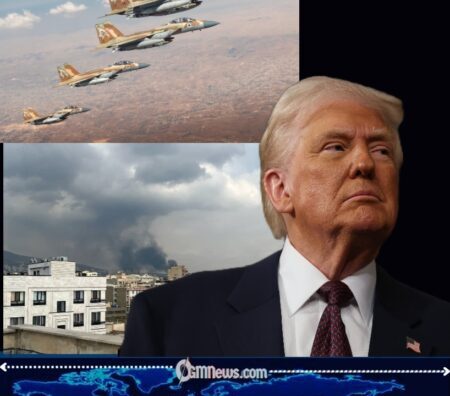
U.S. President Donald Trump declared that the war with Iran is far from over, signaling a continuation of American military operations even as he suggested earlier that the conflict might soon conclude. Speaking from his golf resort in Doral, Florida, the president said the United States would press forward with its offensive until Iran is “totally and decisively defeated.”
The remarks came as the conflict entered its second week and after Trump announced additional military deployments, including the ordering of more than two dozen B-2 bombers. Meanwhile, Iran’s Revolutionary Guard responded with a firm warning that Tehran—not Washington—would determine when the war ends.
Escalating Military Operations in the Second Week of War
President Trump said U.S. forces have already struck approximately 5,000 targets across Iran since the conflict began, describing the campaign as advancing “very far ahead of schedule.” The administration has framed the operation as a decisive effort to weaken Iran’s military infrastructure and regional influence.
According to Trump, one of the campaign’s primary objectives—crippling Iran’s naval capabilities—has largely been achieved. The president claimed that 46 Iranian vessels have been destroyed and that the country’s navy has effectively been eliminated from the battlefield.
The president also asserted that Iran’s broader military capabilities have been severely degraded, including the destruction of air defense systems, radar installations, and telecommunications infrastructure.
Mixed Signals From the White House on the War’s Duration
Despite the aggressive tone of the president’s latest comments, the administration has sent mixed signals about how long the conflict may last. Earlier in the day, Trump suggested the war was “very complete,” implying that the main objectives had largely been achieved.
“I think the war is very complete, pretty much,” Trump told CBS News, adding that Iranian forces had lost their navy and air force and that the remaining operations involved “wrapping up.”
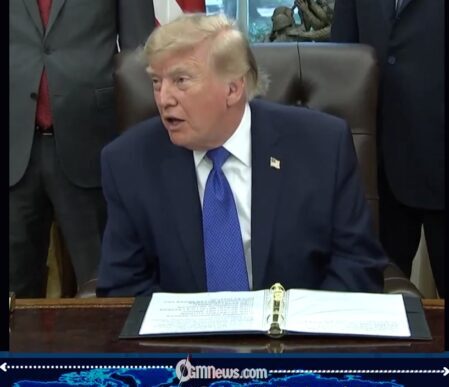
During a press conference, a reporter questioned the apparent contradiction between Trump’s earlier remarks and statements by the defense secretary indicating that the conflict was only beginning. The president responded tersely: “You could say both.”
Iran’s Revolutionary Guard Issues Defiant Response
Iran’s Revolutionary Guard Corps responded swiftly to Trump’s remarks, issuing a statement that underscored Tehran’s determination to shape the outcome of the conflict.
“We are the ones who will determine the end of the war,” the statement said, signaling that Iran does not intend to concede defeat despite the ongoing U.S. military campaign.
The response reflects the broader stance of Iranian leadership, which has vowed to continue resisting U.S. operations even as reports suggest significant damage to parts of its military infrastructure.
Economic Ripples and Global Market Reactions
Financial markets reacted sharply to the evolving situation, reflecting the uncertainty surrounding the conflict’s trajectory. Earlier in the day, U.S. markets experienced steep losses amid fears of escalation in the Middle East.
However, markets rebounded after Trump suggested the war might soon wind down. The Dow Jones Industrial Average closed up about 200 points after falling nearly 900 points at its lowest point during the session.
Energy markets also responded quickly. Oil prices dropped to about $86 per barrel from roughly $91 after the president floated the possibility of U.S. control over the Strait of Hormuz, a critical global oil shipping route.
Internal Debate Within the Trump Administration
Trump acknowledged that Vice President JD Vance had expressed some reservations about entering the war, highlighting internal discussions within the administration.
The president said the vice president was “less enthusiastic” about military intervention, noting that Vance holds a somewhat different philosophical perspective regarding foreign conflicts.
Despite those differences, Trump said the two leaders remain aligned on the broader goals of the campaign and maintain a cooperative working relationship.
International Diplomacy and Broader Geopolitical Tensions
Trump also confirmed that he had spoken with Russian President Vladimir Putin about the situation in Iran. According to the president, Putin offered to be “helpful” regarding the Middle East crisis.
The call also touched on the ongoing war between Russia and Ukraine, which is now in its fourth year. Trump said tensions remain high between Putin and Ukrainian President Volodymyr Zelensky.
Meanwhile, the U.S. administration continues to monitor developments inside Iran following the appointment of Mojtaba Khamenei as the country’s new Supreme Leader, a leadership transition that could influence Tehran’s strategy in the conflict.
Civilian Casualty Concerns and Congressional Scrutiny
The war has also raised humanitarian concerns, particularly after reports that a girls’ school in Tehran may have been struck by a missile, killing at least 170 people. The alleged attack has sparked calls for an investigation in the United States.
President Trump said he was not fully briefed on the incident but confirmed that the matter is under investigation. He noted that Tomahawk missiles are used by multiple countries, suggesting it was too early to determine responsibility.
Democratic lawmakers in Congress have demanded a formal inquiry into the reported strike and broader scrutiny of the military campaign’s impact on civilians.
[…] […]