


















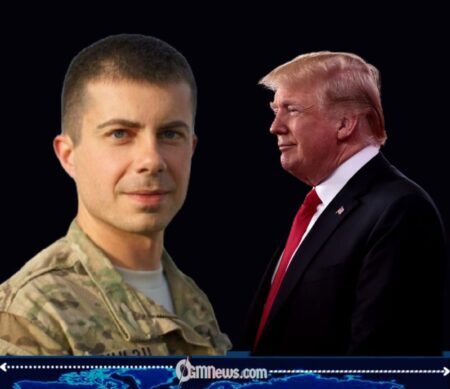
Pete Buttigieg has delivered a pointed critique of President Donald Trump over the administration’s military campaign against Iran, describing the conflict as a dangerous “war of choice” that risks repeating the mistakes of past U.S. interventions in the Middle East.
The former U.S. Transportation Secretary and military veteran argued that the decision to deploy American forces without a clearly defined long-term strategy could lead to prolonged instability, rising casualties, and economic consequences at home. Buttigieg shared his concerns through social media posts and during a discussion on the MeidasTouch Podcast, where he warned that unnecessary wars historically create years of chaos and heightened danger for the United States.
Buttigieg Frames Conflict as a “War of Choice”
Buttigieg’s criticism centered on his belief that the military action lacks a clear objective and strategic roadmap. Drawing on his own experience as a deployed officer during the Afghanistan War, he warned that launching a conflict without detailed planning can lead to long-term consequences that extend far beyond the initial battlefield.
According to Buttigieg, history has shown that wars undertaken without clear goals or post-conflict planning often result in extended instability. He emphasized that policymakers should carefully weigh diplomatic alternatives before committing U.S. troops to combat operations.
His remarks reflect a broader debate in Washington about whether the current military approach toward Iran was unavoidable or whether diplomatic options remained available.
Veteran Perspective Shapes His Criticism
A central element of Buttigieg’s argument stems from his personal experience as a military veteran. During his discussion on the MeidasTouch Podcast, he described the emotional weight carried by service members and their families whenever troops are deployed into combat zones.
He explained that those preparing for deployment often think about the worst-case scenario: the moment when families receive notification that a loved one has died in service. That possibility, he said, represents the most painful reality of military life.
For Buttigieg, the willingness of troops to risk their lives depends on a fundamental understanding that such sacrifices will only be required when absolutely necessary. He argued that national leaders have a responsibility to ensure that military action is undertaken only after every alternative has been exhausted.
Casualties Intensify the National Debate
Reports from the early phase of the conflict indicate that several American service members have already lost their lives. These casualties have intensified public discussion in the United States about the necessity and potential scope of the operation.
Veterans’ organizations and political leaders have increasingly called for clearer explanations regarding the mission’s objectives and expected duration. Military analysts have also warned that direct confrontation with Iran carries the risk of wider regional escalation involving multiple actors.
Buttigieg referenced these losses as evidence of the human cost associated with military decisions, urging policymakers to consider the long-term consequences for both service members and their families.
Economic Concerns Add to Criticism
In addition to the human toll, Buttigieg highlighted the financial impact of the conflict. Rising tensions in the Middle East have pushed global oil prices upward, fueling fears of broader economic disruption.
Economists warn that sustained instability in the region could drive higher energy costs, increase inflationary pressures, and place additional strain on consumers and businesses.
Buttigieg argued that billions of taxpayer dollars may now be redirected toward military spending rather than domestic priorities.
He suggested that issues such as healthcare,D infrastructure, and economic stability at home could face increased challenges if the conflict becomes prolonged and expensive.
Wider Foreign Policy Debate Emerges
Buttigieg’s remarks have become part of a larger national conversation about the direction of U.S. foreign policy. Supporters of President Donald Trump argue that strong military action may be necessary to counter perceived threats and protect strategic allies in the region.
Critics, however, contend that diplomatic engagement and multilateral negotiations should remain the primary tools for addressing geopolitical tensions. They warn that military escalation could deepen instability and create long-lasting geopolitical consequences.
This divide reflects broader disagreements in Washington over how the United States should balance national security concerns with the risks associated with military intervention.
Calls for Strategic Reassessment
As the conflict continues to evolve, several policymakers and analysts are urging a reassessment of the current strategy. They argue that clearer objectives, transparent communication with the public, and careful evaluation of potential outcomes are necessary for responsible decision-making.
Buttigieg has joined those voices calling for a more cautious approach, emphasizing the importance of learning from the lessons of past wars in the Middle East. For him, the central question is whether the United States can pursue its security interests without repeating the costly mistakes that have defined previous conflicts. His critique underscores the growing debate within American political circles about the balance between military power, diplomacy, and the long-term national interest.


https://shorturl.fm/XPOeg