





















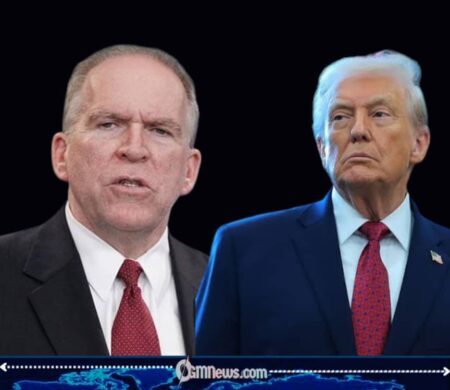
Former CIA Director John Brennan has warned that the ongoing war involving the United States and Iran is unfolding in a far more complicated way than many in Washington initially anticipated. John Brennan said the conflict has become increasingly chaotic and unpredictable, challenging assumptions about how quickly military pressure might produce decisive political results.
According to John Brennan, recent calls for Iran’s “unconditional surrender” reflect an unrealistic understanding of the situation on the ground. The former intelligence chief argued that wars involving entrenched political systems and powerful military institutions rarely end with the type of sweeping capitulation sometimes demanded in political rhetoric.
Speaking in interviews and public commentary, John Brennan suggested that the escalating language from political leaders may indicate frustration as events develop differently from expectations. In his assessment, the conflict has entered a stage where strategic calculations are constantly shifting, making quick resolutions unlikely.
John Brennan Questions the Demand for “Unconditional Surrender”
A central point of criticism from John Brennan has been the administration’s demand that Iran accept “unconditional surrender.” The phrase has been repeatedly used by Donald Trump, the current U.S. president serving a second term, as he outlines Washington’s objectives in the conflict.
John Brennan argued that framing the end of the war in such absolute terms risks oversimplifying the realities of international conflict. He said history shows that wars involving large regional powers rarely end with unconditional surrender unless one side faces total military collapse.
For John Brennan, the demand could also complicate diplomatic options. By setting such an extreme condition for ending the conflict, he warned that political leaders may limit the space for negotiations that could eventually help de-escalate tensions.
Trump Administration Maintains Hardline Position
President Donald Trump has maintained a firm stance toward Iran throughout the conflict, insisting that the United States will continue applying pressure until Tehran abandons its military ambitions and ceases threats against regional allies. Administration officials say the strategy aims to dismantle Iran’s missile capabilities and weaken its ability to project power across the Middle East.
Supporters of the administration argue that strong rhetoric is necessary to demonstrate resolve and deter adversaries. They believe that uncompromising language sends a clear signal that the United States will not accept partial concessions from Iran.
However, John Brennan has suggested that such rhetoric may reflect growing frustration as developments on the battlefield fail to align perfectly with initial expectations.
Intelligence Community Views on Iran’s Political Structure
Many analysts note that Iran’s political system is designed to withstand external pressure. Institutions such as the Islamic Revolutionary Guard Corps hold significant influence over the country’s military and security apparatus.
These institutions, along with Iran’s religious leadership and political networks, create a system capable of maintaining stability even during periods of intense external pressure. As a result, experts say military strikes alone may not be enough to produce rapid political change.
John Brennan has emphasized that underestimating the resilience of such systems can lead to unrealistic expectations about how quickly wars can be resolved.
Regional Conflict Raises Global Concerns
The war has already expanded into a wider regional confrontation involving missile strikes, drone attacks, and retaliatory operations across multiple countries in the Middle East. Governments across the region are closely monitoring developments as tensions continue to escalate.
Energy markets and international shipping routes are also under heightened scrutiny. The Persian Gulf remains a critical corridor for global oil supplies, and prolonged instability could have far-reaching economic consequences.
Observers say the complexity of the conflict reinforces the concerns raised by John Brennan about the difficulty of achieving quick or decisive outcomes.
Growing Debate in Washington
The remarks from John Brennan have fueled broader debate in Washington about the strategy and long-term objectives of the war. Some lawmakers and foreign-policy analysts argue that military pressure should be combined with diplomatic engagement.
Others insist that only sustained pressure will force Iran to change its strategic behavior. The discussion reflects deep divisions within the United States over how to approach conflicts in the Middle East.
As the situation continues to evolve, the warnings from John Brennan highlight the uncertainty surrounding the war’s trajectory and the challenges facing policymakers attempting to shape its outcome.


The vibes here are amazing and the winning streaks are real. It feels just like...