


























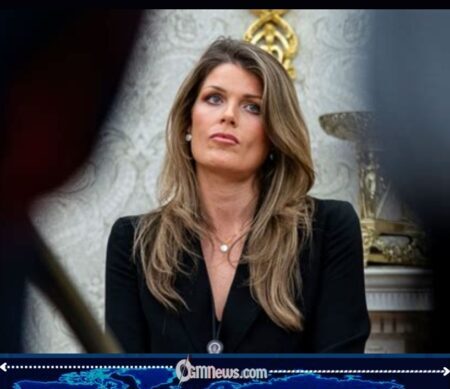
A disciplinary investigation has been opened into Lindsey Halligan, the former interim U.S. Attorney for the Eastern District of Virginia, by the The Florida Bar, following complaints regarding her conduct in two politically sensitive prosecutions. The probe comes after a federal judge ruled that Halligan’s appointment to the role violated constitutional provisions, a decision that resulted in the dismissal of criminal cases against former federal and state officials.
The investigation was confirmed in a letter from The Florida Bar obtained by opitanglobamedia news. The complaints, submitted by the watchdog group Campaign for Accountability, allege that Halligan may have breached professional conduct rules in connection with her handling of cases involving James Comey and Letitia James. Both cases collapsed after a federal judge determined Halligan had been improperly appointed to the prosecutorial post.
Background of the Dismissed Cases
Halligan came under intense scrutiny after overseeing federal cases targeting two prominent figures: Comey, the former director of the Federal Bureau of Investigation, and James, the attorney general of New York. The prosecutions were considered politically sensitive and attracted national attention when they were filed.
However, the cases were dismissed in November when Cameron Currie, a federal judge, ruled that Halligan’s appointment as interim U.S. attorney was unconstitutional. Currie determined that the appointment violated both the Appointments Clause and federal statutes governing temporary vacancies in U.S. attorney offices.
Because the court found that Halligan lacked legal authority to act as U.S. attorney, Currie ordered that the criminal charges against Comey and James be dismissed entirely. The ruling dealt a significant blow to the prosecutions and sparked debate within legal and political circles.
Complaints Filed by Government Watchdog
The ethics complaints that triggered the Florida Bar investigation were filed by the nonprofit Campaign for Accountability. According to its executive director, Michelle Kuppersmith, the organization believes Halligan’s actions during the investigations violated professional standards governing prosecutors.
Kuppersmith said the complaint “outlined all the ways” in which Halligan’s conduct during the Comey and James cases allegedly breached legal ethics rules recognized by both Florida and Virginia state bars. The group argued that the actions taken under Halligan’s leadership raised questions about prosecutorial conduct and accountability.
The organization initially filed complaints with both the Florida Bar and the Virginia State Bar in November, shortly after the judge’s ruling. The move signaled growing pressure from oversight advocates who believed the matter warranted disciplinary scrutiny.
Virginia Bar Declines to Investigate
While Florida regulators moved forward with a probe, the Virginia State Bar declined to launch its own disciplinary investigation at the time. In a letter responding to the complaint, the organization said it could not initiate a case based solely on “potential violations” of professional rules.
According to the Virginia bar’s explanation, disciplinary proceedings typically require either a court finding of misconduct—such as sanctions for false statements—or criminal charges resulting in a conviction. Without such determinations, the bar concluded it lacked sufficient grounds to proceed.
This response effectively shifted attention toward Florida, where Halligan is licensed to practice law and where regulators retained the authority to investigate the allegations independently.
Court Ruling and Departure of Halligan from the Justice Department
The controversy surrounding Halligan deepened after the court’s ruling against her appointment. In addition to dismissing the cases she had pursued, the judge barred her from continuing to identify herself as a U.S. attorney in court filings.
According to Pam Bondi, Halligan subsequently departed the United States Department of Justice in January. The departure followed a judicial finding that her continued use of the U.S. attorney title violated a “binding court order” that had disqualified her from the role.
The Justice Department later appealed the constitutional ruling to the United States Court of Appeals for the Fourth Circuit, although it did not request an immediate stay of the judge’s decision while the appeal proceeds.
Florida Bar Confirms Ongoing Investigation
In February, Campaign for Accountability submitted a second complaint to both state bars, reiterating its request for a formal investigation now that Halligan had left her federal position. Shortly afterward, The Florida Bar confirmed it had already opened an investigation.
“We are aware of these developments and have been monitoring them closely. We already have an investigation pending,” the organization wrote in its response letter, which included Halligan as a recipient.
A communications director for the bar association stated that the organization does not comment publicly on active disciplinary cases. Halligan has not publicly responded to requests for comment about the investigation.
Broader Debate Over Oversight of Federal Lawyers
The investigation is unfolding amid broader policy discussions within the federal government about how allegations of misconduct involving Justice Department attorneys should be handled.
The Justice Department recently proposed a rule that would allow the attorney general to review state bar investigations involving federal lawyers. Supporters argue the change could protect federal prosecutors from politically motivated complaints, while critics fear it could undermine independent oversight.
Kuppersmith said publicizing the Florida Bar investigation was partly intended to encourage state legal regulators to maintain their independence in evaluating professional conduct complaints involving government attorneys.
[…] […]