



























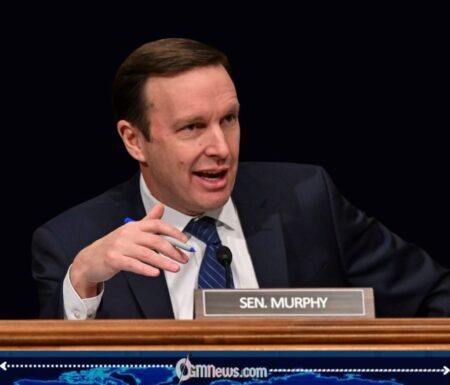
Chris Murphy sharply criticized President Trump for putting middle-class and poor Americans in harm’s way, pointing out that the president himself would never send his own children to fight. In a pointed statement, Murphy described the situation as emblematic of a “draft-dodger deciding the fate of others’ sons and daughters.”
Chris Murphy argued that the contrast between Trump’s personal choices and the sacrifices demanded of ordinary Americans underscores a deep inequity in leadership. He stressed that sending others to war while avoiding personal risk is both morally and politically troubling.
Chris Murphy highlighted that these decisions not only affect service members and their families but also carry long-term consequences for communities that bear the brunt of military engagement.
Rising Concerns About Leadership and Accountability
Chris Murphy’s comments come amid growing debate over the administration’s approach to international conflicts and military intervention. Critics argue that policies appear detached from the realities faced by those on the front lines.
Public confidence in decision-making is particularly fragile when leaders have avoided personal military service. Murphy emphasized that credibility is built through shared responsibility, not rhetoric alone.
Chris Murphy warned that the perception of inequity can erode trust in government institutions and fuel broader societal divisions.
Chris Murphy Highlights Draft-Dodging Hypocrisy
Chris Murphy repeatedly underscored that Trump’s avoidance of military service while directing national security policy represents a fundamental hypocrisy. The senator framed the discussion as not only a policy issue but a moral question about leadership and accountability.
He drew attention to the fact that many families across the country face the possibility of sending their children into conflict zones, while the commander-in-chief has no personal stake in the outcome.
Chris Murphy argued that such a dynamic risks undermining morale within the military and trust among citizens, particularly those from less privileged backgrounds.
The Impact on Middle-Class and Working Families
Chris Murphy stressed that the administration’s policies disproportionately affect middle-class and lower-income Americans, who make up the bulk of enlisted personnel. Families face the real dangers and sacrifices of military service while wealthier Americans, including political elites, remain largely insulated.
Economic realities compound the burden, as military families may encounter financial strain alongside emotional stress, a situation Murphy described as “entirely preventable” with more equitable policy considerations.
Chris Murphy noted that long-term community consequences include loss, trauma, and reduced economic mobility for families whose loved ones serve in conflicts initiated far from their homes.
Calls for Transparency and Ethical Leadership
Chris Murphy has consistently called for greater transparency in decisions that put Americans in harm’s way. He advocates for policies that consider both the human cost and ethical responsibility of military engagement.
Murphy urged the public to question the motivations behind military actions and to hold leaders accountable for the consequences of war.
Chris Murphy emphasized that ethical leadership requires a willingness to share the risks one imposes on others, a standard he believes should guide decisions on national security.
Looking Ahead: Accountability and Public Discourse
Chris Murphy concluded that ongoing dialogue and scrutiny are essential to prevent future missteps in military policy. Citizens, media, and policymakers alike must engage critically with decisions that carry life-and-death stakes.
The senator warned that ignoring inequities in how military burdens are distributed risks undermining both democratic legitimacy and international credibility.
Chris Murphy reaffirmed his commitment to advocating for policies that protect American lives, promote fairness, and ensure that leaders bear responsibility for the consequences of their decisions.


[…] […]