





























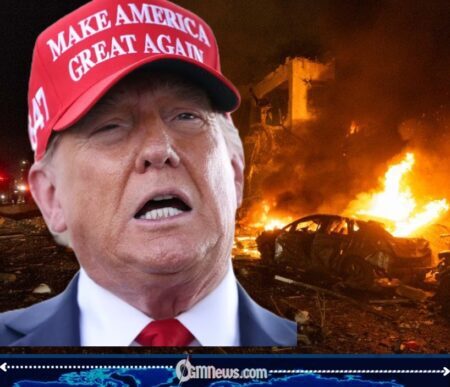
President Donald Trump, currently serving his second term as President of the United States, is confronting a defining political moment after authorizing military strikes against Iran—an action that has stirred debate within his own political base just months before critical midterm elections. While Republican leaders have largely rallied behind the operation, influential voices within the Make America Great Again (MAGA) movement are openly questioning whether the move aligns with the campaign promises that propelled Trump back to the White House in 2024.
The decision has introduced new political calculations for Republicans seeking to maintain control of Congress. For a base energized by pledges to focus on inflation, economic recovery, and avoiding new foreign entanglements, the Iran strike represents both a demonstration of strength abroad and a potential flashpoint at home.
Trump Campaign Promise Under Scrutiny
Throughout the 2024 presidential campaign, Trump emphasized a commitment to prioritizing domestic economic issues and steering clear of prolonged foreign conflicts. That message resonated strongly with working-class voters and younger Americans who expressed fatigue with overseas military engagements.
Michael Traugott, professor emeritus of political science at the University of Michigan, observed that criticism thus far appears concentrated among what he described as the “chattering class” of the MAGA movement rather than elected Republican officials. However, he cautioned that sustained military escalation could test the durability of Trump’s grassroots support.
“For the popular MAGA base,” Traugott noted, “this is pretty much a direct violation of a major campaign promise to stay out of foreign engagements.” Whether that perception takes root broadly remains uncertain.
Republican Leaders Rally, Influencers Divide
The Republican National Committee issued a statement endorsing the Iran operation, and reaction on Capitol Hill largely followed party lines. Republican lawmakers described the strikes as necessary to protect American interests, while Democrats criticized the move as risky and potentially destabilizing.
Within the MAGA-aligned media ecosystem, reactions have been more divided. Conservative commentator Jack Posobiec referenced remarks by the late activist Charlie Kirk, who had warned that younger voters were more focused on domestic policy than foreign intervention. Posobiec argued that such concerns cannot be ignored in a midterm election year.
Meanwhile, the Hodgetwins, a popular conservative podcast duo with millions of followers, criticized the strikes as inconsistent with Trump’s 2024 messaging. “Freeing the people of Iran is not why I voted for Trump,” they posted on social media.
Support From Loyalists and Hardline Advocates
Not all prominent MAGA figures voiced opposition. Laura Loomer, a close Trump ally, strongly defended the action, framing it as a decisive response to decades of Iranian hostility toward the United States. On social media, she described the president’s move as fulfilling a historic mission.
Mike Davis, head of the pro-Trump legal advocacy group the Article III Project, argued that recent statements from Iran’s Supreme Leader, Ayatollah Ali Khamenei, provided sufficient justification for decisive military action. Speaking on Steve Bannon’s “War Room” podcast, Davis maintained that the president acted within his authority to protect national security.
In a televised address, Trump himself said he was seeking regime change in Iran and warned Americans to prepare for potential consequences, acknowledging that casualties could occur in what he characterized as a broader conflict.
Risks to Republican Control of Congress
The midterm elections now loom as a critical test of whether the Iran strike will energize or alienate key voter blocs. Public opinion surveys indicate that the cost of living remains Americans’ foremost concern, and some Republicans worry that prolonged military engagement could distract from economic priorities.
Reagan Box, a Republican candidate seeking to succeed former Representative Marjorie Taylor Greene in Georgia, expressed reservations despite identifying as a Trump supporter. She described Iran’s leadership as “heinous” but cautioned against regime-change efforts, citing past destabilization in the Middle East.
Greene herself, once a close Trump ally before breaking with him over domestic priorities, posted on social media that “War with Iran does not lower inflation and make cost of living affordable.” Her remarks reflect broader anxieties among voters who prioritize economic relief over foreign policy objectives.
A Calculated Political Gamble
Trump’s supporters previously celebrated the January capture of Venezuelan leader Nicolás Maduro as a swift and decisive success. The Iran operation, however, presents a more complex geopolitical and political challenge.
The Republican Party’s institutional backing suggests no immediate fracture in party leadership. Yet analysts caution that a prolonged conflict—particularly one involving American casualties or economic fallout—could shift public opinion. For now, dissent appears limited, but the long-term implications remain unclear.
As November approaches, the Iran strike stands as both a show of executive resolve and a high-stakes electoral gamble. Whether it ultimately consolidates Trump’s coalition or tests its cohesion may depend on how quickly and decisively the conflict unfolds—and whether voters view it as enhancing national security without compromising domestic priorities.


Casinoabc999? Good Site. The interface is sleek, and there is a lot of stuff to...